Balanced to Single-Ended: When 4.4mm-to-3.5mm AUX Cables Make Sense
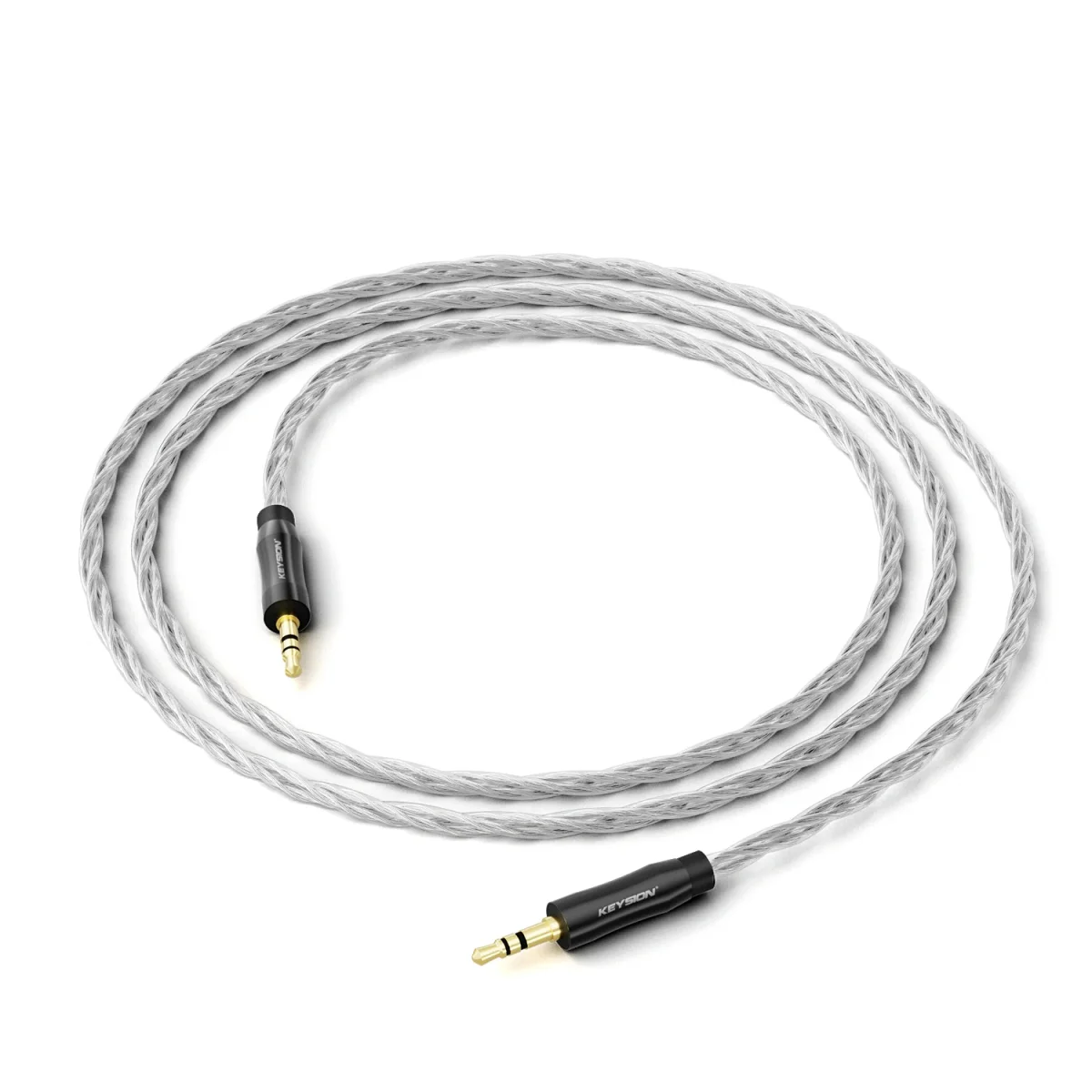
This cable solves a small but common hassle: you want to connect your player to powered speakers or a desktop amp, but they only have a 3.5mm AUX input, while all your good cables are headphone jack to headphone jack. The AUX cable comes in two versions: 3.5mm to 3.5mm, and 4.4mm balanced to 3.5mm. The latter lets you bring out the clean signal from the player's balanced output.
| Parameter | Value | What It Means |
|---|---|---|
| Spec | 3.5→3.5 / 4.4→3.5 | Choose based on front-end interface; for balanced output devices, select the latter |
| Conductor | 4N oxygen-free copper, 4 strands × (56×0.05mm) | 224 fine copper wires, ample margin for analog signal transmission |
| Connector | Gold-plated | Anti-oxidation, stable contact over repeated plugging |
| Length | 1.2m | Ideal for desktop setups, no excess |
| Price | CNY 59 (USD 9) | Cost of a takeout meal, solves interface mismatch |
Usage note: When connecting to speakers or a desktop amp, prioritize using the player's Line-out (if available), lock fixed volume output, and let the speakers handle volume; for devices without Line-out, using the headphone jack at low volume is also viable, just requires an extra layer of volume adjustment.
- Suitable for: desktop active speaker users; those who want to use a player as a transport to connect to a headphone amp; those who need a reliable analog interconnect cable.
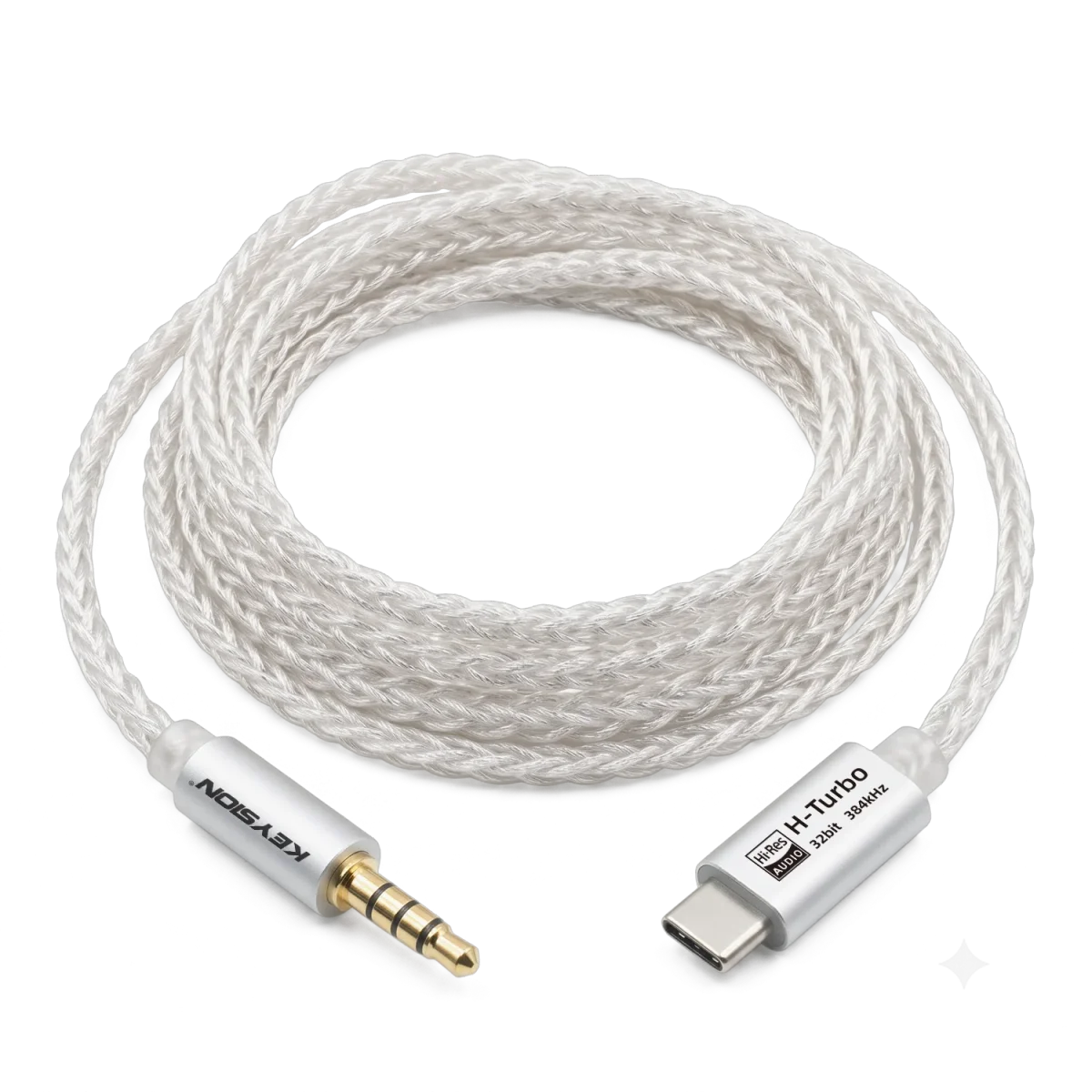
- Not suitable for: connecting speakers directly to a phone (if the phone lacks a 3.5/4.4mm jack, see the H-Turbo S1 DAC cable); in-car scenarios also recommend the S1.
FAQ
Is the signal still balanced when converted from 4.4mm?
No. When the balanced signal enters the 3.5mm single-ended interface, it is already combined into unbalanced transmission. The significance of this cable is physical adaptation + quality wire. The benefits of the balanced output are mainly reflected when driving headphones directly.
Can it be used as an interconnect cable between two devices with headphone jacks?
The 3.5→3.5 specification can be used for analog recording between devices (e.g., player to AUX in of an amp); note that you connect audio output to input, don't plug two headphone jacks together.
Is it much different from a few-dollar interconnect cable?
The main differences lie in cable shielding, connector craftsmanship, and long-term reliability. For short-distance analog transmission, the audible differences are usually subtle, but this cable is less prone to contact noise and oxidation issues.
Does it support microphone calls?
No. This is a pure audio two-channel cable (TRS) with no microphone pins; for calls, please use a cable with a TRRS microphone, such as MIc01.