Why Does a Headphone Cable Pick Up Noise? How Much Shielding and Crosstalk Actually Matter (Tested with KEYSION 24G)
If your headphones occasionally hiss or buzz and you instinctively blame the cable, this post is for you. The plain answer: on a 1-2 metre home-use cable, shielding influences the sound less than people assume, and most noise traces back to a tarnished connector, a loose plug, or the source's own noise floor, not the wire. Shielding earns its keep only with long runs, strong electromagnetic interference, and the common-mode rejection of balanced transmission—which we unpack below.
The hiss and buzz you hear usually falls into three buckets: noise floor from the source (poor signal-to-noise ratio, common when high gain meets sensitive IEMs), poor connector contact (tarnished or loose plug), and EMI picked up by the cable itself. For a 1-2 metre home-run cable, the first two are far more common than the third. Reaching for the cable first is backwards in most cases.
The idea behind a shield is a grounded conductor wrapped around the cores that catches outside interference and drains it away. Common forms are braided, spiral-wound, and coaxial with a shielding layer; denser shields usually resist interference better. But more shielding is not automatically better—it stiffens the cable and raises the cost, and on a short headphone run you would rarely hear the difference.
| Noise source | Common on short home runs? | Can shielding fix it? | What this means |
|---|---|---|---|
| Source noise floor / high gain | Yes | Basically no | A better-shielded cable will not help; check the source |
| Tarnished connector / poor contact | Fairly common | No, needs cleaning or a new plug | Most "noise" lives here |
| EMI on long runs | Rare at home | Yes, shielding plus balance | Limited benefit for short home runs |
| Noisy environment (server/studio/crowded desk) | Medium in pro use | Yes, clearly | Worth chasing dense shielding only for long or pro runs |
What this means: for most home use over 1-2 metres, shielding does little for the tone; what it decides is whether a cable resists interference in a noisy environment, not whether the sound is cleaner.
Balanced carries the signal on two independent cores with opposite phase, and the receiver subtracts the two again. Noise picked up along the way has the same phase on both, so it cancels out—that is common-mode rejection. Unbalanced shares a ground, so interference mixes in more easily and left-right crosstalk is more likely. Crosstalk rarely causes obvious distortion; more often it quietly narrows the perceived soundstage and slightly drops channel separation.
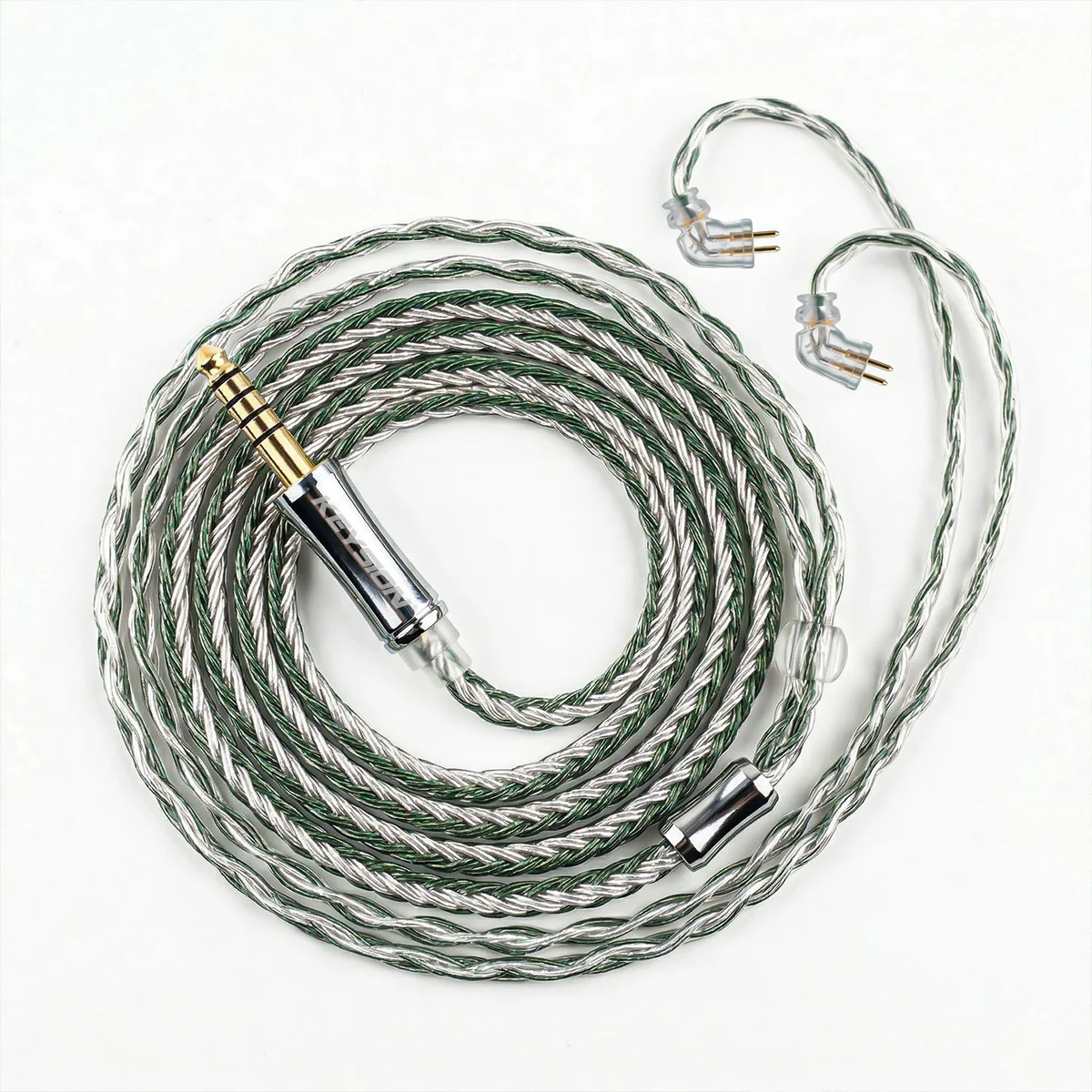
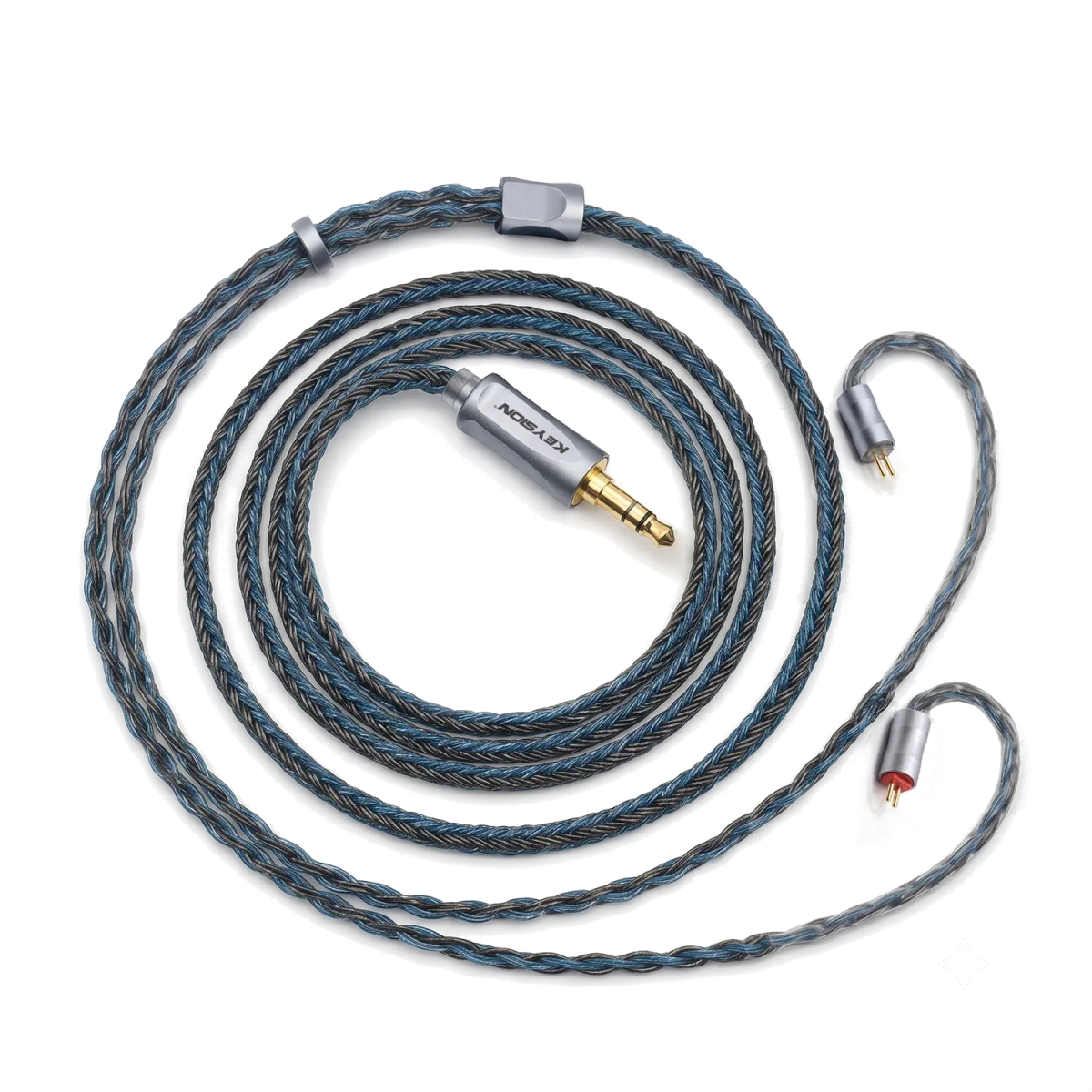
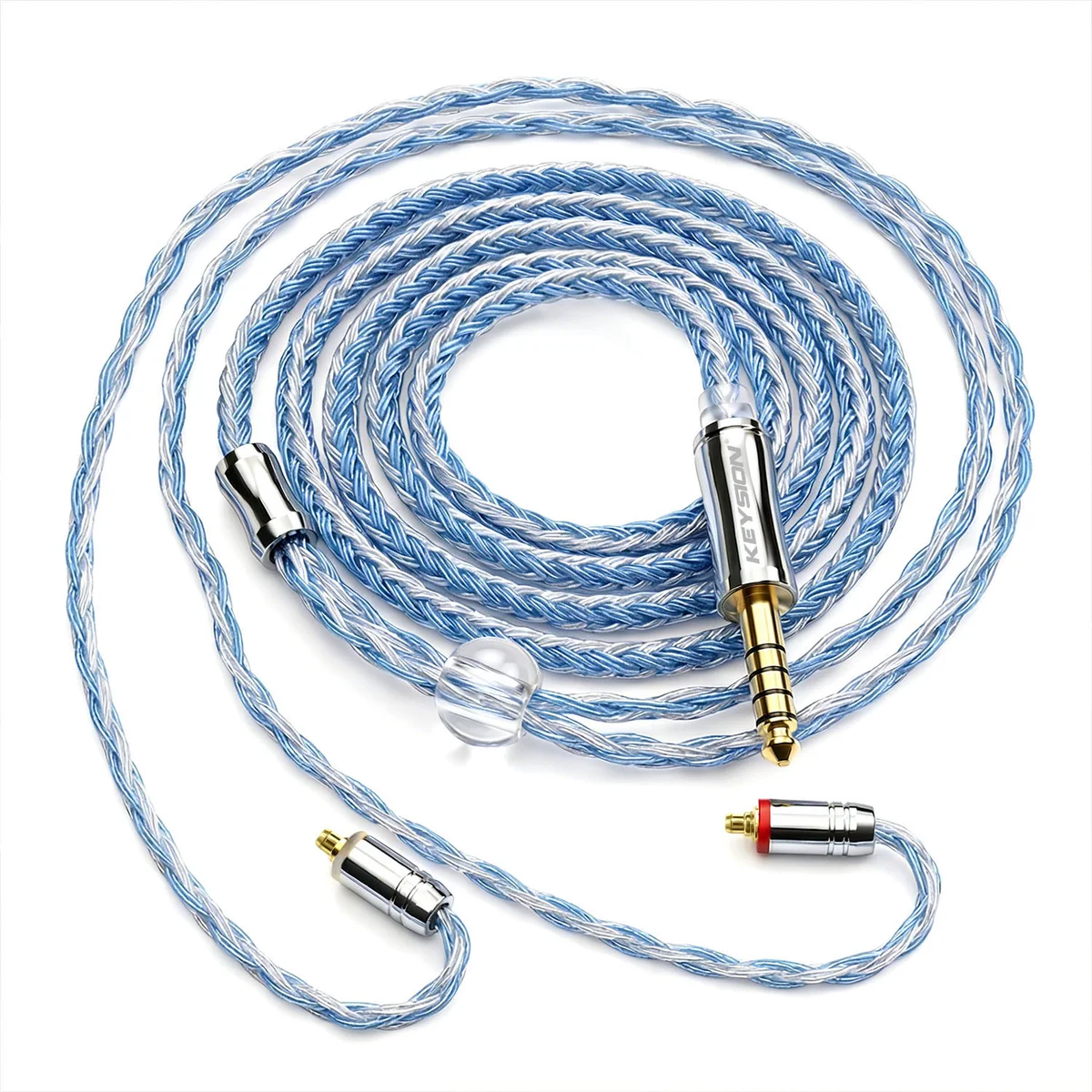
If your cable is 1-2 metres, used at home, and the IEM sits well, check the connector and the source before swapping cables. Shielding and balance earn their value with long runs, a desk crowded with electronics, or professional recording. To probe the differences yourself, compare the KEYSION 24G blue-silver cable (/product/kshf-24g) and its 5N sibling—but only after the source and connector are ruled out.
Do not replace anything yet; rule things out in order: drop the volume near zero and hear whether the hiss stays—if yes, suspect the source or gain; swap eartips or plug into another device to see whether the noise follows the cable; clean the plug and jack, since oxidation is a common culprit; only then consider a better-shielded cable or balance. In most cases the problem is located by step three.
One line to end on: at home distances, shielding and balance are oversold; the real troublemakers are noise floor, contact, and the jack. Sort out the basics, then bother with the weak differences a cable makes. Read this together with the science of cables (/blog/cable-sound-science-guide) and the single-ended vs balanced trade-off (/blog/single-ended-vs-balanced-guide) for the full picture.
About the author: Compiled by the KEYSION audio lab from industry-standard public measurements and community blind-test consensus, for reference only and not an absolute verdict. On noise, working the checklist beats reading specs.
FAQ
Why does my headphone cable hiss?
Most hiss comes from the source noise floor or a poor connector contact; a lack of shielding accounts for only a small share. Turn the volume down near zero to hear the noise floor and clean the plug first—most cases are located there.
Will a costlier shielded cable cut down the noise?
If the noise is noise floor or a contact problem, a better-shielded cable will not help. Shielding and balance pay off mostly on long runs or in noisy environments; at home on a short run, fix the basics first.
Are shielding and balance the same thing?
No. Shielding wraps a conductor to deflect interference; balance carries opposite-phase signal pairs and subtracts them at the receiver to cancel noise (common-mode rejection). They are separate mechanisms that can also combine.
Can crosstalk ruin the sound?
Rarely. Crosstalk usually narrows the perceived soundstage and slightly drops channel separation, not obvious distortion. On a short home run the effect is limited, so over-investing to chase it down is not worth it.
When is it worth paying for better shielding?
Long cable runs, a desk crowded with electronics, or pro recording environments—these are where shielding and balance show real benefit. At home over 1-2 metres, make sure the source and connector are fine first.
Related products
Related articles