4N, 5N, 6N OFC and Litz Structure: The Real Meaning and Reasonable Expectations of Cable Parameters
On cable product pages, 4N, 5N, 6N and Litz are the most frequently appearing terms. They are not mysticism, but their value is often exaggerated. This article breaks down each term to give you an honest version that lets you spend your money with confidence (or confidently not spend it).
N stands for "Nine" (the count of 9s): 4N = 99.99%, 5N = 99.999%, 6N = 99.9999%. Oxygen-free copper (OFC) refers to electrolytic copper with controlled oxygen content during smelting. Conventional HiFi cables start at 4N.
Honest conclusion: From 4N to 6N, the change in conductivity is less than one thousandth, and under blind test conditions, the vast majority of people (including seasoned audiophiles) cannot reliably distinguish differences in purity. From an engineering perspective, the priority affecting signal transmission is: wire resistance and gauge > shielding and geometry > contact quality > purity. So why still sell in grades? Because high purity means more expensive smelting processes and stricter quality control; it is a label of "material grade"—buying 5N/6N actually buys specification certainty and psychological satisfaction, not audible improvement. With this understanding, you can judge for yourself whether the CNY 60 (USD 9) price difference between 24G (4N, CNY 168, USD 25) and 24G-5N (5N, CNY 228, USD 35) is worth it.
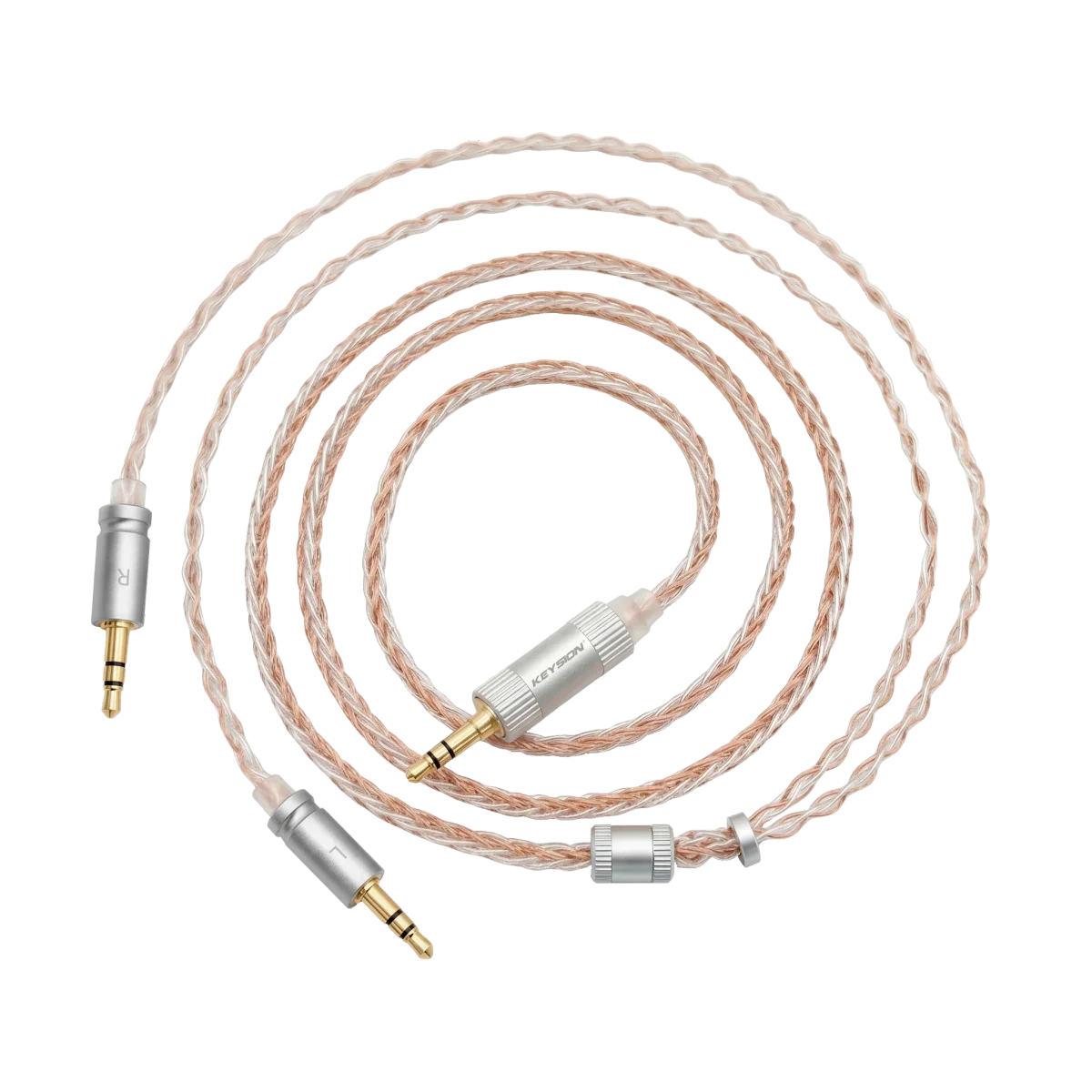
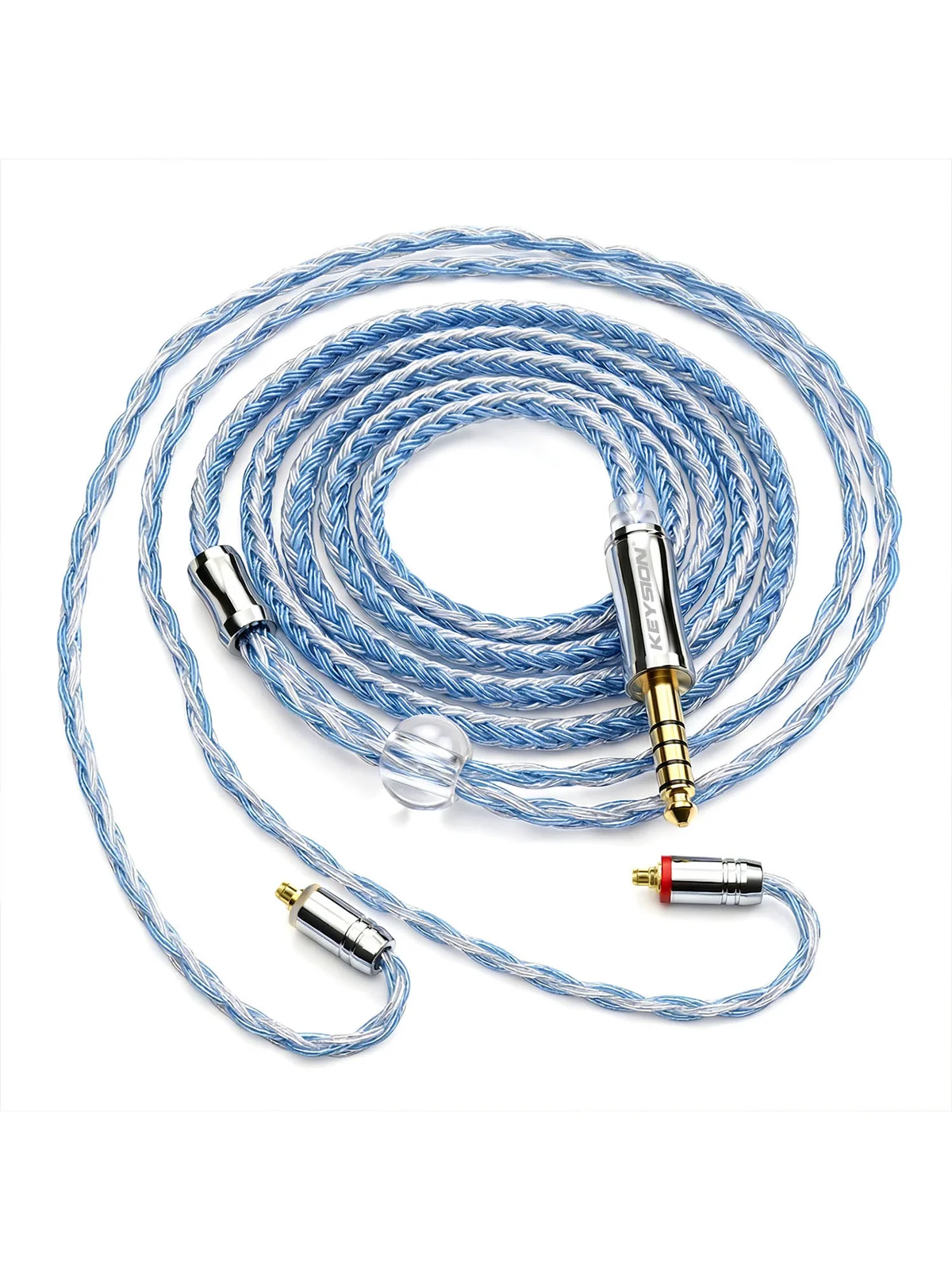
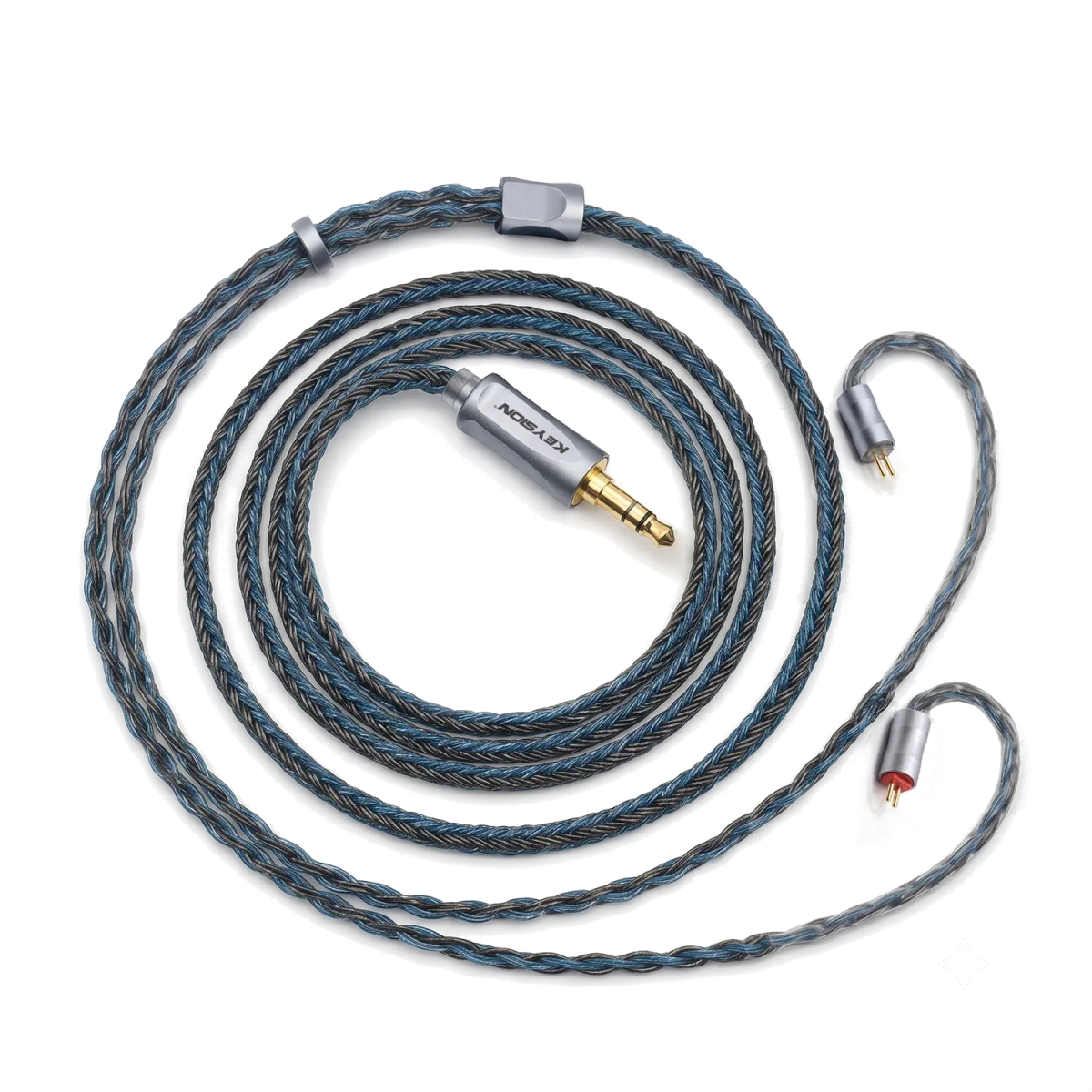
Litz wire is a structure where each strand is insulated from each other and then braided. Its two benefits are tangible:
- Electrically: High-frequency currents exhibit the "skin effect" (tending to flow near the wire surface) and proximity effect. The Litz structure allows each fine strand to share the current evenly, reducing transmission unevenness caused by these effects—the more strands (KEYSION's 24-strand wire has 216 fine strands of 0.05mm), the more obvious the effect.
- In use: Multi-strand braided wire is soft, resistant to bending, not prone to tangling, and doesn't stiffen in winter. This is the part that yields the highest return in daily experience.
So when you buy a multi-strand Litz cable, the perceptible value you get (feel, durability, high-frequency uniformity) is much more real than the purity number.
The solder joint is the final link in the entire chain. Ordinary tin solder's contact performance and aging resistance are inferior to silver-bearing solder (KEYSION multi-strand cables use WTB silver-bearing solder). Intermittent connections caused by cold solder joints and poor soldering are the number one reason for repair of upgraded cables—solder grade is more worth paying attention to than purity.
- CNY 100-150 (USD 15-23): Structure first. 16G with 16-strand Litz + 4N, spend where it counts on structure.
- CNY 150-250 (USD 23-38): Full specs. 24G with complete structure and solder; 24G-5N for those who want the top tier.
- Headphone users: S35 with bulletproof silk blend for durability first; S35-31 with 6N + three plugs to get it all at once.
FAQ
How much do conductivity rates differ between 4N and 6N purity?
The difference in impurities between 99.99% and 99.9999% is 100 times, but the absolute amounts are extremely small, translating to a conductivity difference of less than 0.1%. This is the physical basis for the difficulty in distinguishing purity in blind tests.
Is there a difference between OCC single-crystal copper and OFC?
OCC (single-crystal continuous casting) has fewer grain boundaries, often rated 5N-6N, theoretically reducing signal loss at grain boundaries; it also falls into the "measurable but hard to hear" category. The KEYSION series mainly uses OFC, spending costs on structure and solder.
How to choose between silver-plated copper and pure copper?
Silver-plated structure offers better high-frequency extension, suitable for muffled earphones; pure copper sounds thicker and warmer, suitable for already bright combinations. [MIc01](/product/kshf-mic01-cable-with-mic) is a silver-plated representative, 16G is a pure copper representative.
Does an upgrade cable need "burn-in"?
There is no reliable evidence that conductors need aging. The initial softness changes of the Litz cable come more from stress relief of the outer jacket. Just use it normally, no need to deliberately burn in.