Does Touching the Cable Make Noise? Microphonics Explained and How to Reduce It (with the KEYSION 24G Cable)
A cable that thumps when it brushes your clothes, then goes quiet the moment you stop moving, is showing microphonics. It is not a fault. Mechanical vibration travels along the solid cable into your ear canal, and the more it rubs, the stiffer the cable, or the looser the fit, the louder it gets. Fit and cable construction both reduce it, but nothing removes it completely. Here is what causes it and what actually helps.
What microphonics actually is
Sound is vibration. When the cable rubs against clothing or skin, that vibration travels up the solid cable into the ear canal. Solid-body conduction loses less energy than air, and low frequencies get boosted, so it arrives as a dull thud. The industry calls it microphonics, close to how a microphone picks up sound, except here it captures the cable's own friction.
This is not the same as hiss. Microphonics only appears when you move and stops the instant you hold still, while circuit noise is always there.
Why some cables thump and others barely do
It comes down to construction and how you wear them. A tightly braided, soft-jacketed cable damps vibration before it reaches the earpiece; a stiff single core with a thin jacket behaves like a taut string and carries every scrape far. In-ear models are more affected than over-ear ones, because the nozzle couples straight to the ear canal with no earcup to buffer.
Fit matters just as much. Over-ear routing pins the cable against the side of your head and cuts sway and rubbing; worn straight down, the cable swings and scrapes far more.
| Factor | Worse | Better | What it means |
|---|---|---|---|
| Braid and jacket | Single core, stiff, thin | Multi-strand braid, soft jacket | Braid and damping are the main fix |
| Routing | Straight down | Over-ear | Over-ear costs nothing, do it first |
| Thickness | Thicker, stiffer, carries more | Moderately soft | Thick is not better; supple wins |
| Type | In-ear, nozzle to canal | Over-ear with cup buffer | In-ear users should care more |
| Movement | Walking, turning the head | Sitting still | The scene sets how loud it is |
Put simply, the same upgrade cable worn over-ear with a soft jacket usually thumps a step less than a stiff single core.
Microphonics or electrical noise?
Both get called "noise," but the sources are worlds apart, and guessing wrong wastes money.
Microphonics only shows up when walking, rubbing, or turning your head; holding the cable or stopping silences it, and it tracks friction. Electrical noise, whether hiss or interference, is there as soon as you plug in, unrelated to motion, and changes with volume or when you switch gear. One is mechanical, the other electrical.
A quick test: wear the earphones, stay still, and listen for a few seconds. Still noisy? Chase the circuit. Silent? The cable is conducting friction.
How to reduce it
Start with routing. Over-ear costs nothing: rotate the earpiece, run the cable over the top of the ear to the back of the head, keep it pinned to the side of your head, and most sway and rubbing disappears. Next, add a clip or a shirt run to fix the slack and cut swinging.
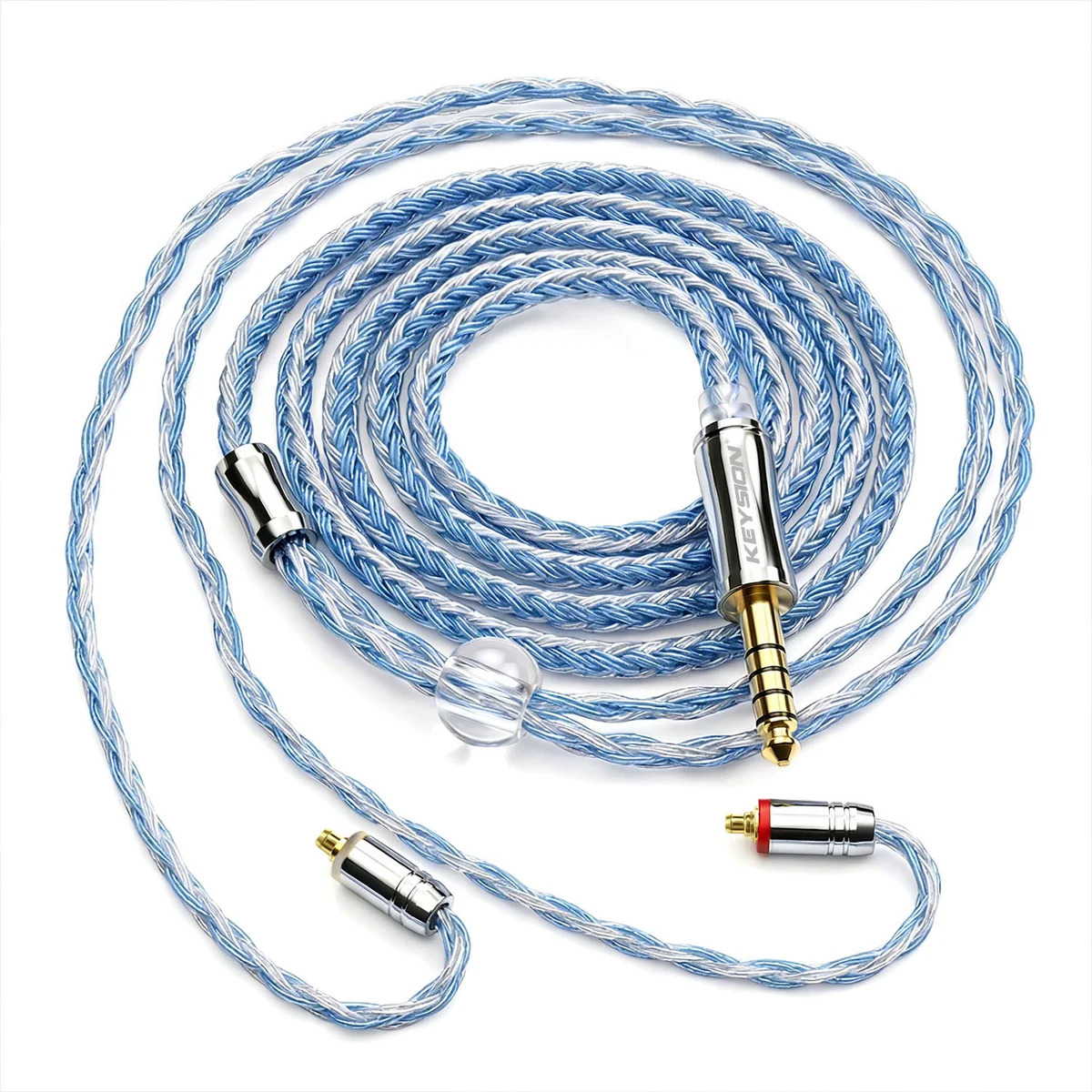
Then look at the cable. Multi-strand braids, soft jackets, and textured outer layers damp better, and multi-strand oxygen-free copper and mixed braids in upgrade cables exist for exactly this. With wired models you can also switch to a cable built for over-ear routing, or route it outside your clothing instead of against the fabric.
One claim deserves a cooler head: the evidence that cables "change the sound" is thin, but for microphonics, moving to a denser braid with a softer jacket is a change you genuinely hear. Keep those two things apart and the marketing loses its grip.
Is a cable upgrade worth it?
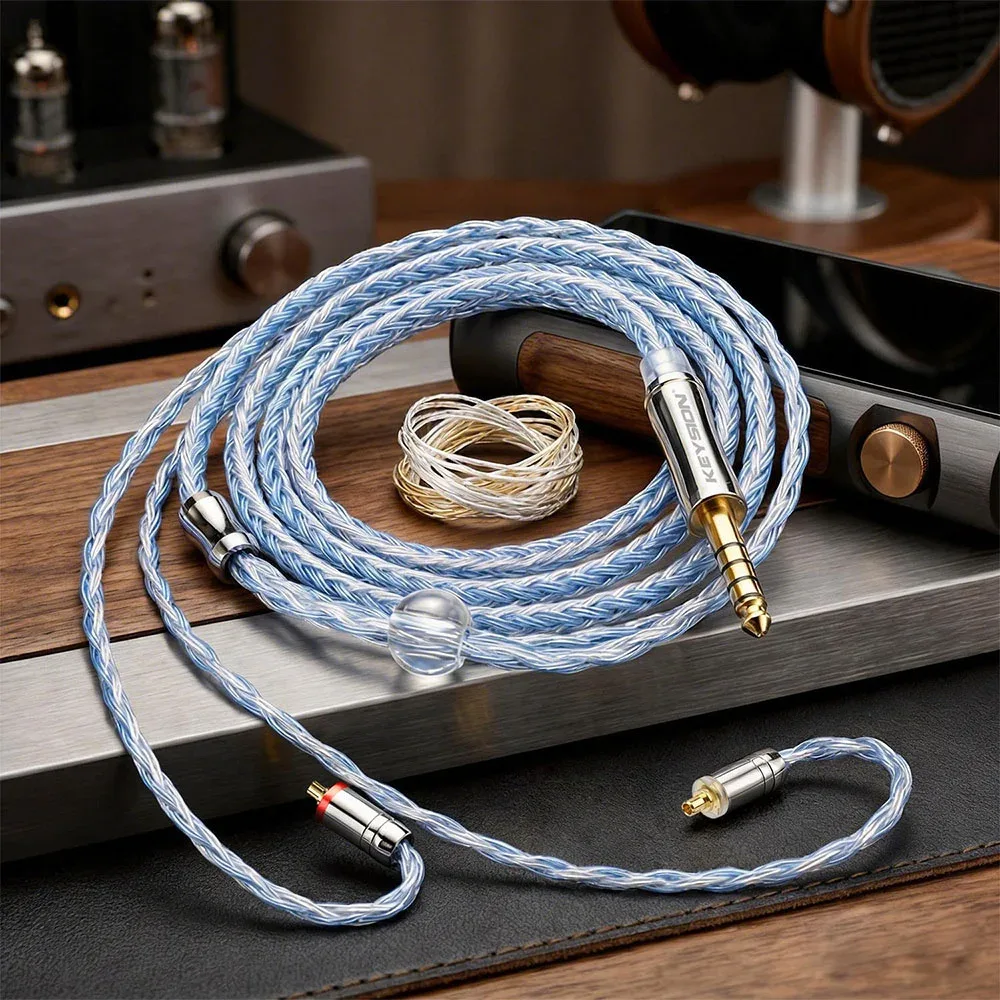
If your cable is stiff and loud, thumping on every walk, an over-ear braided cable is worth it. A multi-strand silver-plated OFC cable like the KEYSION 24G upgrade cable has a supple jacket and over-ear routing, made for long sessions, and the 24G-5N version follows the same idea on a tighter budget. If your cable is already soft and quiet, leave it and keep the money.
Keep in mind that a new cable fixes mechanical friction, not electrical noise. If it hums while you sit still, work through cable shielding and crosstalk and the sources of hiss first; a cable swap will not cure an electrical problem.
Further reading: whether cables change sound is covered in the science of cables and sound; how fit affects bass in IEM fit and seal; copper purity and geometry in OFC and Litz. Related products: KEYSION 24G cable, 24G-5N cable, YCX OTG cable.
About the author
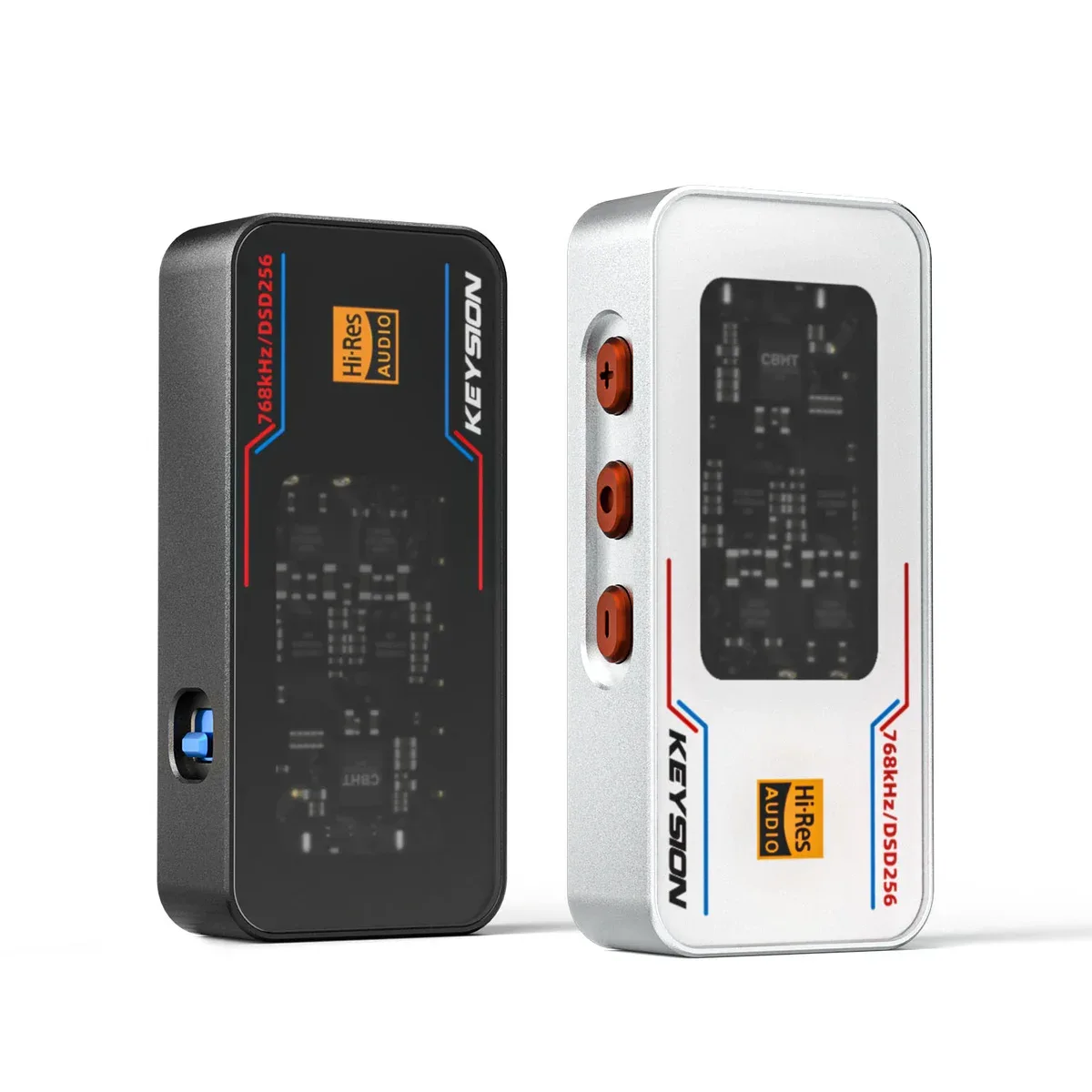
Written by the KEYSION audio team. We make headphone upgrade cables and portable DACs, testing fit and noise with the 24G, 24G-5N and YCX OTG daily. Our points on solid-body conduction and damping come from side-by-side wear tests and basic acoustics; ear shape and tip choice vary a lot, so the same cable can behave very differently between two people. Trust your own fit.
FAQ
Is the thumping a sign my earphones are broken?
No. If it stops when you hold still and changes with friction, it is microphonics, mechanical vibration through the cable, unrelated to the drivers. Only worry about the circuit if it stays noisy while you are motionless.
How do I tell microphonics from hiss?
Watch the trigger. Microphonics only appears when you walk, rub, or turn your head and stops when you do. Hiss is there as soon as you plug in, independent of motion, and changes with volume or gear.
Can I reduce it without a new cable?
Yes, start with fit. Over-ear routing costs nothing and cuts most sway and rubbing, and a small clip to fix the slack makes it even quieter.
Does an upgrade cable really help?
For microphonics, a denser braid with a softer jacket is a change you hear. But it fixes mechanical friction, not electrical noise, so it will not help if the noise is there while you sit still.
Why is over-ear routing quieter?
It pins the cable above the ear and against the side of your head, so the cable sways less and rubs clothing less, which means less vibration reaching the ear canal.
Related products
Related articles