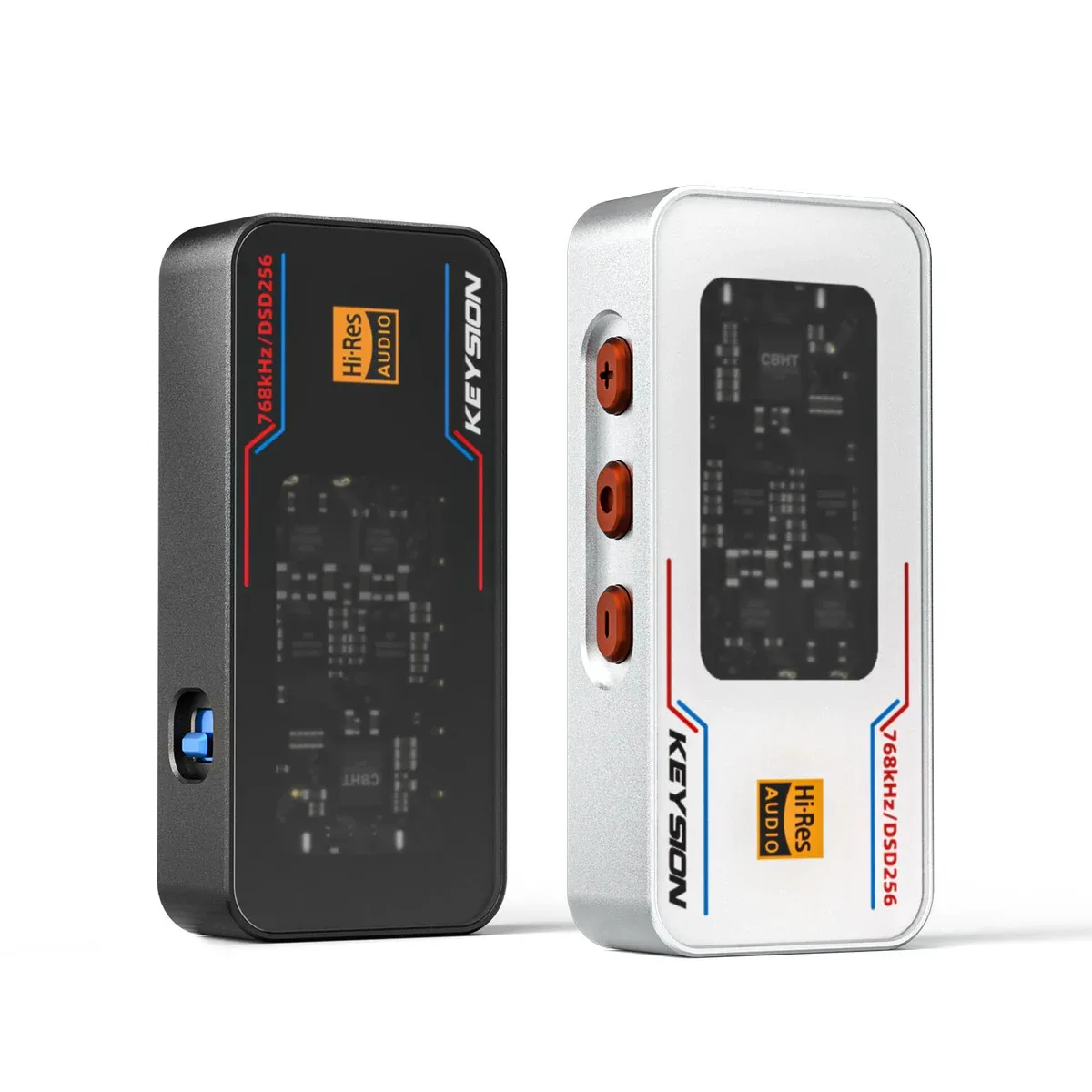
Digital vs Analog Volume: Does Turning Down the Volume Actually Lose Sound Quality? Measured on the KEYSION 02 Pro
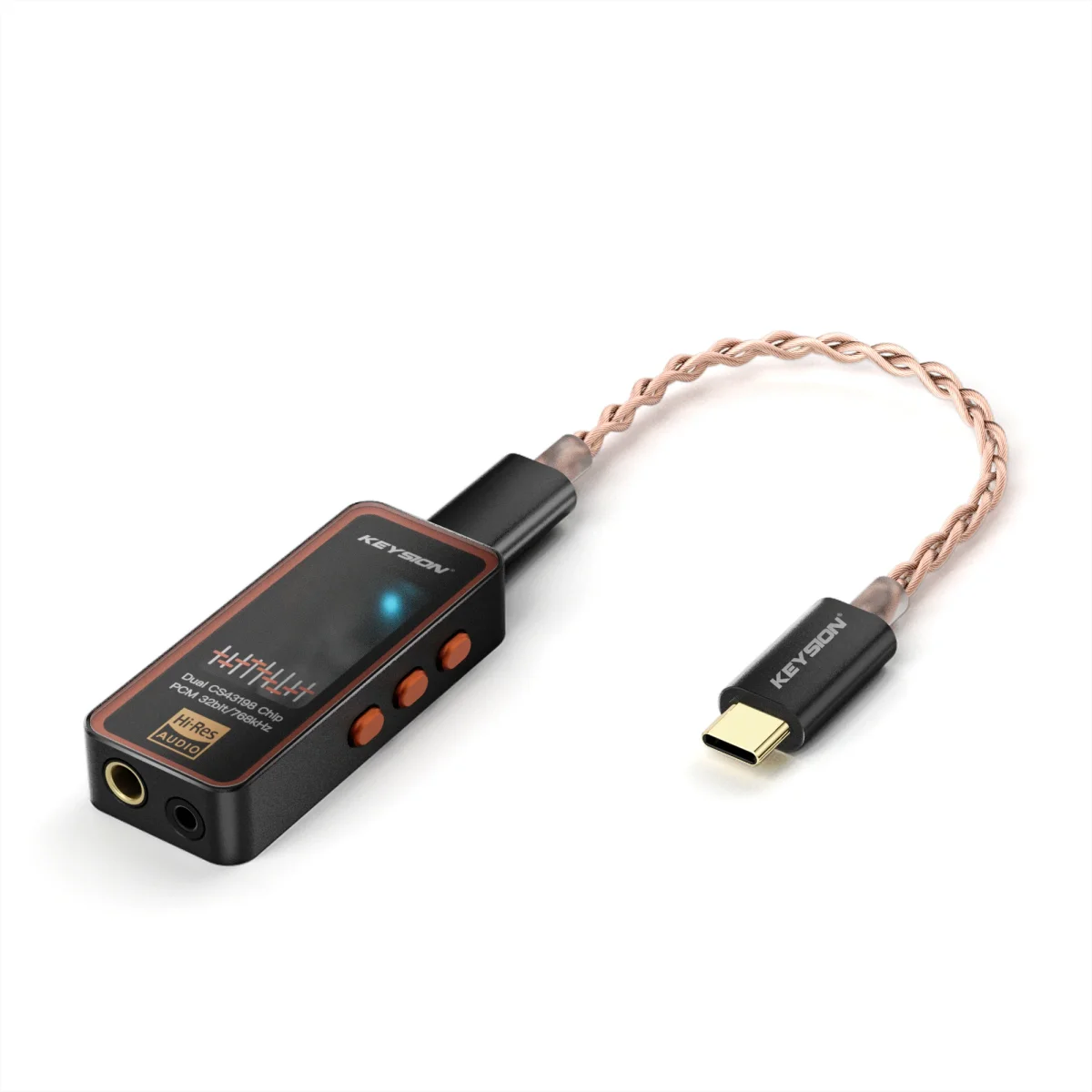
Digital and analog volume are two very different ways of doing the same job, but the conclusion is usually simpler than the mystique suggests. On modern DAC amps, the risk of digital volume eating into bit depth is thinned out considerably at high sample rates, while a cheap potentiometer can actually bring in background noise and left-right channel mismatch on the analog side. Using KEYSION 02 Pro, 02, and 01 as examples, this article explains how each works and when it's actually worth worrying.
Here's the short version up front: in everyday listening, adjusting volume within a normal range almost never adds audible degradation. What you should actually watch is a noisy source (background hiss) or gain set too high — that has little to do with how the volume is handled.
| Aspect | Digital volume | Analog volume | What this means |
|---|---|---|---|
| How it works | Scales the sample values in the signal | Changes voltage with a potentiometer/attenuator | The former edits data, the latter changes a physical quantity; the principles are entirely different |
| Resolution limit | Bit depth gets eaten; details coarsen at low volumes | More linear in the low-volume range | Digital worries about lost detail, analog about noise and mismatch |
| Common pitfalls | Software reduces too much; the output stage boosts again | Worn potentiometer causes left-right imbalance | To judge a real change in sound, first tell which pitfall you're in |
Digital volume, putting it simply, multiplies each sample value in the signal by a factor below 1 before you hear it. It sounds clean, but once the values shrink, the bit depth actually in use drops. Cut a 16-bit recording's volume in half and the effective resolution lands below 16 bit — that's where the "turning down digitally loses quality" idea comes from. The mechanism is most typical in a PCM chain; DSD looks slightly different because of how its density is processed.
The good news is modern gear generally carries plenty of resolution. Take a high-rate DAC amp like the KEYSION 02 Pro: the signal already has spare bit depth, and trimming by 20%–40% in daily use still leaves you far beyond what the human ear can resolve. In other words, this theoretical trap is hard to actually trip over in most portable setups.
Analog volume uses a physical potentiometer that changes the actual voltage reaching the headphones. It sounds more "physical", more lossless, but a potentiometer is not an ideal component: the expensive ones are fine, but cheap pots often have left-right imbalance in the mid-to-low range, and wear over time, producing a scratchy hiss. Residual contact resistance and dust are its two most common annoyances, and both are cheap to fix or replace.
So analog is not a universal answer. It doesn't care about digital problems like bit depth, but it has to live with the physical imperfections of the parts. Truly high-end analog designs swap the pot for stepped discrete resistors and relays, which is neither common nor cheap in small portable devices. More steps give finer gradations, but cost and size go up with them.
The key variable is the headroom in the signal itself. Cutting volume by half in a 16-bit legacy file versus a high-resolution file leaves effective resolution on completely different scales. The richer the sample rate and bit depth, the closer digital attenuation's bite comes to being negligible. Carry that idea over into the whole chain and both the front end and the back end matter.
This is also why, in this article on sample rates, I argue that rather than obsessing over how volume is adjusted, you should first get the source signal's specs right: the truth about sample rates. A thin source can't be recovered downstream no matter how you adjust things.
Frankly, most people blame the wrong thing when they say "lowering the volume got worse". Too much gain amplifies the background noise along with the signal — especially obvious with sensitive IEMs. The volume setting is just the visible symptom. Checking whether the gain setting is appropriate before blaming how the volume is adjusted is usually the right order. On the same source, switching to a more sensitive IEM can turn noise from "audible" into "grating".
I've broken down the relationship between gain and volume: gain is the amplification factor, volume is the loudness control. The former enlarges the useful signal but also the noise floor. Sensitive IEMs want low gain; only low-sensitivity headphones need more — advice I give again and again.
Three quick, practical habits. First, prefer the hardware's physical volume and keep the software volume relatively high. Second, lower the volume before unplugging your headphones so the next boot doesn't startle you. Third, when the sound feels off, rule out noise and gain before blaming the volume. All three take minutes and need no extra tools.
The human ear's sensitivity to volume isn't linear either — at low levels it's less sensitive to bass, which is one reason many people feel the low end is lacking at night. The basics of loudness compensation are here. To close in one sentence: on entry-level products like the KEYSION 02 or the 01, any volume adjustment in your normal range sounds basically identical — spending that attention on choosing headphones pays off far more than scrutinizing the volume mechanism.
This article was written by the KEYSION Acoustics Lab, which has long measured the volume chains and listening impressions of DAC amps like the 02 Pro, 02, and 01. We like to keep "theoretically it loses a little" separate from "in practice you can't hear it", and we don't argue for rejecting a whole chain over a theoretical bit-depth loss.
To dig deeper into sample rate — the factor upstream of bit depth — read the truth about sample rates; to understand how gain affects the noise floor, see how to switch high and low gain. We hand you the tools; the conclusion is yours to hear.
FAQ
Does turning the digital volume down cause sound-quality loss?
In principle yes, because resolution (bits) is consumed. But on high-rate, high-bit-depth gear, trimming by 20–40% daily still leaves effective resolution far beyond the ear's limit, so you practically can't hear it. The more common degradation comes from background noise or too much gain, not the volume itself.
Is analog volume better than digital?
There's no absolute answer. Analog is more linear and doesn't fear bit-depth issues, but cheap potentiometers can have left-right imbalance or wear over time. Digital has a theoretical resolution limit that modern gear dilutes heavily. Don't mythologize either one.
Why does the sound seem to change when I adjust volume on my little dongle?
Usually it isn't the volume itself. First check whether the gain stage is too high and amplifying noise, then look at whether the IEM's sensitivity matches the source. Differences tied to volume changes are often a normal result of loudness compensation and different band sensitivities.
Is it normal for bass to feel different when I raise or lower the volume?
Yes. The ear's sensitivity to different bands varies with loudness — at low levels it is less sensitive to bass, so lowering the volume at night often makes bass feel lacking. That's a hearing characteristic, not necessarily a device or volume-mechanism problem.
Related products
Related articles