How to Spot Swapped Channels and Inverted Polarity? A Check Order for 2-Pin Cables Like KSHF-3in1
- 01 What is the difference between a channel swap and inverted polarity?
- 02 What does one inverted channel sound like?
- 03 Why is it harder to hear on headphones?
- 04 How do I check with a mono track?
- 05 How do I check a 2-pin cable with a multimeter?
- 06 What goes wrong with a 4.4 mm balanced plug?
- 07 I only noticed after changing the cable. What now?
- 08 When is this not worth fixing?
- About the author
Swapped channels and inverted polarity are two different faults. A channel swap exchanges left and right, so a mono track jumps to one side. An inverted polarity flips the sign of one signal path: invert both channels and most people hear nothing, invert only one and mono bass cancels. On headphones this is far subtler than on speakers. Measure continuity first, then argue about what you hear.
01 What is the difference between a channel swap and inverted polarity?
A channel swap exchanges L and R. The hi-hat on the left ends up on the right, and any track reveals it within seconds.
Polarity inversion multiplies one signal path by -1. Invert both paths and you have multiplied the whole recording by -1, which is inaudible on headphones. Invert one path and anything shared by both channels cancels.
Short version: a swap is the wrong place, an inversion is the wrong sign.
02 What does one inverted channel sound like?
The damage shows up where the two channels carry the same content. Mono bass, centred vocals and kick drums suffer first: bass turns thin, the vocal image goes vague, as if a veil sits in front of it.
On a normal stereo pop or electronic track the two channels differ a lot, so cancellation is small and the change is easy to miss. Some recordings invert one instrument on purpose; that is not a fault.
A counter-intuitive part: inverted polarity is obvious on speakers and much harder on headphones. Each ear gets its own channel, the two signals never add in air, and cancellation happens inside the auditory system instead.
03 Why is it harder to hear on headphones?
Two speakers share the same air. An inverted pair cancels physically in the room, and bass disappears first.
Headphones keep the channels apart acoustically, so nothing cancels in air. What is left is binaural processing: the brain uses timing and phase between the ears to place sounds. Once a mono component is inverted, the localisation cues weaken, and the sound feels diffuse rather than silent.
For polarity, a meter beats your ears. Most people will not notice a single inverted channel in daily listening.
04 How do I check with a mono track?
Find a genuinely mono recording: old jazz, a mono radio broadcast, or sum the two channels in Audacity.
With correct wiring the sound sits in the middle of your head. Invert one channel and the centre widens, bass thins, drums go hollow.
Then swap the earbuds between your ears. If the odd feeling follows the swap, the signal or cable is at fault. If it stays on the same side, the IEM or your ear is the more likely cause.
05 How do I check a 2-pin cable with a multimeter?
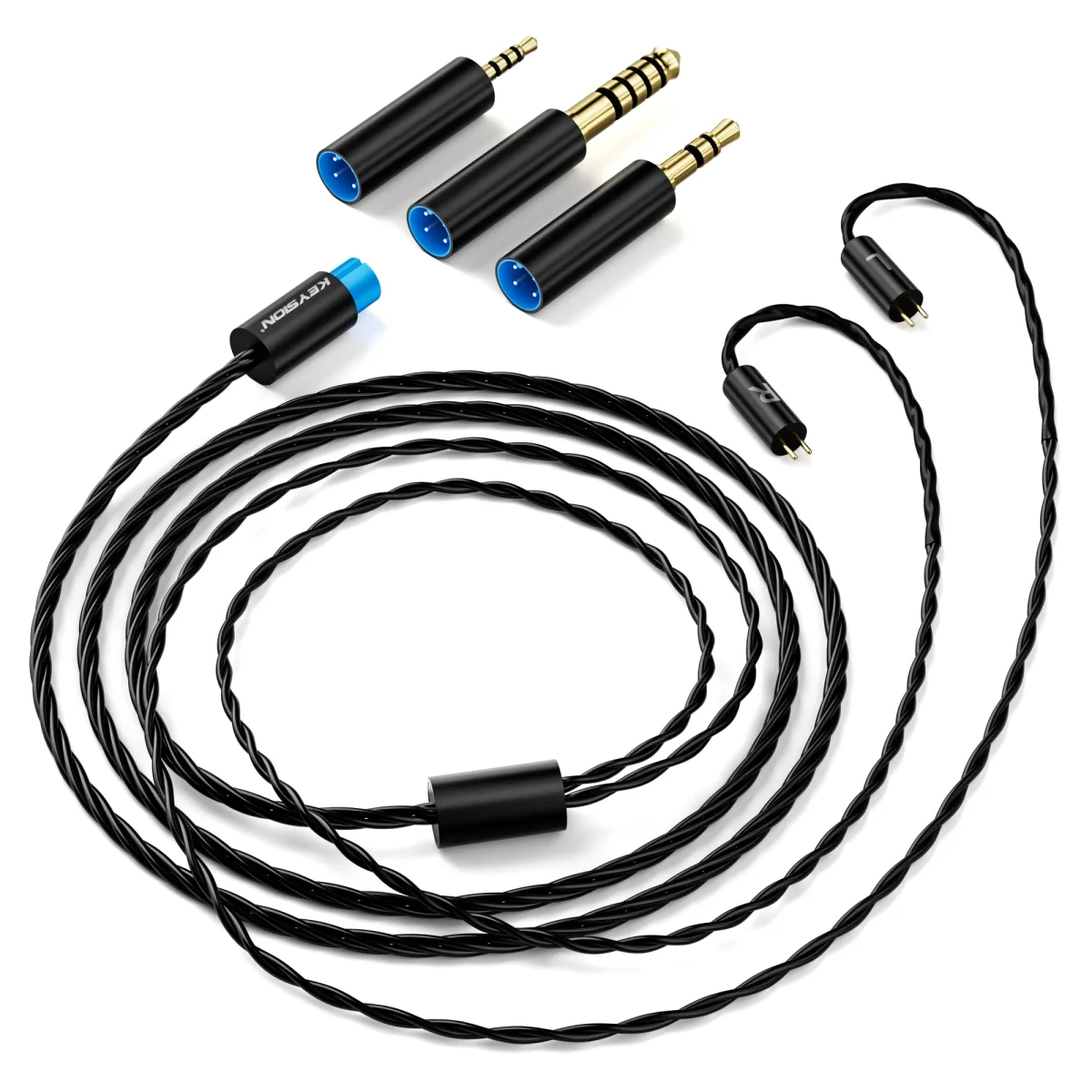
Set the meter to continuity or resistance. On a 3.5 mm plug, the tip is left, the ring is right, the sleeve is ground. On a 4.4 mm balanced plug, the tip is L+, ring one is L-, ring two is R+, ring three is R-.
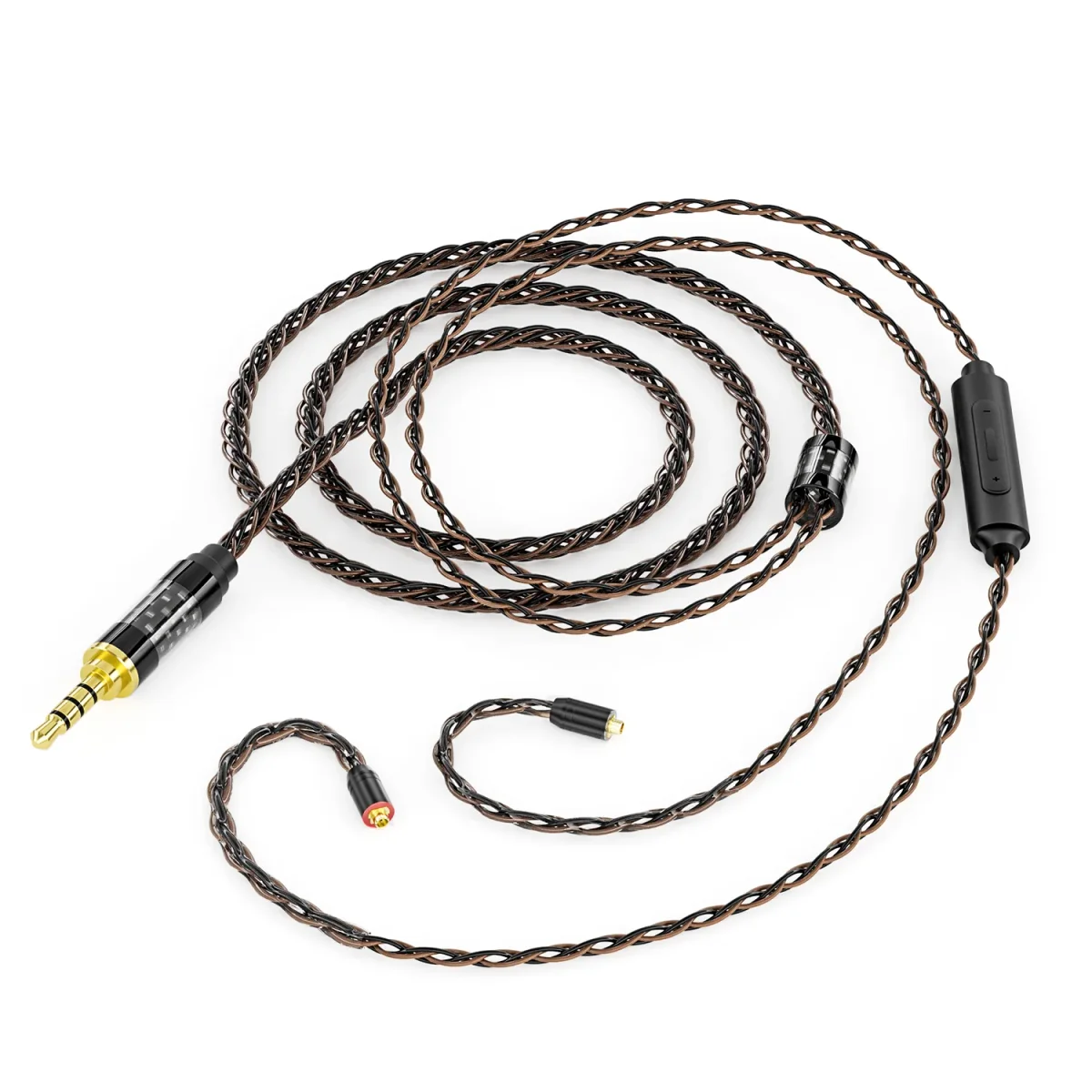
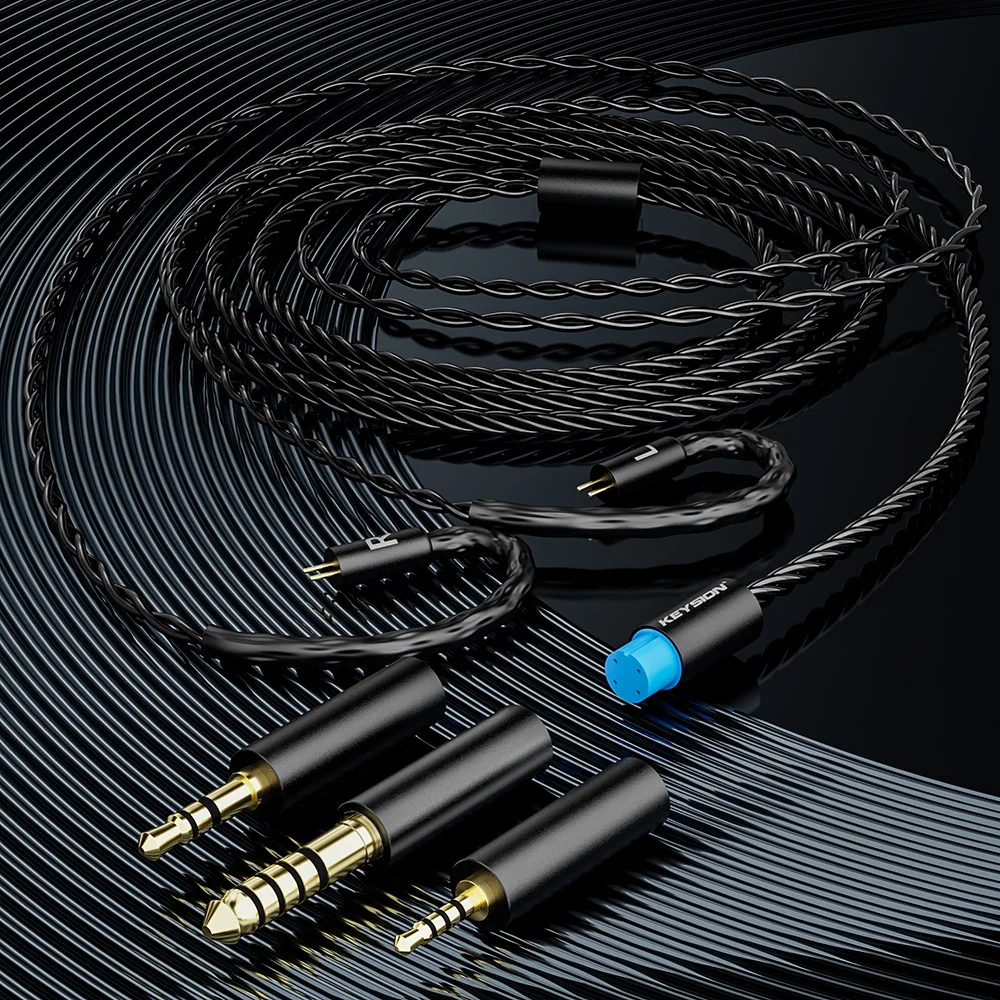
Take a 0.78 mm 2-pin cable such as KSHF-3in1. Probe from the plug tip to each pin on the left connector: the one that beeps is L+, the other stays open. Repeat for the right channel from the ring.
The two channels must never conduct to each other. A reading of 0 ohm, or a few tens of ohms, means a short or strands touching, and that cable has a bigger problem than polarity.
| Symptom | More likely cause | One-minute check | What it means |
|---|---|---|---|
| Mono vocal sits centred but sounds vague, bass thin | One channel inverted | Use a mono track, swap earbuds left to right | Cancellation only hits shared content, so stereo songs hide it |
| All sound sits on one side | Channels swapped or one side broken | Swap the earbuds between ears | If it follows the swap, wiring is the problem |
| Both channels feel "inverted" | Absolute polarity flipped | Compare with a known-good source | Mostly inaudible on headphones, leave it |
| Noise or hiss as soon as you plug in | Short between strands or poor shielding | Check continuity between channels | Fix the short first, polarity later |
| One side odd on a 4.4 mm output | Hot and cold swapped on that channel | Read the plug pinout | That channel is inverted, not swapped |
A cable with a remote such as KSHF-MIc01 has one extra mic pole. On TRRS the sleeve is ground and ring two is the mic, so do not mistake the mic pole for the right channel.
06 What goes wrong with a 4.4 mm balanced plug?
Each channel in a balanced link has a hot and a cold wire. Swap hot and cold on one pair and that channel becomes inverted, not swapped.
Swap the two channel pairs and you get a true channel swap. The two faults behave differently on quiet mono material, so name the fault before you fix it.
There is also the fake balanced socket: a 4.4 mm connector wired single-ended inside, with the cold pin floating or grounded. It will not invert anything, but it has no common-mode rejection, so long cable runs behave differently from a real balanced output. More on that in true vs fake balanced.
07 I only noticed after changing the cable. What now?
Work out which fault you have. One inverted channel points to pin-to-plug mapping. A full swap points to the left and right markings.
On cables with removable pins, swap the two wires of that channel. Soldered cables need a retermination, and the risks are covered in cable retermination.
If you would rather not touch the cable, swap channels in software. Most players have a channel swap option that fixes left and right temporarily. Polarity inversion cannot be fixed that way without digital processing.
Digital inversion costs nothing in a lossless chain, and lossy encoders are not phase sensitive, but doing it is usually unnecessary.
08 When is this not worth fixing?
If you only listen on a laptop, only use mono voice, and never record, an inverted channel changes little. Three groups do need to care: people who solder their own plugs, live sound engineers, and anyone using headphones as a mixing monitor.
The last group gets caught most often. A mono fold-down check exposes the problem, while headphone monitoring sounds fine.
About the author
This article was written by the KEYSION audio content team. We checked continuity from plug to pin on KSHF-3in1, KSHF-MIc01 and KSHF-S35 with a multimeter, and listened to inverted channels using mono pink noise and a 1 kHz sine. The firmest conclusion: guessing polarity by ear on headphones has a low success rate, and a meter is more reliable. Pin assignments here follow the common 3.5 mm TRS and five-pole 4.4 mm conventions. Vendors differ, so check the markings on the actual part before rewiring.
FAQ
Is a channel swap the same as inverted polarity?
No. A swap exchanges left and right and is obvious with any track. Inverted polarity flips a signal sign and only cancels shared mono content. Check the L/R markings for a swap, and measure continuity for polarity.
Can I hear one inverted channel on a pop song?
Usually not. Stereo pop differs a lot between channels, so little cancels. Mono bass, centred vocals and live recordings expose it, and headphones make it harder than speakers.
Can a phone test headphone cable polarity?
A phone helps only roughly. Continuity needs a real multimeter. A player channel swap can confirm left/right, but polarity cannot be judged by software.
On a balanced output, does a wrong wire invert or swap channels?
Swapping hot and cold of one pair inverts that channel only. Swapping both pairs is a true channel swap. Name the fault before you touch the wiring.
If I cannot hear a difference, should I fix it?
Not for daily listening. People who solder their own plugs, run live sound or mix on headphones should care, because a mono compatibility check exposes it.
Related products
Related articles