
Is Balanced Always Better? Single-Ended vs Balanced, When the 4.4mm Output Really Wins
- What's physically different between single-ended and balanced?
- Is it true that balanced outputs more power?
- When does balanced actually help?
- When is single-ended enough?
- Balanced cables: do you need to swap your upgrade cable?
- How to confirm your device is truly balanced?
- Bottom line: needs first, connector second
"Balanced sounds better" is one of the most repeated claims in headphone circles. The conclusion first: balanced output is not a sound-quality upgrade switch. Its real advantages are just two — higher voltage swing and lower crosstalk — and they only become audible in specific situations. For most people with low-impedance IEMs on short stock cables, the difference between the 4.4mm balanced jack and the 3.5mm single-ended jack is one that a blind test would leave most listeners unable to name.
Single-ended transmission carries both channels on one signal wire with a shared ground, so the two channels share the ground return path and resistance in the ground wire introduces crosstalk. Balanced gives each channel its own signal path (positive and inverted phases), which in theory lowers crosstalk and improves common-mode noise rejection.
"Balanced" at the headphone end usually means one of two things: true balanced (each channel has its own amplifier path, driven in opposite phases) or separate grounding (each channel gets its own ground wire but the amplification is still single-ended). The benefit of the latter is mostly ground isolation; voltage swing does not change. The 4.4mm plug itself only defines five contacts (L+/L-/R+/R-/ground), and the shape of the plug does not determine the circuit behind it — many people misunderstand this. For more on plugs, see our 3.5mm, 4.4mm, 2.5mm plug guide.
Yes, with caveats. In true balanced drive, each channel is driven by two amplifier stages, so voltage swing can double at the same supply voltage, and power into the load can theoretically reach about 3-4x the single-ended figure. For high-impedance headphones, that is a real gain in headroom.
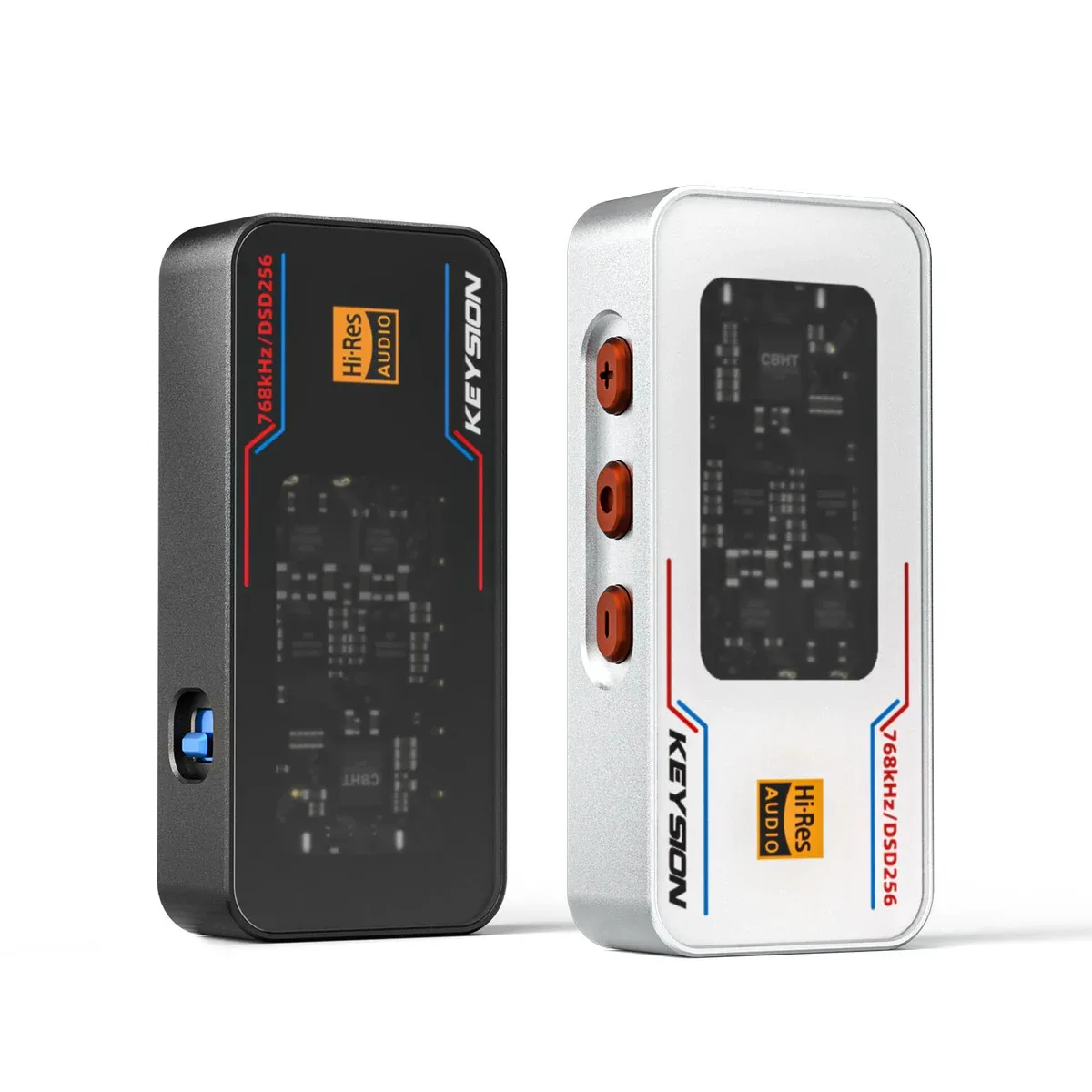
For low-impedance, high-sensitivity IEMs, though, power was already surplus, and balanced's benefit lands mostly on SNR and crosstalk. Numbers from KEYSION: the 02 Pro measures 130dB SNR on the 3.5mm single-ended output and 135dB on the 4.4mm balanced output; the 02 measures 125dB versus 130dB. The balanced jack has a lower noise floor and a bit more headroom, but the gap sits at the "visible in measurements, subtle in listening" level — far from a night-and-day difference.
Three scenarios are worth going balanced for:
One, driving high-impedance headphones (300Ω class). Voltage swing is the bottleneck here, and balanced directly raises loudness and dynamics. This is where the gain is largest.
Two, long cables or electrically noisy environments. The noise-rejection advantage only becomes obvious on cables beyond about 1 meter — think stage setups or desktop cable runs with lots of crossing wires.
Three, high-sensitivity IEMs for users who are sensitive to noise floor. Balanced outputs usually run a lower noise floor; paired with a quiet front end like the KEYSION 02 Pro, the difference in a quiet room is easier to hear.
Short cables, low-impedance high-sensitivity IEMs, quiet surroundings — if all three apply, most people won't hear the difference between single-ended and balanced.
One factor is easy to overlook: balanced is usually louder. The ear naturally prefers louder sound, so the gap narrows noticeably once you match the volume. Align the levels on both outputs before comparing, or loudness will skew the conclusion.
Going balanced requires a cable with the matching plug, but the cable itself is not the source of "balanced sound". The noise-rejection benefit of balanced transmission comes from the amplifier circuit and the plug definition; as long as the contacts are reliable and the shielding is sound, the cable carries a balanced signal in full.
Plenty of "balanced upgrade cables" on the market advertise silver-plated or oxygen-free copper. Those materials affect the sound no differently than in single-ended setups. What cable specs actually mean is covered in our 4N, 5N, 6N OFC and Litz guide. On a limited budget, spending on headphones and the front end first beats chasing a balanced upgrade cable.
Three steps:
- Check whether the spec sheet declares separate amplifier channels (e.g. "4-Channel" or independent DAC/AMP per channel).
- Compare the SNR figures of the single-ended and balanced outputs; a clear gap suggests separate circuits.
- Match the volume before listening, to rule out loudness bias.
A "balanced jack" without independent amplifier channels is just a different plug shape — output power will not improve.
Balanced is not a synonym for "more advanced"; it is an engineering solution to specific problems. For long cables, big headphones, and noisy environments, the balanced jack earns its place; for short cables and low-impedance portables, single-ended is plenty — the KEYSION 02 already delivers 125dB SNR on its 3.5mm output. When money is tight, upgrading the headphones or the source usually pays off more than chasing a balanced jack.
This article was written by an audio engineer at the KEYSION lab. Data comes from official specs and public measurements; individual units vary, and the listening impressions are subjective — treat them as a reference, not a verdict.
FAQ
Is balanced always better-sounding than single-ended?
Not necessarily. The advantages of balanced are higher voltage swing and lower crosstalk, which matter for high-impedance headphones and long cables. With short cables and low-impedance IEMs, most people cannot tell them apart in a blind test. The "sounds better" impression from balanced being louder shrinks once the volume is matched.
Does a 4.4mm plug mean true balanced?
No. The 4.4mm plug only defines 5 contacts; the plug shape does not determine the circuit inside. True balanced needs a separate amplifier channel per side — check whether the spec sheet declares independent channels, or compare the SNR figures of the single-ended and balanced outputs.
How much more power does balanced output?
In true balanced drive, voltage swing can double, and power into the same load theoretically reaches about 3-4x the single-ended figure, depending on the supply architecture. For low-impedance, high-sensitivity IEMs, power was already surplus, so the gain is limited; for 300Ω headphones, it is a real improvement.
Do single-ended-to-balanced adapter cables help?
Basically no power gain. An adapter just rearranges the single-ended signal onto the 4.4mm contacts; the signal remains single-ended and crosstalk does not improve. To get the benefits of balanced, you need a front end with independent amplifier channels.
When is single-ended enough?
When short cables, low-impedance high-sensitivity IEMs, and a quiet environment all apply, the audible difference between single-ended and balanced is very small. For those users, upgrading the headphones or the source pays off more than chasing balanced.