IEM Filter Mesh and Damping Foam: How Much Can One Small Screen Change?
Yes, the sound changes, but within clear limits. Swapping a 200-mesh filter for 500 mesh usually costs 1-3dB above 10kHz, and bass moves by less than 1dB. Cleaning a filter blocked by earwax or oil can bring 3-6dB back in the mid-treble, a bigger change than changing mesh. Damping foam resists airflow in the nozzle and alters bass weight and transients, not some hidden tuning trick.
What do the filter and the foam each block?
The mesh starts as a dust guard and ends up an acoustic resistor. Hole size and open area set airflow resistance; higher resistance slows pressure changes in the cavity and shifts how much top and bottom end survives.
Foam in the nozzle or rear chamber absorbs mid and treble and adds damping. The same foam in the front nozzle and in the rear chamber does not behave the same.
How much difference between 200, 350 and 500 mesh?
Mesh count is holes per inch, and hole size follows from it. 200 mesh is about 74μm, 350 mesh about 44μm, 500 mesh about 30μm. Smaller holes lower the open area and raise airflow resistance.
| Spec | Typical hole size | Open area | Treble change (subjective) | Bass change | What this means |
|---|---|---|---|---|---|
| 200 mesh | about 74μm | about 34% | basically unchanged | basically unchanged | Common stock choice, free airflow, grain can show |
| 350 mesh | about 44μm | about 30% | about -1 to -2dB above 10kHz | within 0.5dB | A middle setting, trims sibilance without choking |
| 500 mesh | about 30μm | about 25% | another 1-3dB down, less sibilance | 0.5-1dB | Good for vocals and harsh peaks, at the cost of dynamics |
| Clogged old mesh | effective holes under half | below 15% | up to 3-6dB lost | bass stands out more | Clean it first; do not rush to replace |
| One layer of foam | porosity about 60-80% | depends on thickness | -2 to -5dB mid/treble | +0.5 to +1.5dB | Thicker sound, slower transients |
Which layer gets the foam?
Foam inside the nozzle mostly absorbs treble, and the closer it sits to the driver the stronger the effect. Foam in the rear chamber works more on airflow and bass damping; that is where a looser or tighter bass comes from.
Thickness matters more than area. Going from 2mm to 4mm of the same material roughly doubles mid-treble loss, while a wider disc changes little.
Check with the maker before opening an IEM. Some models glue the mesh and foam in place, and prying them out voids the warranty and can deform the nozzle.
Clogged, dirty or broken?
A clog shows up as slowly falling volume, left-right mismatch and treble dulling first. Oil and earwax collect on the front mesh; wipe gently with an isopropyl swab and let it dry fully before refitting.
A torn mesh shows up as sudden rustling or harsh treble. Cleaning will not help, so replace the screen.
Swapping left and right is the quickest check. Trade the two meshes; if the dull side follows the mesh, the mesh is the cause. If the dull side stays in the same shell, look at the driver, cable or source.
How to compare after a swap
Same source, same pair of tips, same volume. Listen ten minutes with the new mesh, then swap back. Removing and refitting tips changes the seal, so reseat them firmly each time.
A 1-2dB shift is easy to bias with expectation. Have someone else do the swap so you do not know which mesh is fitted; only then is the result trustworthy.
Three common mistakes
A common assumption: denser mesh means more resolution. Dense mesh removes treble energy; it does not add detail, which comes mostly from the driver, chamber and source.
Another: more foam means warmer sound. Extra foam lifts bass weight and slows transients; it sounds thicker while flattening the original layering.
A third: ignoring tips and vents. The mesh is one short section of the airflow path, and a leaking tip or blocked vent usually changes more. Swap the tips first to tell them apart.
Care routine
Inspect the mesh once a week and look for an oil film under a loupe. After exercise, let the ear canal dry before putting the IEMs back.
Keep a pack of the same mesh on hand; it is easier than repeated cleaning. Never poke the nozzle with a sharp tool, since balanced armature drivers are fragile.
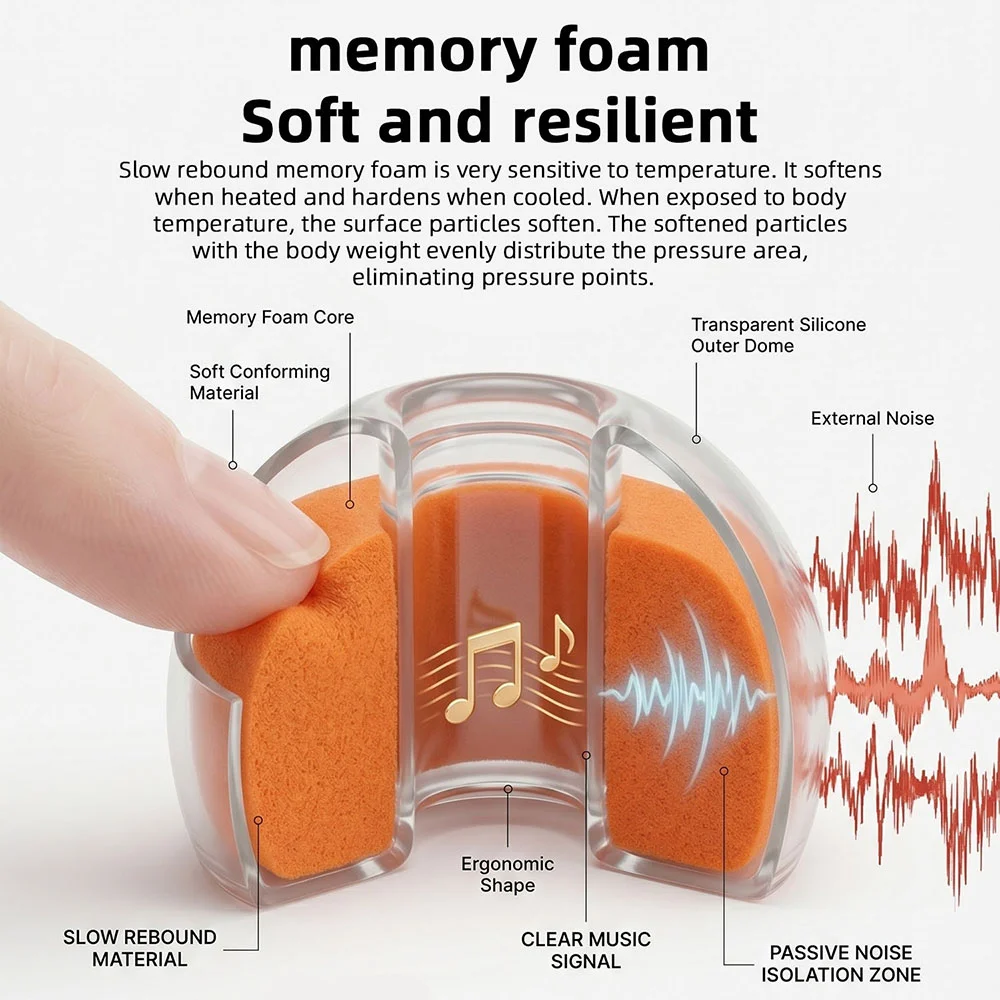
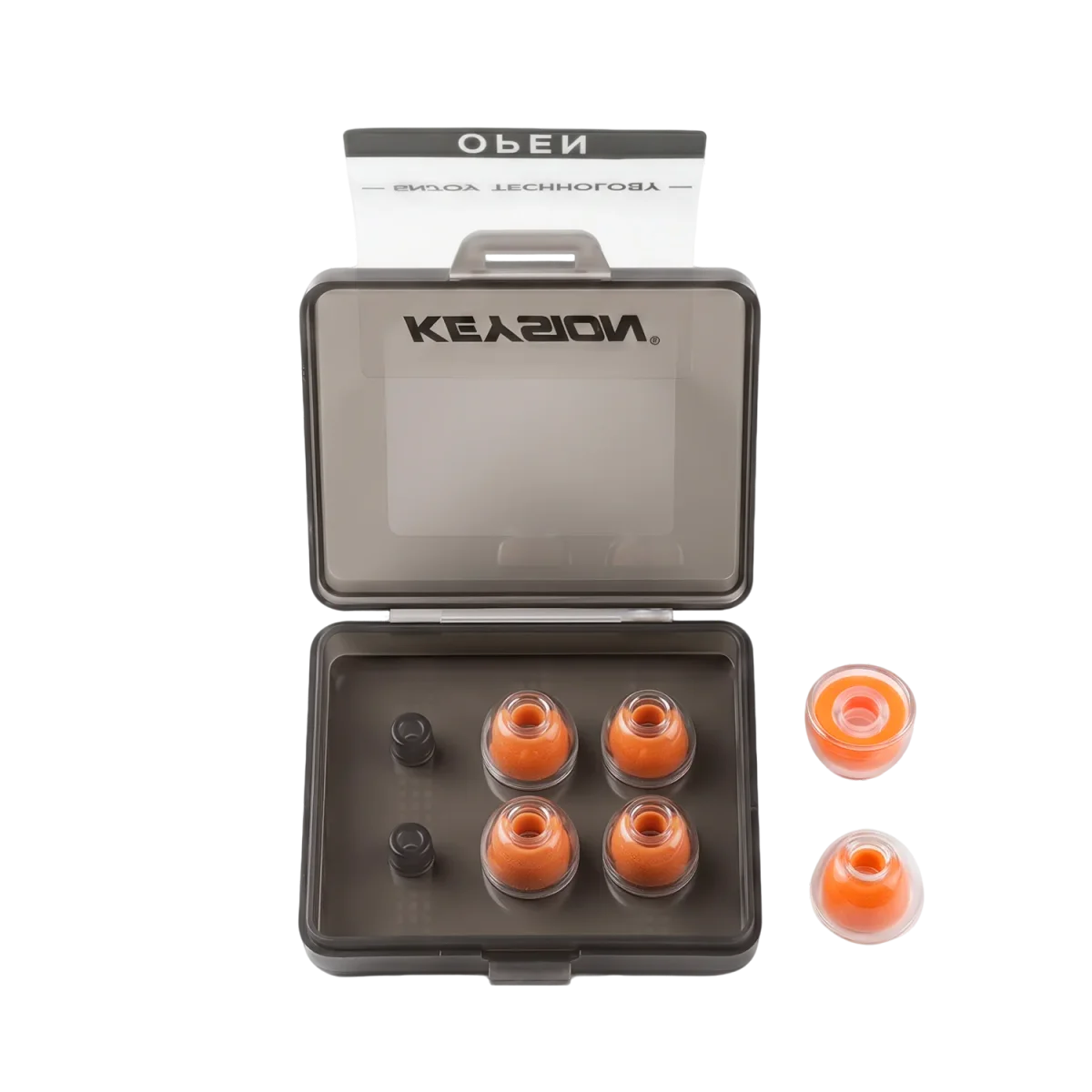
After refitting, listen at low volume to check for whistling or channel imbalance before normal use. Slow-rebound tips like the 30A memory foam tips improve the seal but also change treble, so compare with one fixed pair.
Background reading: vents and bass in IEMs, tip materials and sound, fit, seal and listening, multi-driver crossover basics. For the source, a low-noise DAC such as 02 Pro makes a 1-2dB treble difference easier to hear.
About the author: written by the KEYSION acoustics content team. These notes come from routine teardown, cleaning and left-right swaps, not anechoic chamber measurements. Chambers differ a lot between drivers, so treat the numbers as orders of magnitude and trust your own ears on any specific pair.
FAQ
How often should I replace IEM filter mesh?
It depends on use. With daily commuting and oily ear canals, check every 3-6 months, and replace at the first oil film or drop in volume. Cleaning only rescues light clogging; deformed or torn mesh should go.
Will a denser filter make the sound dull?
It trims treble by roughly 1-3dB. Sibilance drops, and so do air and transient snap. People who like a bright signature may not enjoy 500 mesh.
Can I add damping foam myself?
Some models allow it, others are glued shut. Check nozzle space and warranty first, and add only 1mm of foam at a time, then listen for a week before deciding.
Can a clogged filter cause channel imbalance?
Yes. One clogged side loses treble first and runs slightly quieter, which reads as a weaker channel. Swap the two meshes to confirm.
Do I need to recalibrate volume after changing mesh?
The equipment does not need recalibration, but match levels when comparing. Mesh changes land around 1-3dB, and mismatched levels exaggerate the subjective difference.
Related products
Related articles