IEMs or Over-Ear Headphones: How Do You Choose Between the Two? (with the KEYSION 02 Pro and 30A Eartips)
- What is the fundamental difference between in-ears and over-ears?
- How much do isolation and leakage differ?
- Why do soundstage and bass differ?
- Comfort over long sessions
- Driving difficulty: which one asks more of your source?
- Should you own both?
- Which KEYSION pairings make sense?
- How to choose: three steps
On a crowded train you hear almost nothing through open headphones; at your desk, in-ears start to feel stuffy after an hour. In-ears (IEMs) and over-ears are two different tools, not two grades of the same thing. IEMs seal the ear canal and buy isolation and bass that way. Over-ears use a larger driver and a bigger air volume around the ear to buy soundstage and a lighter, spread-out fit. Neither is better; the situation decides. This article covers four things that actually matter - isolation, soundstage, comfort and how hard each type is to drive - and ends with a three-step way to choose.
What is the fundamental difference between in-ears and over-ears?
An IEM places the driver right at the entrance of your ear canal, so sound travels one or two centimetres to the eardrum. An over-ear places the driver outside the ear, and sound crosses the pad and a pocket of air first. Distance from driver to eardrum, and whether the canal is sealed, drive almost every difference that follows. IEM bass depends on the seal: lose a little seal and you lose a chunk of low end. Over-ear bass depends more on how the pad meets your head and on the driver's control, so it is less sensitive to how you sit.
How much do isolation and leakage differ?
| Aspect | In-ear | Over-ear | What this means |
|---|---|---|---|
| Isolation method | Tip seals the canal (passive) | Pad covers the ear (passive), some add ANC | IEM passive isolation is usually stronger; open over-ears need ANC to catch up |
| In noisy places | Easy to hear on a train or plane | Open models block almost nothing, closed models are moderate | With IEMs you do not have to raise the volume |
| Leakage out | Very low | Obvious on open models | Open over-ears in a quiet office will annoy colleagues |
| What others hear | Almost nothing | Audible once you turn it up | In shared spaces prefer IEMs or closed models |
Isolation sets how loud you end up listening. Train noise often sits around 75-85 dB, and an IEM removes a good part of that low-frequency energy, so you can hear clearly at a lower volume. When over-ears isolate poorly, people quietly push the volume up, and their ears tire sooner. For the wider picture on noise cancelling versus passive blocking, see Active Noise Cancelling vs Passive Isolation.
Why do soundstage and bass differ?
An over-ear has a large driver and a real air volume inside the cup, so sound mixes there before it reaches the eardrum and the channels project around the head more easily. The stage usually sounds wider and further out. An IEM fires right at the canal, so the stage often feels more contained, more inside the head, though imaging accuracy is not necessarily worse. On bass, a well-sealed IEM can reach deep with plenty of weight, but it is easy to mistake that for boom. Over-ear bass is more about control and layering. For soundstage in depth, read Soundstage and Imaging.
Comfort over long sessions
Over-ears spread pressure over the top of the head and the outer ear, so two or three hours is workable, but weight and clamping force are the weak points, and summer heat puts many people off. IEMs concentrate pressure at the canal entrance: light overall, yet the canal can ache after long wear, and the wrong tip material or size makes that worse. Tips shape both the sound and the comfort of an IEM; see Eartip Materials Compared and Fit and Seal. On the over-ear side, ear pad materials change the sound and the warmth just as much.
Driving difficulty: which one asks more of your source?
This part is often skipped. IEMs have high sensitivity and low impedance, so a phone drives them to a usable level on its own. Among over-ears, low-impedance high-sensitivity models are also easy, but high-impedance or low-sensitivity models ask far more from the source.
| Type | Typical impedance and sensitivity | From a phone jack | What this means |
|---|---|---|---|
| In-ear | 16-32 ohm, high sensitivity | Usually loud enough | Hiss becomes audible, so the source needs a good signal-to-noise ratio |
| Low-impedance over-ear | 32-80 ohm | Mostly fine | Volume is there, dynamics depend on the source |
| High-impedance over-ear | 250-600 ohm | Often too quiet and flat | Needs a DAC/amp with enough voltage swing |
Easy to drive does not mean easy to live with. High sensitivity also magnifies source hiss into a steady fizz, and the test is simple: in a quiet passage, do you hear noise? For how to estimate power needs, see Headphone Amp Power Matching.
Should you own both?
If your use is narrow, one pair is enough. For commuting, noisy surroundings and portability, IEMs are simpler. For long, quiet listening at home where you want stage and a relaxed feel, over-ears suit better. People who own both usually need to listen on the move and also want a quiet desk setup.
Which KEYSION pairings make sense?
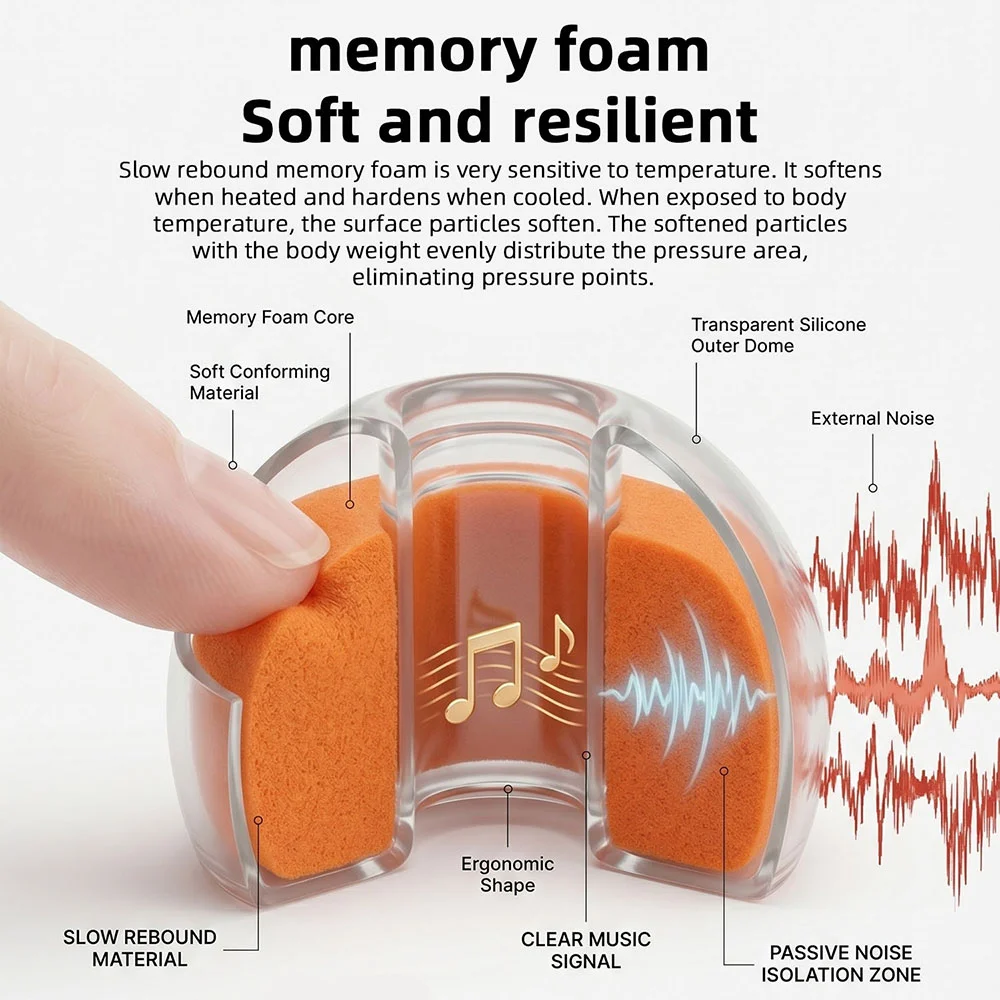
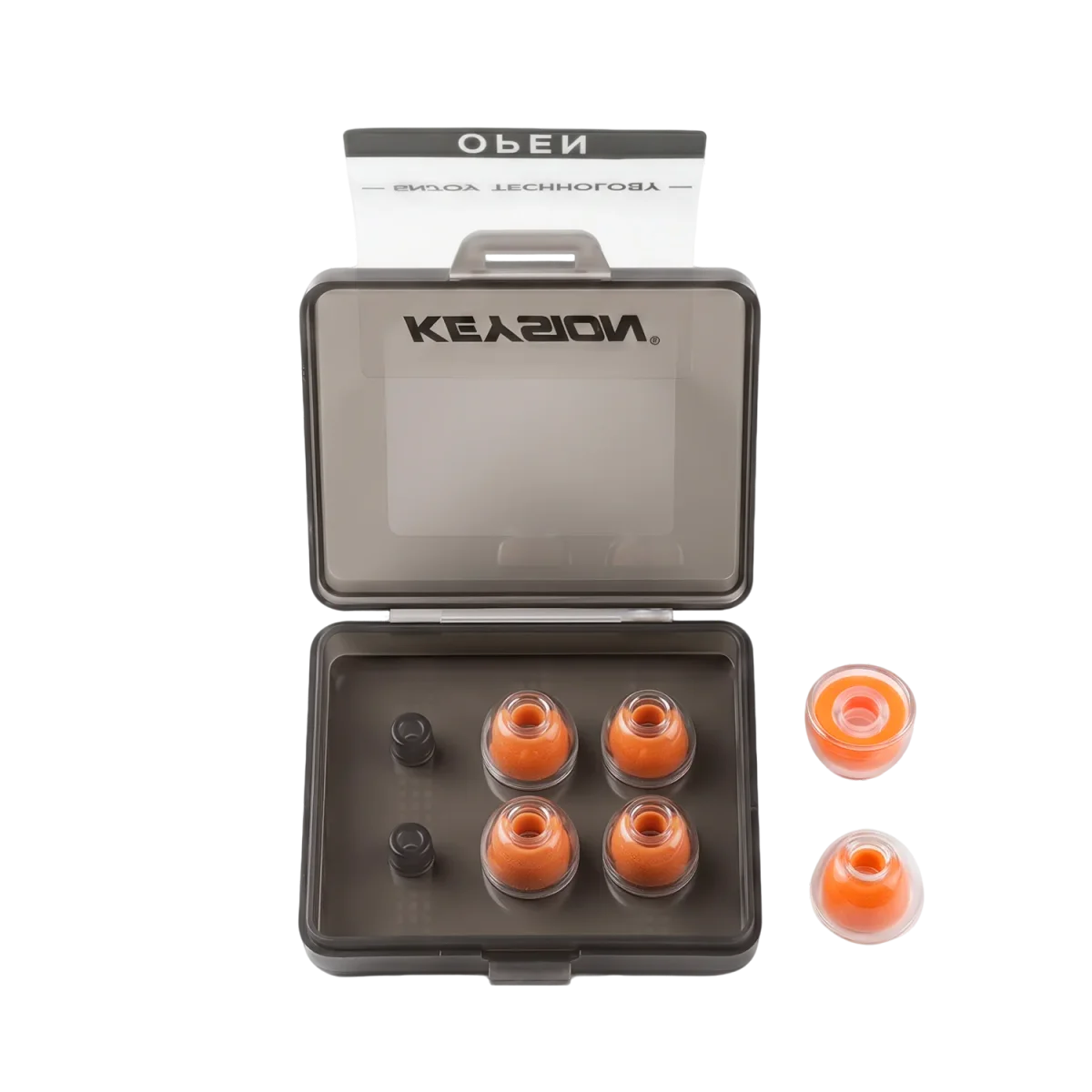
Take KEYSION 02 Pro: its rated impedance range is 16-600 ohm, so it can supply enough voltage for high-impedance over-ears, and having both 3.5mm and 4.4mm outputs gives over-ears more room to work. With slow-rebound tips such as the 30A liquid silicone memory foam eartips, an IEM reaches a solid seal and proper bass more easily. If you already own over-ears and want a different cable, an over-ear upgrade cable is a common route. The KEYSION 02 source also covers most over-ears and IEMs.
How to choose: three steps
Start with the environment: noisy and portable means in-ears; quiet and seated means over-ears. Then check the source: if you only have a phone but want over-ears, favour a low-impedance model or add a small dongle DAC/amp. Finally, check your ears: if the canal aches easily, do not wear IEMs for hours; if over-ears feel hot, rotate between the two.
Each format gives something up. Line up the environment and the source and the choice gets easy. Sound is subjective, so if you can, try both for half an hour before deciding.
Written by the KEYSION audio content team. We compare how in-ears and over-ears actually fit and drive over long sessions; the impedance ranges quoted for the 02 Pro and 02 come from official specifications. Ear comfort varies from person to person, so try before you buy when you can.
FAQ
Which isolates better, in-ear or over-ear?
Usually the in-ear, because the tip seals the canal directly. Over-ears depend on open or closed: open models block almost nothing, closed models are moderate, and ANC can cover the low frequencies. In quiet places the gap is small; in noise, IEMs let you keep the volume lower.
How different is the soundstage between the two?
Noticeably, though not absolutely. An over-ear has air inside the cup and a bigger driver, so the stage is usually wider and further outside the head. An IEM is more contained and more inside the head, but imaging accuracy is not necessarily worse. Pick over-ear for a spacious feel, IEM for a close and clear one.
Can I run over-ear headphones straight from a phone?
Low-impedance, high-sensitivity models usually yes. A 32-80 ohm pair gets loud from a phone but loses some dynamics. Models above 250 ohm are often too quiet and flat, so add a small dongle DAC/amp. IEMs rarely need this worry.
My ears ache after wearing IEMs a long time. Is that the earphones' fault?
Usually the tip size or material is the cause. Slow-rebound or liquid silicone tips, and one size down, ease the pressure a lot. If it still aches after that, your canal simply does not suit long IEM sessions, and alternating with over-ears is more comfortable.
Is recabling over-ear headphones worth it?
It helps, but do not expect a new headphone. The gains are mostly durability, microphonics and how the cable feels; the change in sound is usually small. The driver and tuning remain the main variables, so sort out the headphone and source first.
Related products
Related articles