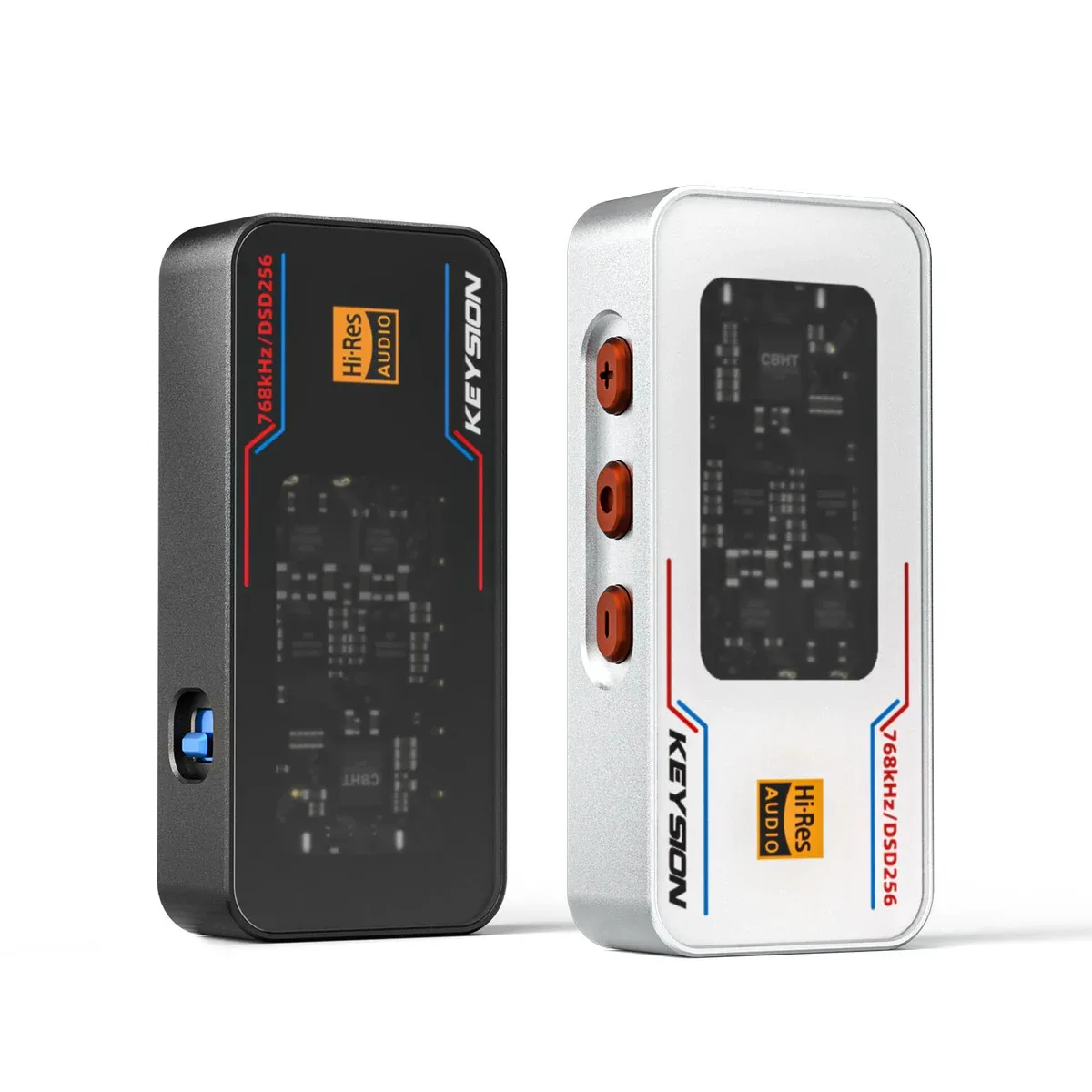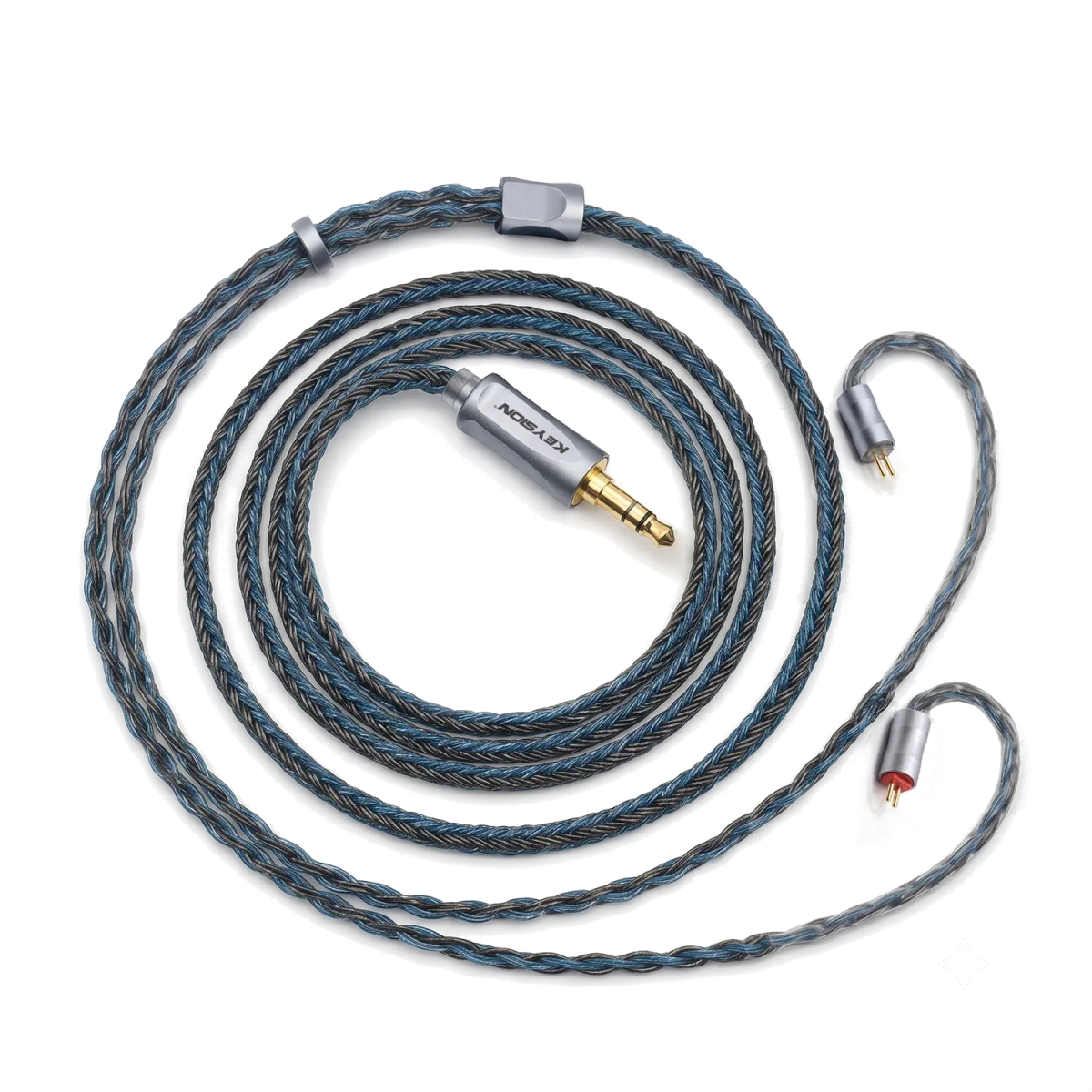
Does a 4.4mm Jack Always Mean True Balanced? Spotting Real vs. Fake Balanced with the KEYSION 02 Pro and Upgrade Cable
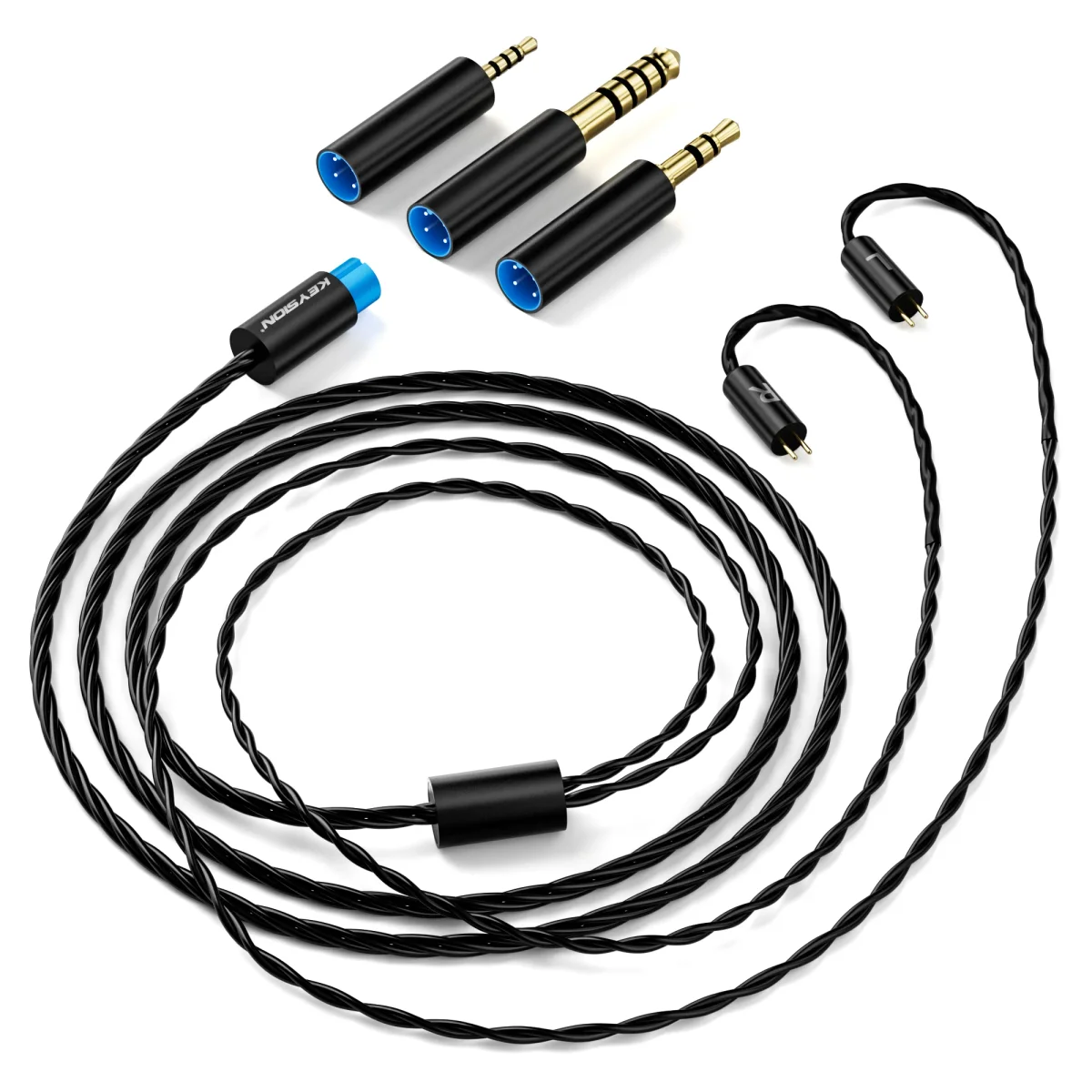
A 4.4mm jack does not guarantee true balanced operation: the connector shape and the amplifier circuit are two different things. This article is for players deciding whether to move to a balanced output. The short version first: for most IEMs, single-ended is enough; the real gains of true balanced show up in headroom and long-cable setups. Below we break down real vs. fake balanced using the KEYSION 02 Pro and the 3-in-1 upgrade cable.
True balanced means each channel gets its own amplifier path: left L+/L-, right R+/R- each carry their own signal, with a separate ground. The 4.4mm Pentaconn is exactly this 5-pole connector (L+/L-/R+/R-/ground); the 2.5mm 4-pole works the same way. Each of the two amplifier circuits keeps its own headroom, so the voltage swing can be pushed higher. That is the root of a balanced output's extra power.
The most common fake-balanced trick is to copy the single-ended signal and invert it, producing L- and R- from one source. The jack says 4.4mm, but only one amplifier chip exists and ground is shared. In plain terms, it only looks balanced. It is not balanced amplification.
A single-ended-to-balanced cable or adapter simply re-routes the single-ended plug's L/R/ground onto the 4.4mm pins. The signal still comes from the same amplifier, so output power does not change, and the converted balanced jack delivers the same power as before. True balanced raises power by doubling the voltage swing with two independent amplifiers (say 4V to 8V), which requires an extra circuit. A passive adapter cable cannot do that.
There is really one test: are the amplifier paths one set or two?
| Item | True balanced | Fake balanced | What it means |
|---|---|---|---|
| Amplifier paths | One per channel | One shared | Fake balanced's power and separation do not change with the jack |
| Ground | Independent per side | Shared | True balanced has lower crosstalk over long cables |
| Voltage swing | Can double (e.g. 4V to 8V) | Unchanged | True balanced leaves more headroom for high-impedance headphones |
| Channel separation | Measured higher (below) | Depends on PCB layout | On most IEMs the two are hard to tell apart blind |
| Cost | High (extra circuit) | Low | Fake balanced mostly appears in cheap dongles and adapters |
Using the measured specs of the KEYSION 02 and 02 Pro as an example: the balanced output shows a 130dB SNR (02) and 135dB (02 Pro), while the single-ended output of the same unit is 5dB lower. The numbers differ, but a 5dB gap is not easy to notice on most tracks, especially with high-sensitivity IEMs.
Start with the spec sheet or the official site: if it clearly states "independent amplifier per channel" or "dual DAC", it is probably legitimate; if it only says "supports 4.4mm", treat it with suspicion. Then look at the jack pins: 4.4mm has 5 poles, 2.5mm has 4. Product photos showing only 3 poles can basically be ruled out.
Listening can help too: play a pure left-channel test track; obvious bleed into the right channel points to weak separation. If you have a multimeter, check whether L- and R- short to ground. A short means shared ground, which is not true balanced.
The practical use cases for true balanced are narrower than most expect. Its advantages are easiest to hear with high-impedance headphones, long cables, or noisy environments. With high-sensitivity IEMs on single-ended, noise control is usually less hassle. For a portable DAC/amp like the KEYSION 02 Pro with a 4.4mm jack, the main value of the balanced output is headroom; ordinary IEMs are perfectly fine on single-ended.
On a limited budget, upgrading your headphones and source pays off more than chasing a balanced jack. If you want one cable to cover 3.5/4.4/2.5mm, the KEYSION 3-in-1 upgrade cable (IEM version) and the over-ear version S35-31 make switching easy, but keep in mind that a cable never changes the amplifier structure.
About the author: KEYSION Audio Lab. We rely on specs and measurements, not unfounded listening claims. A caveat: balanced is just one link in the chain; source, headphones, and fit usually matter more. Related reading: Single-ended vs. balanced: how to choose, Output impedance and damping, How to set headphone amp gain.
FAQ
Does a 4.4mm jack always mean true balanced?
No. 4.4mm is just the connector standard; whether it is truly balanced depends on the amplifier circuit. True balanced needs an independent amplifier path per channel; fake balanced merely copies and inverts the single-ended signal while still using one amplifier chip.
How much do fake and true balanced differ in sound?
For most IEMs the difference is limited; in blind tests many people cannot separate true balanced from a good single-ended output. The advantages of true balanced mainly show with high-impedance headphones, long cables, and noisy environments, where separation and voltage swing are higher.
Can a single-ended-to-balanced cable increase power?
No. The adapter only re-routes the pins; the signal still comes from the same amplifier, so output power stays the same. Doubling the power requires a second independent amplifier circuit, which a cable cannot provide.
How do I confirm whether my device is truly balanced?
Fastest: check the official site or spec sheet for "independent amplifier per channel" or "dual DAC". Then count the jack pins (5 for 4.4mm, 4 for 2.5mm). You can also use a multimeter to test whether L- and R- short to ground; a short means shared ground, which is not true balanced.
Do high-sensitivity IEMs need true balanced?
In most cases, no. High-sensitivity IEMs are not power-hungry, and single-ended usually makes noise control easier. The headroom of true balanced mainly serves high-impedance headphones and long-cable use.