Gold vs Nickel Headphone Plugs: How Much Do Contact Resistance and Plating Wear Really Change?
Gold and nickel plating differ by only a few milliohms of contact resistance when both are new. In a 16-600Ω headphone load, that series resistance usually costs less than 0.1dB, which is not something you reliably hear. What actually changes the experience is what happens after the plating wears through: oxidation, a loose plug and intermittent contact. Those produce crackle, channel imbalance and dropouts, not a nicer or worse tone.
What is plating actually protecting?
Copper and brass oxidize within hours to days in open air. The oxide layer has high resistance and changes with humidity, so contact resistance becomes unstable. Nickel is often used as an underplate to block copper diffusion into the gold layer. Gold sits on top because it is chemically stable and does not oxidize easily.
Contact resistance depends on three things: real contact area, the state of the surface film and contact pressure. A plug does not touch the socket across the whole barrel; only small high points carry the load. Softer plating conforms and increases real area. Harder plating wears better but conforms less.
How do gold, nickel and rhodium compare?
| Plating | Typical thickness | Contact resistance when new | Insertion life (vendor figures) | After wear or oxidation | What this means |
|---|---|---|---|---|---|
| Bare brass | None | 5-20mΩ | Very low | 50-500mΩ and unstable once oxidized | Works when new, noisy after storage |
| Nickel | 2-5μm | 10-30mΩ | About 1000-2000 cycles | Slow oxidation, resistance creeps up | Durable and cheap, slightly higher resistance than gold |
| Gold flash | 0.05-0.1μm | 5-20mΩ | About 500-1000 cycles | Wears through to nickel or copper, resistance jumps | Common in marketing, short life, poor for frequent plugging |
| Standard gold | 0.5-1μm | 5-15mΩ | About 2000-5000 cycles | Slow wear, stable contact | Fine for daily use, costs more |
| Rhodium | 1-2μm | 10-30mΩ | About 5000+ cycles | Very wear resistant, brittle plating | For heavy plugging, expensive and process-sensitive |
The numbers are typical ranges at room temperature and low signal level. Connector vendors commonly reference IEC 60512 or EIA-364 for insertion and contact-resistance tests. Plating baths, substrate preparation and contact force move the results, so treat these as magnitudes rather than guaranteed specs.
How much does contact resistance affect sound?
Think of it as a small resistor in series with the load. 0.1Ω into 32Ω is about 0.03dB of loss. 0.5Ω into 16Ω is about 0.27dB, and 1Ω into 16Ω about 0.53dB. On a 300Ω headphone the same resistance matters even less.
Half a decibel is hard to hear reliably in a blind test, so claims that a gold plug made the sound more open rarely have resistance math behind them. The real problem with contact resistance is instability: a scratchy sound when you rotate the plug, one channel cutting out when you tug the cable, or levels drifting left to right.
Oxide films can also behave nonlinearly. A low-level signal crossing an unstable oxide layer may pick up slight distortion, but that is hard to quantify and should not be used as a selling point. Stick to the symptoms you can confirm: crackle, dropouts and imbalance. Fix those first, then talk about tone.
What changes with 3.5mm, 4.4mm and 6.35mm plugs?
A 3.5mm plug has a small contact area and concentrated insertion force, so plating wears faster. Phones and tablets get plugged in daily, and wearing through a thin gold layer in two or three years is not unusual.
A 4.4mm balanced plug has five contacts and more area than 3.5mm, with a tighter insertion feel. Balanced wiring does not change because of gold plating; the plating still only fights oxidation and stabilizes contact.
A 6.35mm plug has the largest contact area, and desktop gear is plugged in less often, so its plating usually lasts longest. Stage and interface panels get repeated plugging and wear faster, which is why XLR and TRS plating choices matter more in pro audio.
How can you tell the plating is worn?
Look first. Use a torch and a magnifier on the tip and rings. Gold worn down to silver or copper, dark spots, or lengthwise scratches are all signs.
Listen next. Play something quiet and rotate the plug gently. A scratchy noise or a channel that jumps means the contact is already unstable. Tug the plug lightly; if one side cuts out, the plug or socket is the likely cause, not the driver.
Then swap. Exchange the left and right cables, or try a known-good cable. If the noise follows the cable, the cable or plug is at fault. If it stays with the same earphone, check the driver, filter mesh and source.
Cleaning versus replacing
Light oxidation can be wiped with an isopropyl alcohol swab, then left to dry completely before plugging in. Do not use sandpaper, erasers or blades. Once the plating is gone, bare copper oxidizes faster and the plug dimensions change.
A normal multimeter cannot measure contact resistance properly; the probes and contact pressure already add hundreds of milliohms. Real values need a four-wire setup or a dedicated milliohmmeter, which most homes do not need.
If the plug is down to copper, noisy when moved, or inconsistent between channels, replace the cable or plug. Re-terminating a headphone cable carries risk, and balanced armature drivers and thin wire do not tolerate repeated soldering. See cable re-termination and shielding and crosstalk.
What to look for when buying a cable
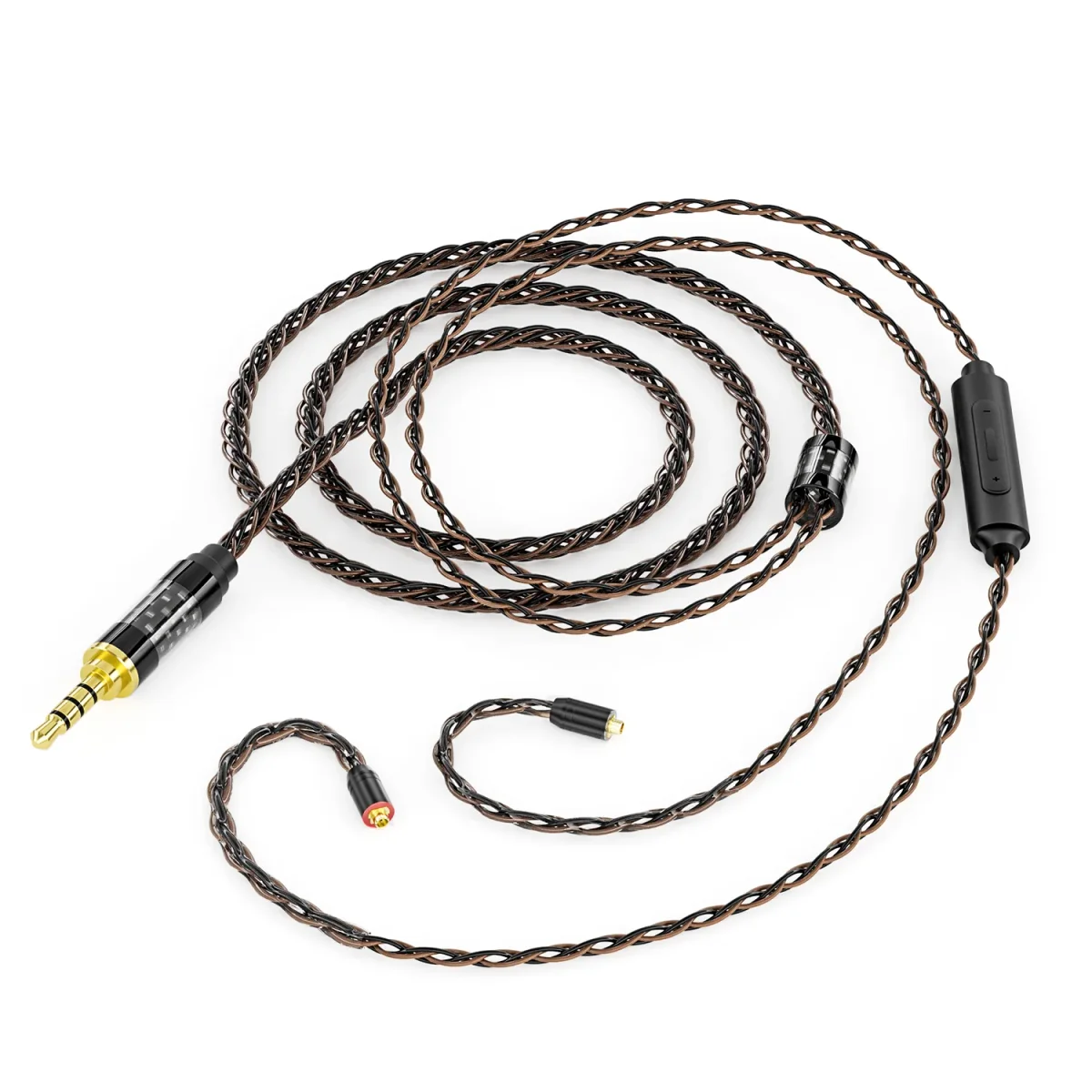
Look at plating thickness, not just the word "gold". A 0.05μm flash and a 0.5μm layer differ by an order of magnitude in cost and life. Check the connector brand, the rated insertion life, the solder joints and the strain relief. The last item decides whether the wire breaks at the plug root.
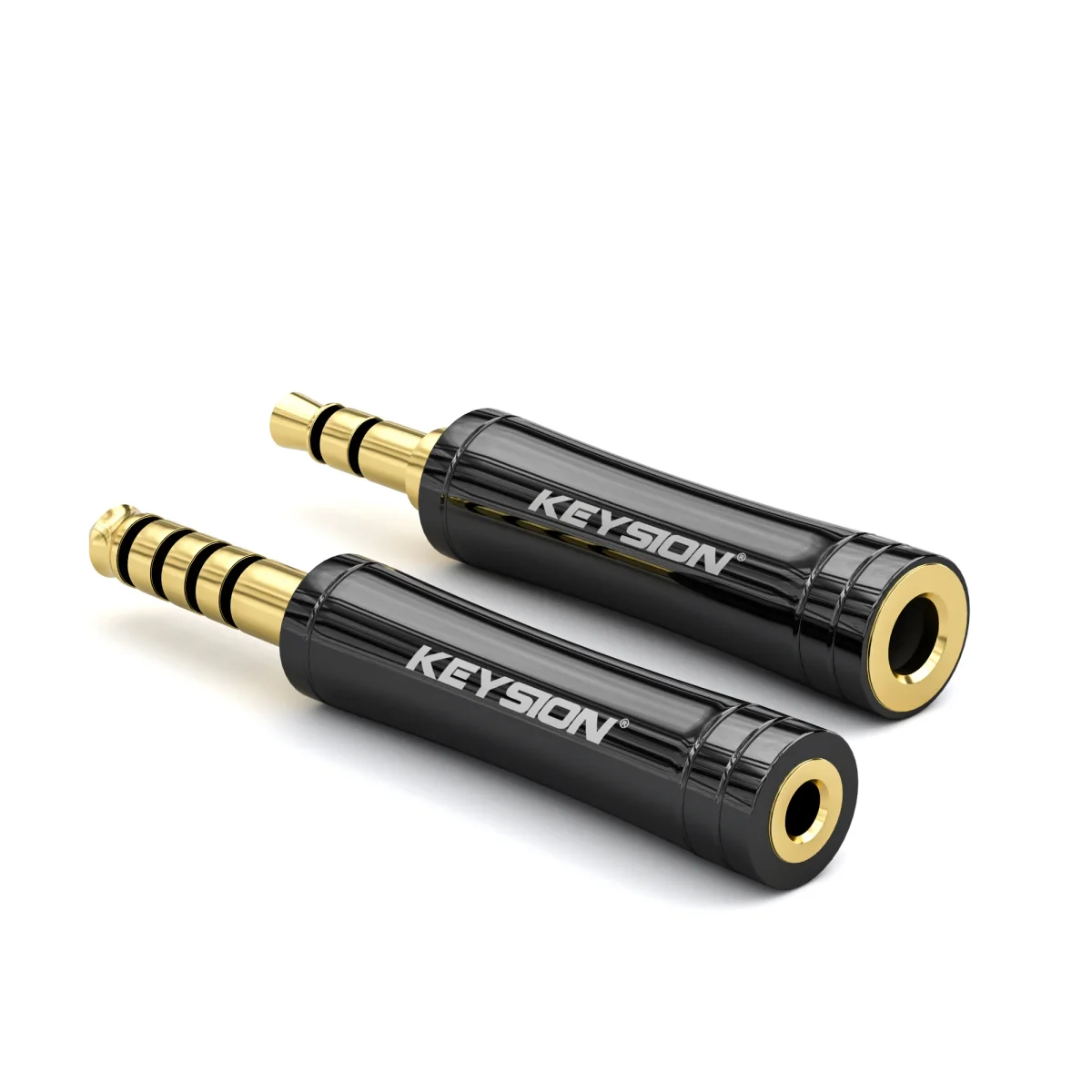
Adapters are another wear point. An adapter such as the KSHF-J2Jack01 stays plugged into one device for a long time, so its plating wears slower than a cable's, but repeated plugging transmits stress to the socket. Leaving it in place is easier on the hardware than daily insertion.
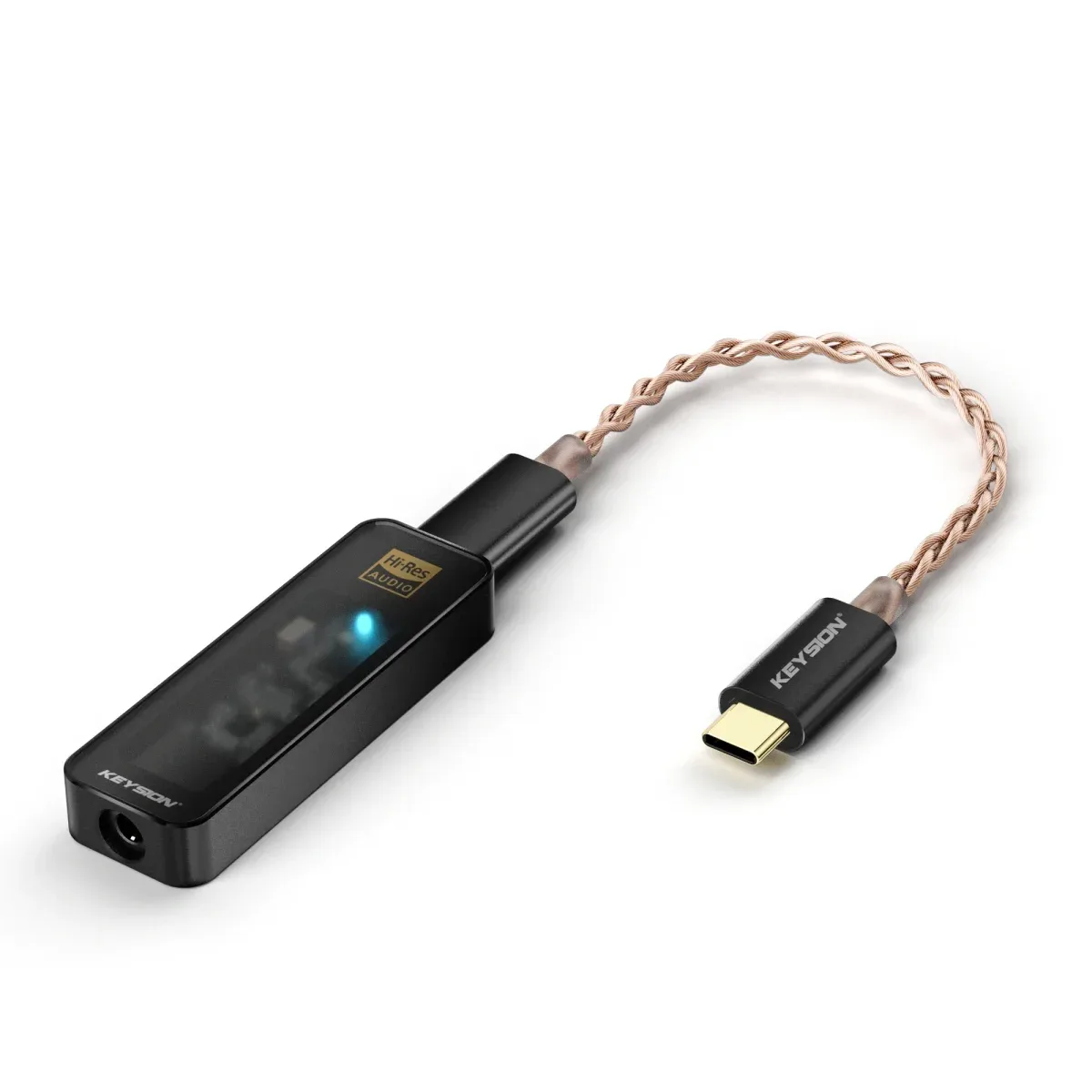
If you change devices often, choose a cable with thicker plating and a stated insertion life, such as the multi-plug KSHF-3in1. USB-C dongle users should also watch connector oxidation; on an OTG cable like the KSHF-YCX, plug plating and wiring both affect stability. For troubleshooting, see USB-C headphone compatibility and channel imbalance checks.
About the author: KEYSION acoustic content team. The contact-resistance and insertion-life figures come from common connector-industry ratings and hands-on disassembly, not from a lab report on a specific production batch. Plating process, substrate and contact force all change the result. For a real fault, swap cables as a control before deciding to clean or replace.
FAQ
Is a gold plug always better than nickel?
When new, the difference is tiny. Gold wins on oxidation resistance and stable contact; nickel wins on wear and cost. Look at thickness and use case, not just the material name.
Can I keep using a plug after the gold has worn off?
It will still play, but exposed nickel or brass oxidizes and contact resistance rises and drifts. If you hear crackle, dropouts or imbalance, clean it first and replace the cable if that does not fix it.
What contact resistance is normal?
New plugs commonly measure a few to a few tens of milliohms. Above several hundred milliohms and jumping around usually means oxidation or too little contact pressure. Clean and re-measure.
Is gold better on a 4.4mm balanced jack?
Same logic as single-ended: plating does not change the balanced topology. Reliable contact and correct dimensions matter more than the color. Do not treat gold as a balanced selling point.
Does sanding a plug improve contact?
No. Sandpaper removes plating, changes dimensions and exposes copper that oxidizes faster. Clean light oxidation with isopropyl alcohol; replace the plug if wear is heavy.
Related products
Related articles