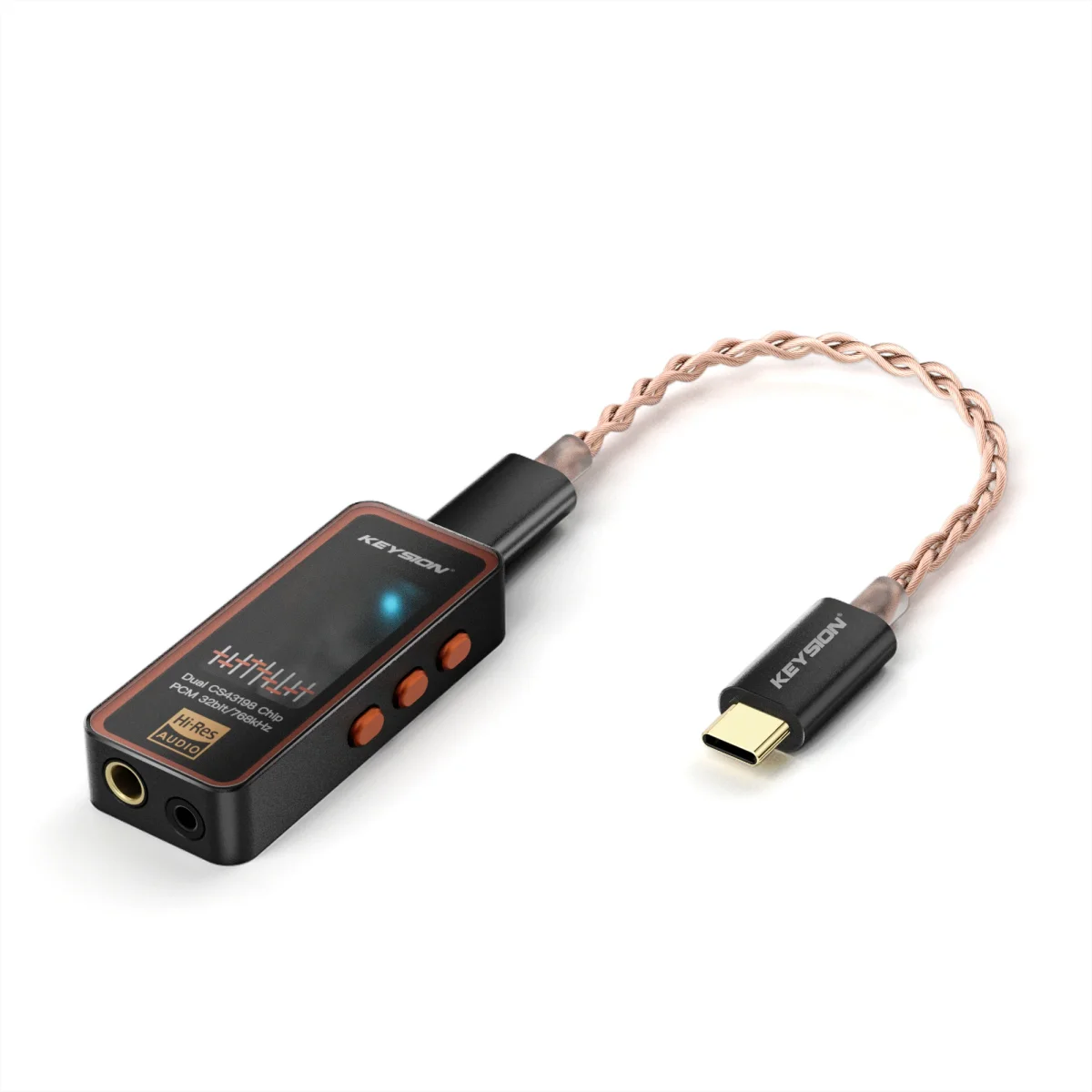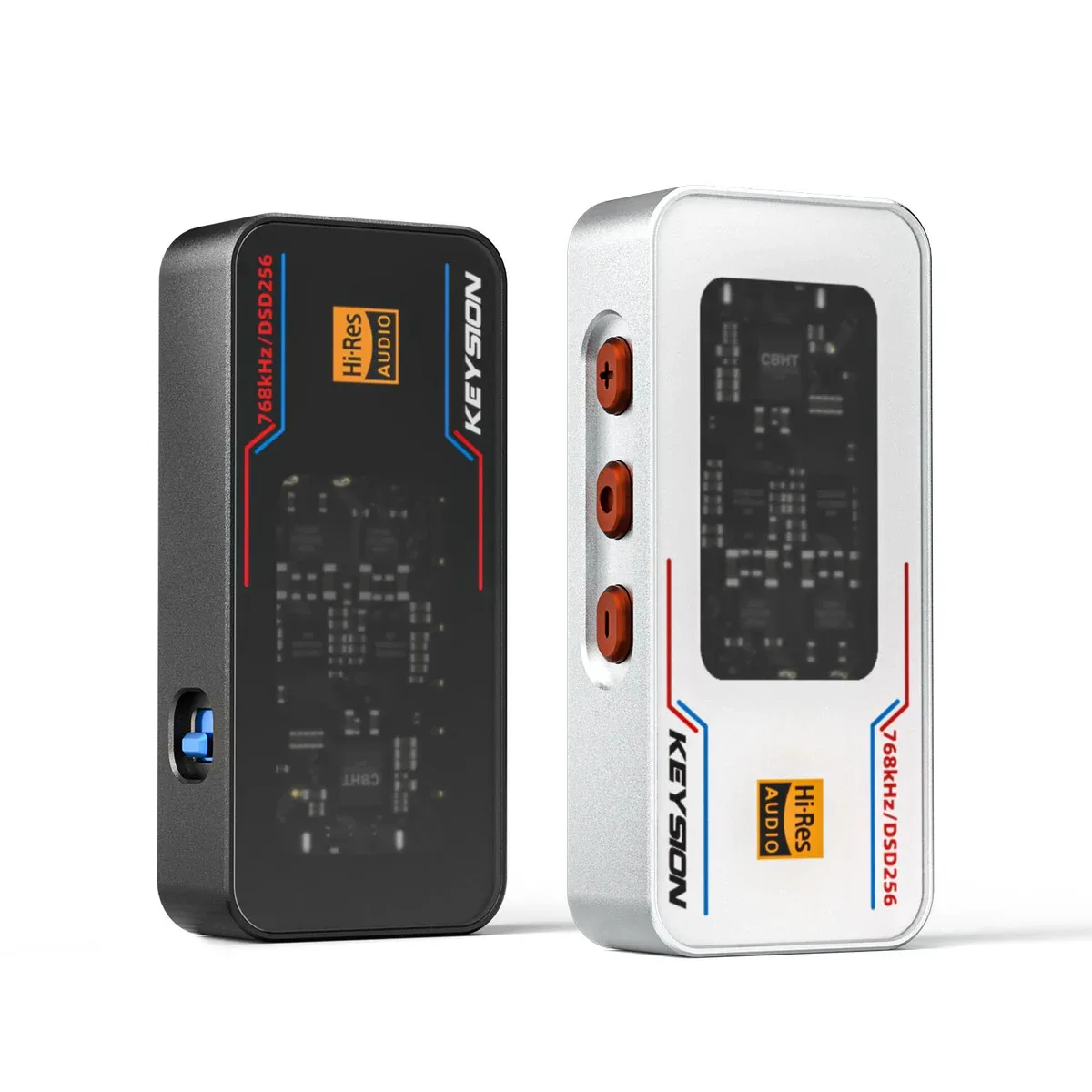
Why Do Dongle DACs Get Hot and Drain Battery? Where Phone Power Comes From, Explained with the KEYSION 01
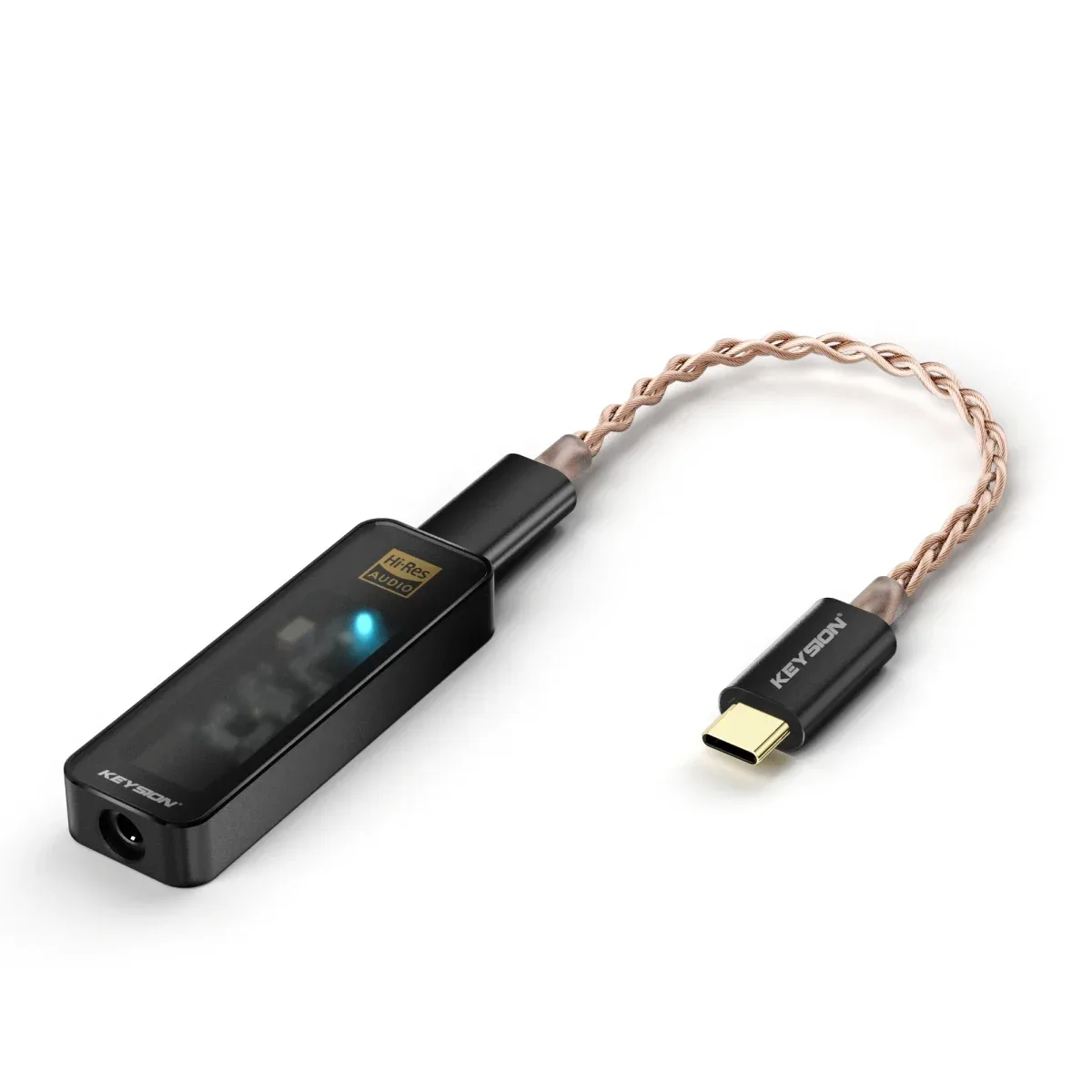
A dongle DAC getting warm and draining battery is normal, not a sign of a broken unit. It has no battery of its own; all power comes from the phone's USB port, and the electrical losses in boosting and amplifying turn into heat. This article explains the power supply and efficiency basics, shows how to tell normal heat from abnormal heat, and uses the KEYSION 01, KEYSION 02, and H-Turbo S2 as references.
USB power has a hard limit: USB 2.0 defaults to 100mA (5V, 0.5W), and after negotiation up to 500mA (2.5W). USB-C can theoretically deliver 3A or more, but phones usually current-limit, and many models actually give a dongle somewhere between 0.5W and 2W.
Driving high-impedance headphones often needs more than 5V, so a dongle DAC has to contain a DC-DC boost converter to raise the voltage to 6V, 8V, or higher. Take the KEYSION 02's rated 361mW: at a 32Ω load that works out to roughly a 3.4V swing at the output; the 02 Pro's rated 551mW needs about 4.2V, above the raw USB voltage, so boosting is unavoidable.
Portable DAC/amps commonly use two amplifier classes: class AB at about 50% efficiency and class D at 85% or more. To output the same 100mW, a class AB stage pulls about 200mW from the phone and turns the difference into heat; class D needs only about 120mW, so the chassis stays cooler.
That said, less heat does not automatically mean better sound. Early class D designs had switching-noise problems at low volumes, only improved in recent years. Budget units use class D to save power and heat; flagships keep class AB for the sound. Both are trade-offs.
| Item | Number | What it means |
|---|---|---|
| USB 2.0 default power | 5V/100mA (0.5W) | Without negotiation many dongles cannot drive high-impedance headphones |
| USB negotiated ceiling | 5V/500mA (2.5W) | The practical power ceiling most phones can deliver |
| Rated 551mW (estimated at 32Ω) | About 4.2V swing | Above 5V the unit must boost internally, and boosting is a heat source |
| Class AB amplifier efficiency | About 50% | Half the power becomes heat; a warm chassis is normal |
| Class D amplifier efficiency | 85% or more | Low heat and low drain; low-volume behavior depends on the implementation |
The point of this table: a dongle DAC's power draw does not come from nowhere. The higher the output and the lower the efficiency, the more heat and battery drain.
The standard is simple: a warm chassis that you can feel but comfortably hold, even for hours, is fine. If it gets so hot you have to put it down, or you pull your hand away on touch, the output load is too heavy or the power supply is abnormal, so stop and check. Many people touch a warm shell on their first dongle and mistake it for a defect. As long as power and load are normal, the heat is roughly predictable: the louder the volume and the higher the headphone impedance, the hotter the unit.
Battery drain can be estimated too: at an average 1W draw, four hours of listening uses about 4Wh, roughly a fifth of a 5000mAh phone battery; the higher the draw, the more visible the hit on battery life.
Three things help most: keep volume at 60%-70%, which protects your hearing and lowers output power; pick a thicker silver-plated OFC OTG cable, which cuts supply loss and heat; avoid driving high-impedance headphones at maximum volume for long stretches, which is the heaviest heat and drain state.
If you want to escape the phone's power limit entirely, a battery-powered portable amp or a desktop unit is a more sensible route than squeezing the phone, a topic covered in the earlier article portable vs. desktop.
To troubleshoot, follow the four steps below.
About the author: KEYSION Audio Lab. Heat and drain follow the laws of physics, not design flaws; as long as the temperature stays under control, there is nothing to worry about. A caveat: to fully escape the phone's power limits, go straight to a battery-powered portable amp or a desktop unit rather than squeezing the phone. Related reading: How much power do headphones really need, Dongle DAC specs explained, Portable or desktop.
FAQ
Is it normal for a dongle DAC to get hot?
Yes. A dongle DAC has no battery; all power comes from the phone's USB port, and the energy lost in boosting and amplifying becomes heat. A warm chassis is normal; only when it burns your hand do you need to investigate.
My dongle drains battery fast. Is my phone broken?
No. The dongle draws power from the phone to drive the headphones; the higher the output, the more it drains, which is normal operation. Only a clearly abnormal standby drain points to the phone itself.
Can a phone's USB port power a high-output dongle?
It depends on the phone's current limit. USB 2.0 after negotiation allows up to 500mA (2.5W), and many phones actually deliver 1-2W. As long as the device stays within that range it works normally, though output will be limited at high volumes.
How do I tell if the dongle is underpowered?
Common signs: muffled or stuttering sound at high volumes, or the device keeps reconnecting. If the problem persists after switching to a better OTG cable, a different USB port, and closing heavy background apps, then look at the device itself.
Does heat affect sound quality or shorten lifespan?
Warmth within a controllable range does not affect sound quality or visibly shorten lifespan. Only sustained high temperatures under extreme load (hot enough to burn) stress the circuitry; avoid long sessions at maximum volume with high-impedance headphones.
Related products
Related articles