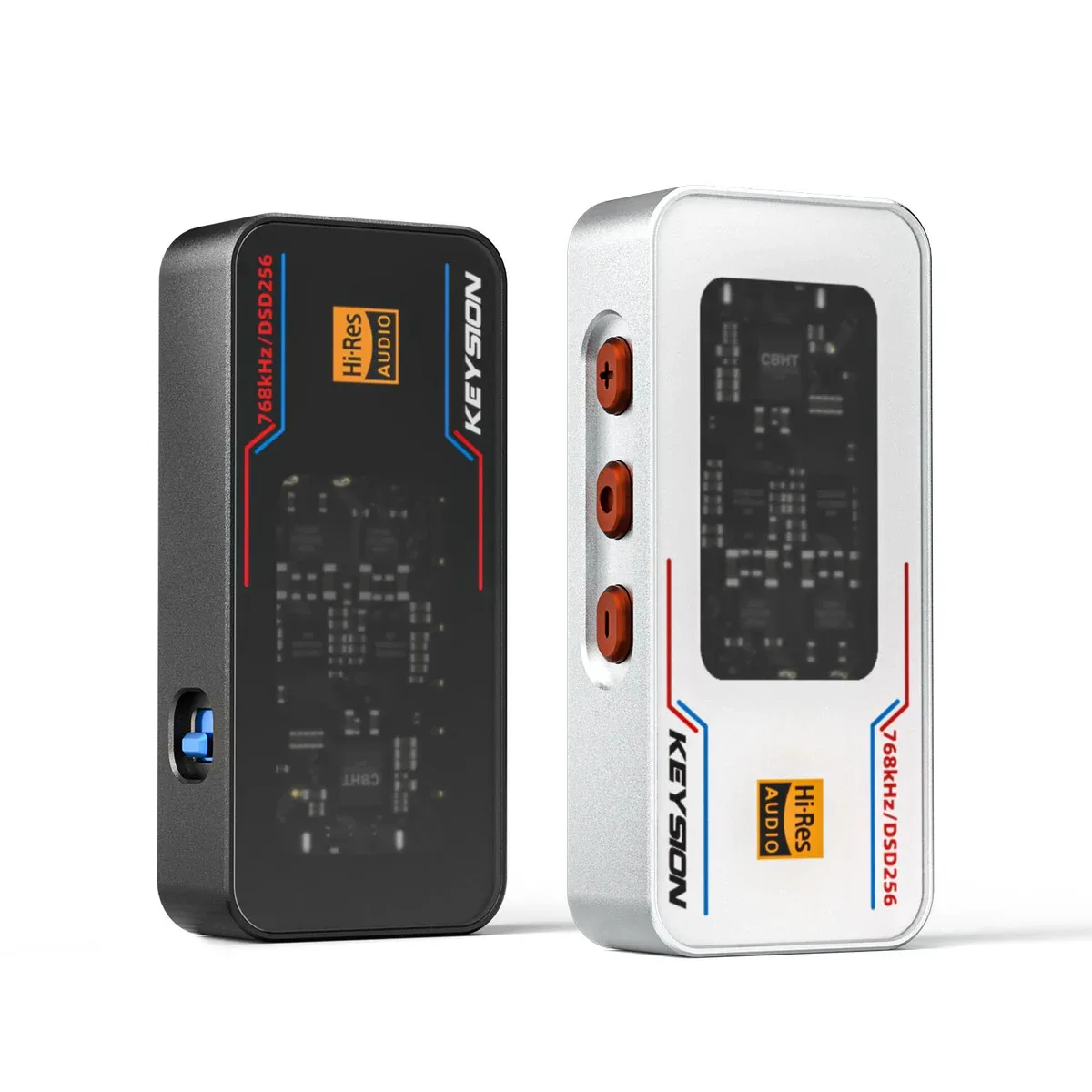
Portable or Desktop: When Is It Worth Upgrading to Desktop HIFI? A Look at the KEYSION 02 Pro
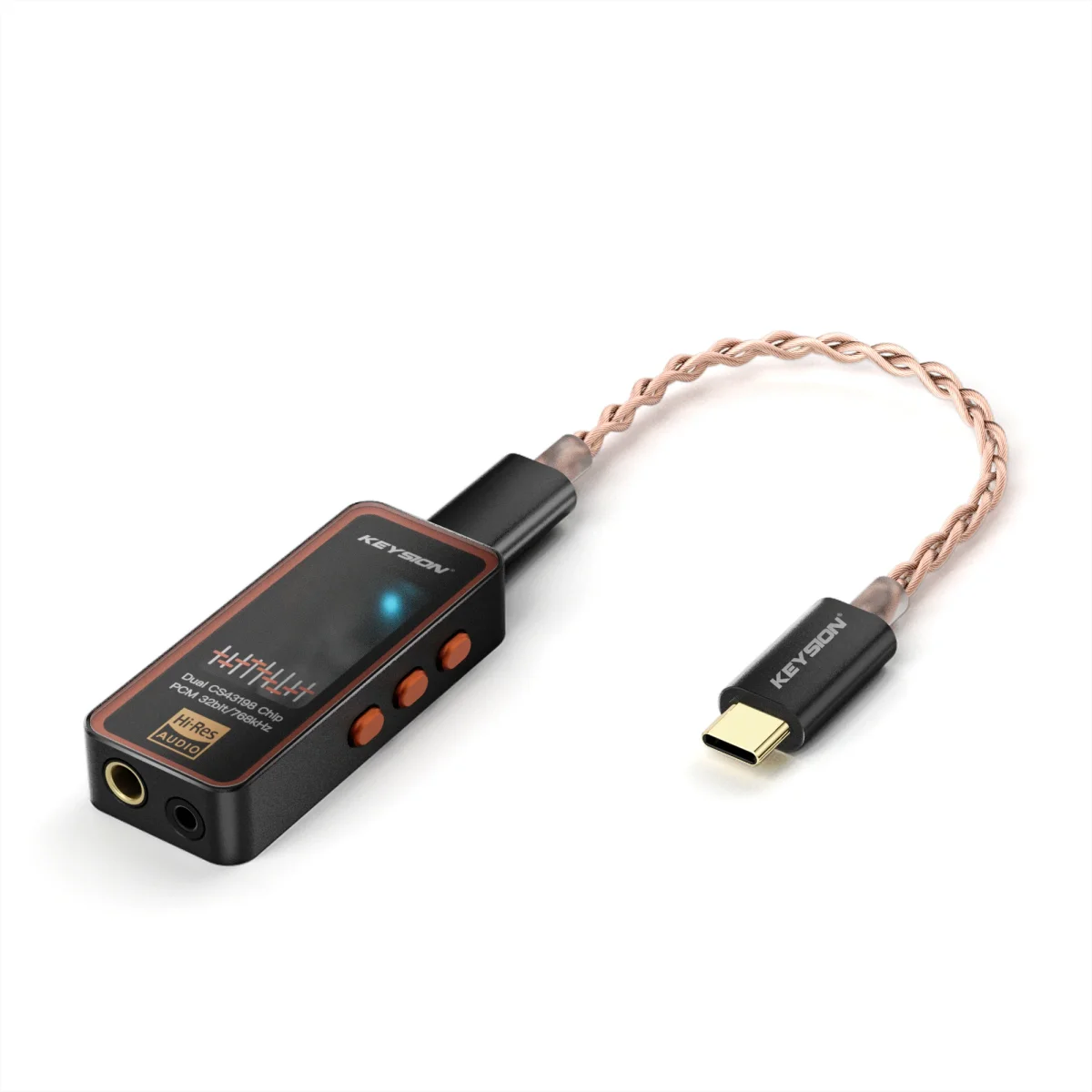
The short answer first: if you mostly listen to low-impedance earbuds on the commute, at the office, or in bed, you probably don't need a desktop unit right now. A portable DAC like the KEYSION 02 Pro packs an independent DAC chip and amplifier circuit into a small dongle, covering powering, decoding, and amplification in one. Where a desktop unit actually pulls ahead is power-supply stability and voltage swing, which decide whether a high-impedance headphone can be driven fully and steadily. This article is for anyone torn between a desktop unit and a dongle. I'll break down the differences on three levels — power supply, drive strength, and use scenario — then give you a sequence for deciding whether to upgrade.
A desktop's core advantage comes down to one point: it draws power from the wall outlet, so it is not limited by battery or USB current. Portable gear relies on USB power, typically only around 5V with a budget of a hundred or two hundred milliamps, which caps the power by design; a desktop uses a dedicated supply that gives the amplifier a steady flow of voltage and current.
Voltage swing directly determines how high the headphone's volume ceiling and headroom can go. High-impedance headphones (say the 250Ω over-ears) need higher voltage to reach sufficient sound pressure, and that is where desktop units shine and dongles struggle a bit.
To decide whether you need a desktop unit, first check whether your headphones are being adequately driven. The table below lines up the typical capability of both setups.
| Spec | Portable dongle (e.g. KEYSION 02 Pro) | Typical desktop all-in-one | What this means |
|---|---|---|---|
| Power source | USB 5V, current-limited | Dedicated supply, continuous power | Desktop holds voltage better on sudden loud transients, less likely to soften on bursts |
| Output power | Up to around 551mW@32Ω | Typically a few hundred mW to the watt level | Enough for low- and mid-impedance earbuds; desktop feels more at ease with high-impedance over-ears |
| Voltage swing | Limited by USB voltage | Higher, suited to 250Ω+ high impedance | High-impedance headphones are easier to push to the same sound pressure on desktop |
| Portability | Fits in a pocket | Needs a fixed desktop spot | The real on-desk vs off-desk difference often comes down to whether you are willing to carry it |
The takeaway from this table is straightforward: the real dividing line is not the decoding stage but amplifier capability and power supply. The DAC chip in your phone may already be adequate; the bottleneck is more often whether the headphone can be driven to a comfortable loudness.
Here is a truth sellers do not like hearing: many people suspect "the gear is not good enough," when in fact the headphone or source is holding things back. If your headphone's frequency response and resolution are limited, switching to a pricier desktop unit will bring limited gains. Do two things first — confirm the headphone's impedance and sensitivity, and confirm whether your source is lossless — before talking about upgrading the amplifier.
For how much power a headphone needs, see how much power a headphone really needs; for how output impedance affects the same pair of headphones, see output impedance and damping. These two articles will most likely save you money on blindly upgrading to a desktop unit.
The scenarios where a desktop unit pays off fall into three types: you listen to high-impedance over-ears in a fixed spot; you especially value the ease of soundstage and transients and are willing to place it prominently; or you need to drive headphones above 250Ω that demand higher voltage. In these cases, the dividends of power supply and voltage swing are actually put to use.
Conversely, if you mostly use low-impedance earbuds on the subway, at your desk, or in bed, or you move around a lot, a portable DAC is the more rational choice. The difference between the KEYSION 02 and the KEYSION 01 lies in drive-level tiers and how complete the interfaces are; which one you pick depends on the headphones you usually wear and whether you use the balanced output.
Here is an ordering you will rarely regret: first, measure your headphone's impedance, sensitivity, and source format to pin down whether the real gap is in amplification; second, if the gap is in amplification and you use high-impedance over-ears in a fixed spot, then consider a desktop unit; third, if it is only commuting and everyday portability, spend the budget on headphones and fit instead of stacking up desktop gear.
Deliberately leave some leeway: the "ease" of soundstage and dynamics has no unified measurement standard, everyone's ears and playlists differ, and if you can, A/B your own headphones on both systems for the most accurate judgment. For the difference a balanced output makes, see single-ended vs balanced; whether the Hi-Res gold label is worth it can help you sort out how much weight certification should carry in an upgrade.
This article was compiled by the KEYSION editorial team, based on published specs and common measurement conventions. Performance comparisons are based on typical gear at comparable price points; the listening impressions are subjective, and we recommend judging with your own headphones and usual tracks.
FAQ
What is the main difference between a portable DAC and a desktop amplifier?
Mainly power supply and voltage swing. A desktop draws from the wall and is stable, with stronger amplification suited to high-impedance over-ears; portable gear runs on USB power with a power ceiling, but wins on portability and is enough for most low- and mid-impedance earbuds.
Do I need a desktop unit for low-impedance earbuds?
Basically no. Low-impedance earbuds need neither much power nor high voltage, and a portable DAC is usually enough; in most cases the bottleneck is the headphone itself and the fit, not the amplifier.
Must high-impedance headphones be driven by a desktop unit?
High-impedance headphones need higher voltage to reach sufficient sound pressure, and desktop is more at ease; however, some high-power portable units can handle it too. What matters is the power spec and voltage swing in the datasheet, not just whether it is portable.
What should I check before upgrading the amplifier?
Confirm two things first: the headphone's impedance and sensitivity, and whether the source is lossless. If the headphone or source is limited, swapping the amplifier gives limited gains. You can refer to the headphone drive-power calculation article.
Is a desktop unit at the same price always better-sounding than a portable one?
Not necessarily. Desktop has advantages in power supply and drive, but the decoding stage and listening experience are affected by many factors. For most low- and mid-impedance earbuds, a portable DAC's improvement may already be enough, and going desktop blindly yields limited gains.
Related products
Related articles