Should You Swap a Desktop DAC Power Adapter for a Linear Supply? Ripple, Grounding and Where Hearing Actually Stops, Using KSHF-02 Pro as a Reference
Most desktop DACs do not benefit much from an external linear power supply. The converter already has one or two internal regulation stages, and if the stock adapter holds ripple below roughly 15mV with no ground leakage, an upgrade usually changes less than one click of the volume knob. The cases worth spending on are narrow: a stock supply with excessive ripple, an analog stage fed directly from the external rail, or audible 50/100Hz hum the moment everything is plugged in.
Where do linear and switching supplies actually differ?
A switching supply rectifies mains, then chops at hundreds of kHz. The transformer is small and efficiency is high, often quoted at 85%-94% at full load. The trade-off is switching ripple and common-mode leakage current. Ripple sits at high frequencies and can travel down the USB ground into the converter if filtering is weak.
A linear supply steps mains down with a 50/60Hz transformer, then rectifies, filters and regulates through a pass transistor. Efficiency is usually 40%-60%; the excess becomes heat, and the box is heavy. Ripple is low in frequency and easier to filter. Transient behavior depends on the pass device, output capacitors and feedback speed.
This is not a clean-versus-dirty contest. A well-designed switching supply can stay at 5-15mV ripple, and a cheap linear supply with poor wiring can hum just as loudly.
How much ripple actually reaches the converter?
The analog section of a DAC has finite power-supply rejection (PSRR), often 60-80dB at low frequencies and less as frequency rises. Ripple of 100mV at 100Hz attenuated by 60dB lands near 0.1mV at the output. A 300kHz spike from a switching supply may only be suppressed by 20-30dB.
| Supply type | Typical efficiency | Output ripple at full load | Size and heat | Main risk | What this means |
|---|---|---|---|---|---|
| Generic 12V/2A switching adapter | 80%-88% | 30-80mVpp | Small, warm | High ripple, Y-cap leakage | Measure ripple before buying anything |
| Branded switching supply | 88%-94% | 5-15mVpp | Small, warm | HF spikes, common-mode noise | Enough for most desktop gear |
| Mains transformer plus linear regulator | 40%-60% | 1-5mVpp | Large, clearly warm | Mains hum, heat sinking | Low ripple, but the DAC decides the benefit |
| Battery or supercapacitor | 70%-90% | Depends on the load stage | Large, needs charging | Voltage falls with charge | Workable portable, awkward on a desk |
| USB bus power | Depends on the host | 20-100mVpp | None | Host load swings, ground noise | A powered hub is often the more direct fix |
Measure ripple with a scope, 20MHz bandwidth and a ground-spring tip. A multimeter on the AC range tells you almost nothing useful.
When can a linear supply make an audible difference?
First, hum caused by ground leakage. The Y-capacitor in a switching supply leaks a small portion of mains onto the DC ground, producing 50/60Hz and its harmonics. Swap to a linear supply or add an isolation transformer and the hum may drop from audible to inaudible. That is a real, repeatable change.
Second, high-current headphone amps. The output stage current swings with the music, and a supply that cannot follow makes loud passages feel soft. A linear supply is not automatically faster; the pass transistor, capacitor bank and feedback loop matter more than the label.
Third, older DACs whose analog stage runs directly from the external rail. With no internal regulation, supply ripple and noise enter the circuit unfiltered, so the upgrade gains more than on a modern converter.
Everything else, especially a modern DAC with separately regulated digital rails, tends to behave like a psychological switch.
What about USB-powered units such as the KSHF-02 Pro?
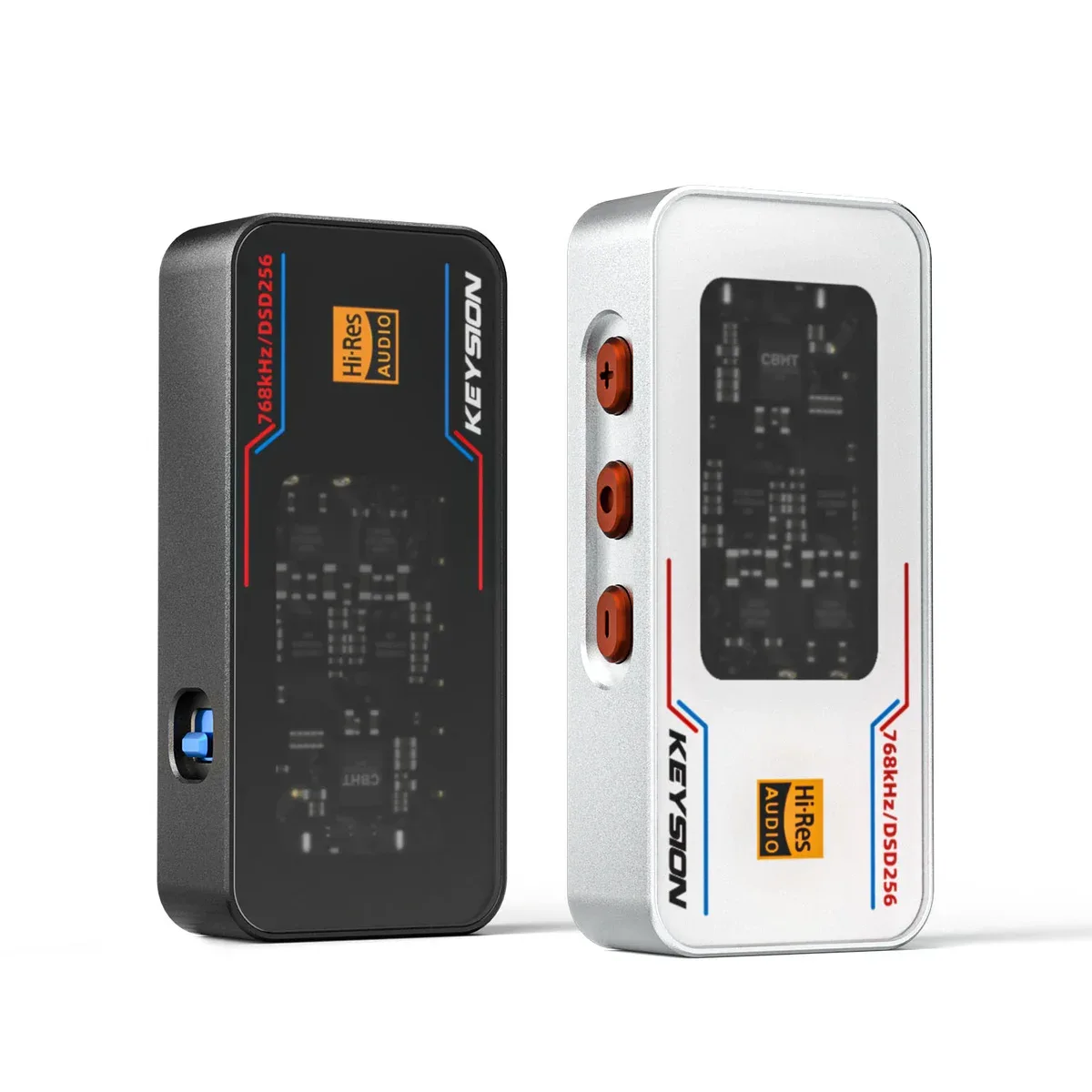
The KSHF-02 Pro runs on USB-C, sharing one cable for power and data, so an external linear supply cannot plug in directly. A cleaner path is a well-shielded, correctly wired OTG cable plus a USB hub with its own power input. The hub's supply quality matters more than the word "linear". The 02 Pro quotes a 0.99μV noise floor at 3.5mm, which makes a clean front end easier to hear and also exposes a noisy one.
Desktop systems follow the same logic. Put the converter on a socket that is not shared with a power amp, then try unplugging other devices. Many "power upgrades" turn out to be grounding repairs.
How should you measure and compare without fooling yourself?
Check three things first: DC voltage at no load and full load, ripple peak-to-peak, and whether you hear hum with your ear near the tweeter after pulling the signal cable. If all three are fine, a new supply is a low-priority purchase.
For listening, keep the same track, the same level and the same day, and have someone else swap the supply so you do not know which is connected. Do at least ten alternations and count how often you hear a difference. Most people cannot reliably hear 1-2dB, and that applies to power supplies too.
Borrow a decent linear unit for a week before buying. Confirm output voltage, polarity, plug size and current headroom; reversing polarity can kill the device.
When not to bother
Small desk, warranty still active, or stock ripple already below 10mV: the return is poor in all three. DIY linear supplies involve mains wiring; without experience, leave them alone. Earth bonding, fusing and creepage distances all matter.
If the budget is tight, fix eartip seal, DAC noise floor and ground loops first. Background reading: ground loop hum, headphone hiss troubleshooting, dongle heat and battery drain, and portable versus desktop. For a first desktop setup, something with internal regulation such as the KSHF-01 makes more sense than chasing a power supply.
About the author: KEYSION acoustic content team. These conclusions come from swapping supplies in everyday desktop systems and measuring with a scope. The test space is not an anechoic chamber, and ripple readings depend heavily on probing and grounding technique. PSRR and internal regulation vary between models, so treat the ranges as magnitude guides and measure your own unit before buying.
FAQ
Will a linear supply make the sound warmer?
Not automatically. A supply does not change frequency response. Most reported differences come from lower noise or better grounding. In blind tests, most listeners cannot reliably hear 1-2dB.
Is linear ripple always lower than switching ripple?
A well-built linear unit usually wins, but a cheap one with poor wiring, shielding or grounding can add hum. A good switching supply can also hold 5-15mVpp, so the type alone proves nothing.
Can I add a linear supply to a USB-powered DAC?
Not directly. A USB-C port carries power and data together. You need a USB hub with its own supply or an internal power modification. Check voltage, polarity and current headroom first.
How much ripple is too much?
Above 30mVpp at full load on a 12V desktop unit is worth investigating. Below 10mVpp it is rarely the first priority. Also consider the DAC power-supply rejection ratio.
Can a new supply fix hum?
If the hum is 50/60Hz from ground leakage, possibly. Check grounding first: separate socket, unplug other devices on the same strip, try an isolation transformer. Confirm the source before spending.
Related products
Related articles