How to Calculate Headphone Amp Power: How Many Milliwatts Does Your Headphone Need (KEYSION 02 Pro and 02 Measured)
How much driving power does a headphone amp actually need? Most portable IEMs are fine with a few tens of milliwatts; it's 300Ω full-size cans and low-sensitivity planars that want a few hundred. What matters is the headphone's sensitivity, its impedance, and the SPL you're aiming for. If you're choosing a dongle DAC and puzzling over power specs, the formula and the measured data below should settle it.
Power demand comes down to three numbers: headphone sensitivity (dB/mW or dB/V), impedance (Ω), and target SPL (dB). The estimate looks like this:
Required power (mW) = 10^((target SPL − sensitivity) / 10)
With sensitivity in dB/mW, a headphone rated at 100dB/mW needs 10^((110−100)/10) = 10mW for a 110dB peak. Want 6dB of headroom? Figure on 116dB instead, and it comes to 40mW.
Most people listen at 75-85dB, and dynamic peaks in pop music usually sit 25-35dB higher, so planning around a 110dB peak leaves a sensible margin (volume-safety limits are covered in safe listening volume).
| Headphone type | Typical sensitivity | Power for 110dB peak | What it means |
|---|---|---|---|
| High-sensitivity IEMs (100-105dB/mW) | 102dB/mW | about 6mW | Any dongle DAC clears this easily; power is not the bottleneck |
| Portable over-ears (96-100dB/mW) | 98dB/mW | about 16mW | Entry-level dongles (the S2, for example) manage |
| High-impedance full-size (300Ω, 95dB/mW) | 95dB/mW | about 32mW | Small wattage on paper, but it needs a high voltage swing |
| Low-sensitivity planars / older flagships (85-90dB/mW) | 88dB/mW | about 160mW | This is where you genuinely need the watts |
One note on the 300Ω row. 32mW into 300Ω works out to about 3.1Vrms at the output, which many dongles can't deliver; 32mW into 32Ω needs only 1Vrms. For high-impedance cans, watch the voltage swing, not the headline power figure (more in output impedance and damping).
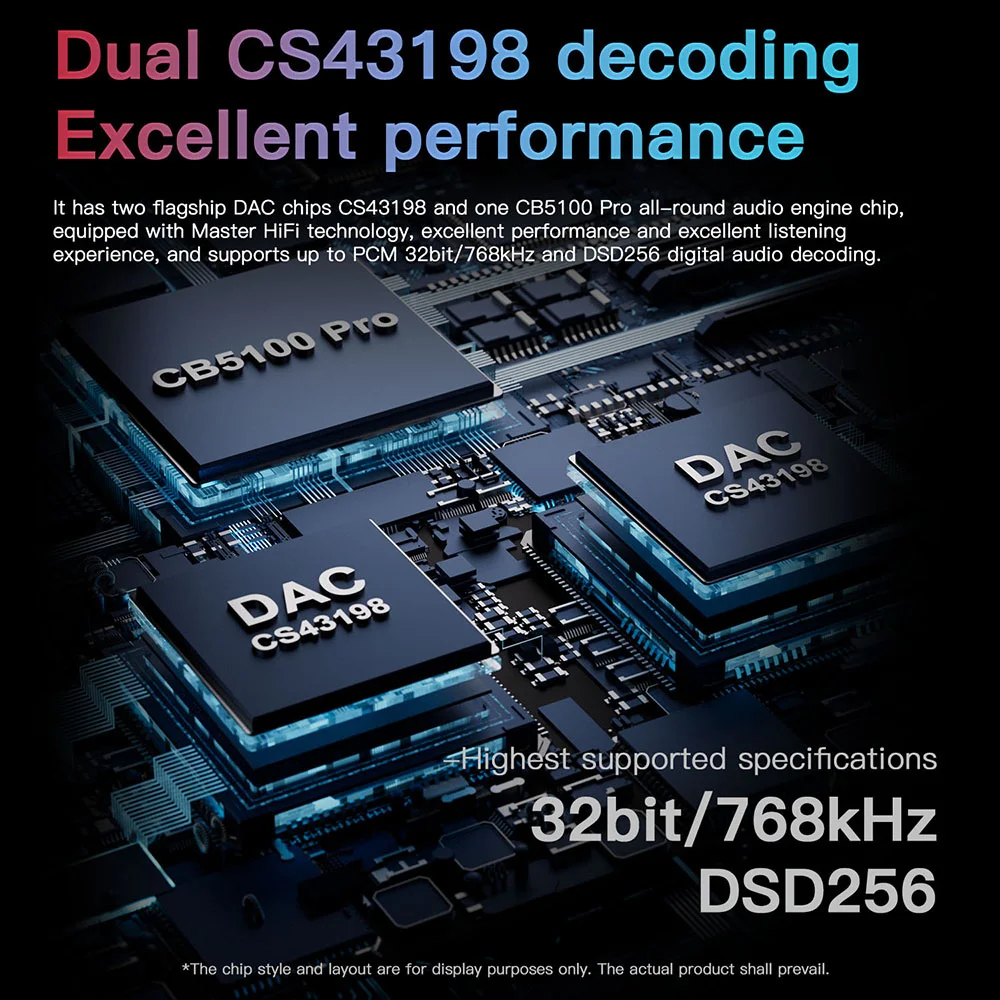
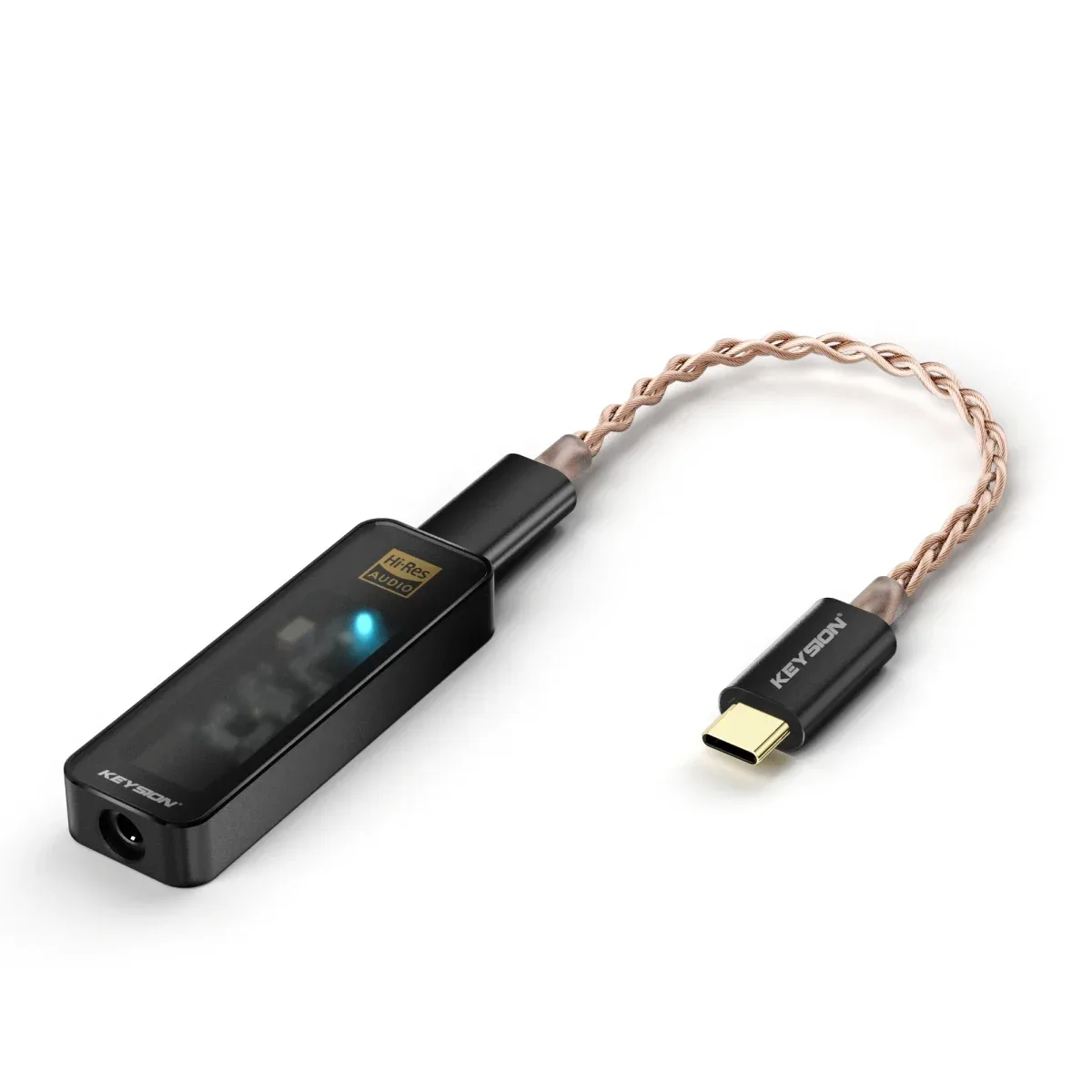
The 02 Pro is rated at 551mW@32Ω; the 02 at 361mW@32Ω. Converted with P=V²/R, here's how they behave at different loads:
| Load | 02 Pro (551mW@32Ω) | 02 (361mW@32Ω) | What it means |
|---|---|---|---|
| 32Ω | 551mW, about 4.2Vrms | 361mW, about 3.4Vrms | Plenty for most portable IEMs, with room to spare |
| 150Ω | about 118mW, about 4.2Vrms | about 77mW, about 3.4Vrms | Medium-impedance over-ears are no problem |
| 300Ω | about 59mW, about 4.2Vrms | about 39mW, about 3.4Vrms | 300Ω cans reach normal loudness; headroom gets tighter |
| 600Ω | about 29mW, about 4.2Vrms | about 19mW, about 3.4Vrms | Only some high-sensitivity high-impedance models; low-sensitivity ones won't drive |
Looking at the two sets of measurements, the 02 Pro's real edge over the 02 shows up above 300Ω. Into 32Ω high-sensitivity IEMs, both are far beyond what's needed, so audible differences come from the noise floor and signal-to-noise ratio rather than a lack of power (the 02 Pro's 4.4mm output measures 135dB SNR; the 02 comes in at 130dB).
Power is just the entry ticket. Three other things decide how well a headphone is driven: output impedance matching (keep it below 1/8 of the headphone's impedance, or the low end turns muddy), the distortion curve (does distortion climb steeply at high output?), and the noise floor (high-sensitivity IEMs pick up every bit of it).
So "more power is better" doesn't hold. A noisy amp driving sensitive IEMs can sound worse than a lower-power one with a clean floor. When you shop, read the SNR, noise floor, and output impedance in the spec sheet together (how to read specs: signal-to-noise and distortion parameters).
Three cases justify spending on more power: low-sensitivity planars or older low-sensitivity dynamics, classical and live recordings with wide dynamic swings that you play loud, and a high-impedance flagship (250Ω and up) as your main headphone.
Flip it around: if your daily driver is a 32Ω high-sensitivity IEM, the 02 — even an entry model — is enough, and the budget goes further spent on headphones and sources (portable vs desktop).
Turn the volume up to the upper end of your usual range (peaks around 85-90dB) and play a passage with big dynamics. Low end stays tight, the climax doesn't distort, and you still have headroom left — that counts as properly driven. If it breaks up or turns mushy around 80% volume, check the source files and volume settings first, then suspect the power stage (the EQ-based troubleshooting routine is in tuning with EQ).
This article was written by an engineer at the KEYSION audio lab, based on measured data from the KEYSION 02 Pro, KEYSION 02, KEYSION 01, and KEYSION S2 plus publicly available formulas. The views reflect individual judgment and are meant as buying guidance.
FAQ
Is more amp power always better?
No. Enough is enough — surplus power doesn't improve the sound, and it either sits unused at low gain or amplifies noise at high gain. High-sensitivity IEMs care more about the noise floor and SNR; it's low-sensitivity headphones that need the watts.
How much power do 32Ω and 300Ω headphones need?
A 32Ω high-sensitivity IEM is fine with about 10-40mW. A 300Ω headphone only needs 30-60mW on paper, but it wants roughly 3-4Vrms of voltage swing, so the real constraint is output voltage into high impedance, not the power figure measured into 32Ω.
What can the 02 Pro's 551mW drive?
In practice it drives most headphones from 16-150Ω with ease. 300Ω cans reach normal loudness with slightly tighter headroom, and at 600Ω only high-sensitivity models work. Low-sensitivity planars that want a few hundred milliwatts still call for a desktop amp.
What does insufficient power sound like?
Typical signs: distortion at higher volume, weak and muddled bass, a compressed feel in dynamic passages, or simply never reaching the loudness you want. If it sounds fine at low volume and only lacks loudness, the voltage swing is usually the limit.
Can a dongle DAC drive big headphones?
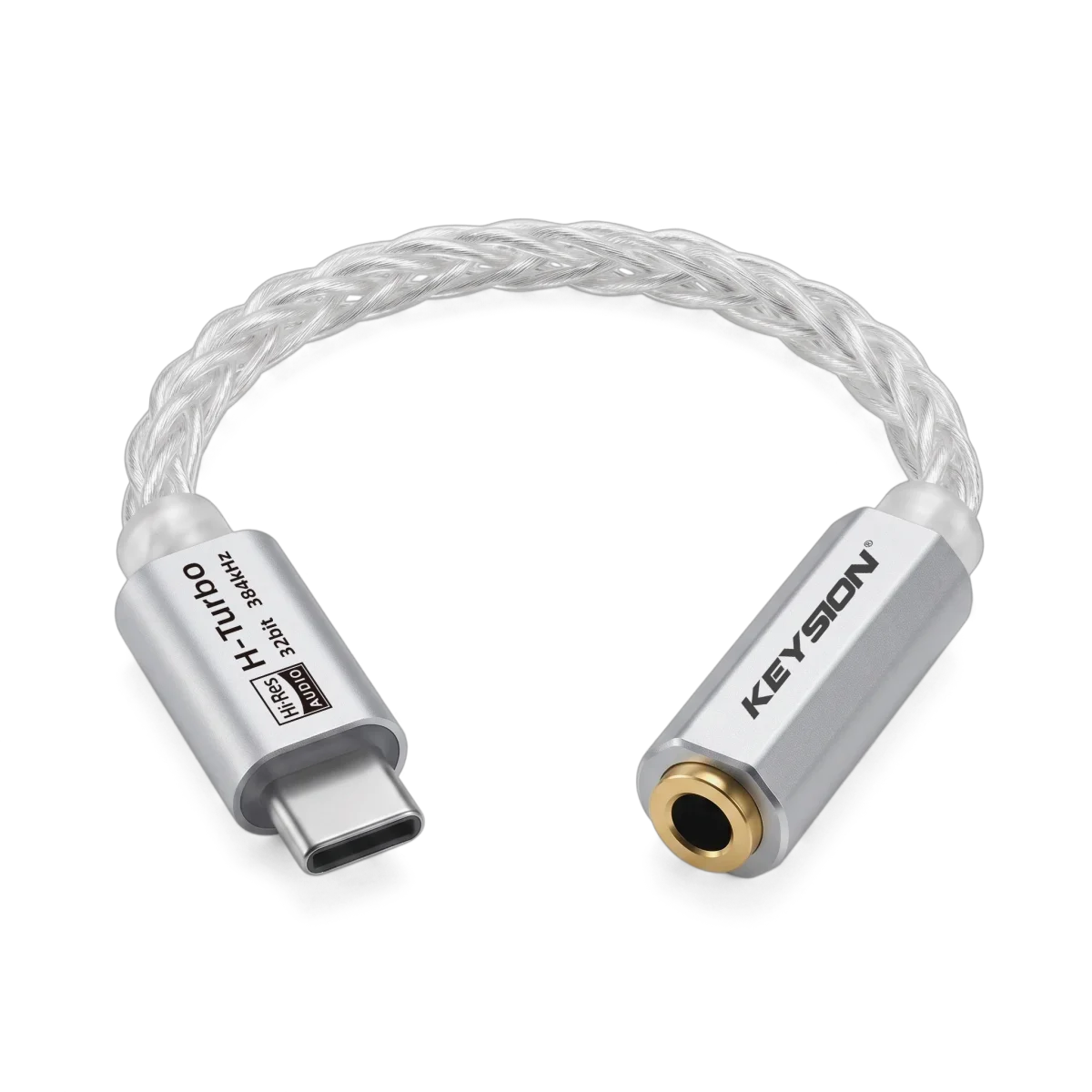
It depends on impedance and sensitivity. A 300Ω high-sensitivity headphone is listenable with a high-voltage dongle (the 02 Pro, for instance). Low-sensitivity planars and 600Ω low-sensitivity models are out — those need the power and voltage of a desktop amp. An entry dongle like the S2 suits 32Ω-class IEMs.
Related products
Related articles