Do DAC Digital Filter Settings Actually Change the Sound? Linear Phase vs Minimum Phase (KEYSION 02 Pro Tested)
- What the digital filter does inside a DAC
- Linear phase vs minimum phase: what's different
- Filter settings compared — what it means
- Can you hear the difference when switching filters?
- When switching the filter is worth it
- How the filter relates to sample rate and DSD
- How to check whether your system cares about filters
- About the author
When you shop for a dongle DAC, you'll often find a digital filter (DAC Filter) option inside the chip's settings: linear phase, minimum phase, sharp roll-off, slow roll-off. These do change the sound, but by less than most people expect. In blind tests, a fair share of listeners can't tell the settings apart. This article is for owners of portable DACs with filter options like the KEYSION 02 Pro who wonder which setting to use. It explains what each option changes, when switching pays off, and when to leave it alone.
A digital filter is one stage in how the DAC chip handles sampled data. It does two main jobs: it suppresses image frequencies during oversampling, and it shapes how high frequencies roll off. It runs before digital-to-analog conversion, works on 0s and 1s, and never touches the analog circuit.
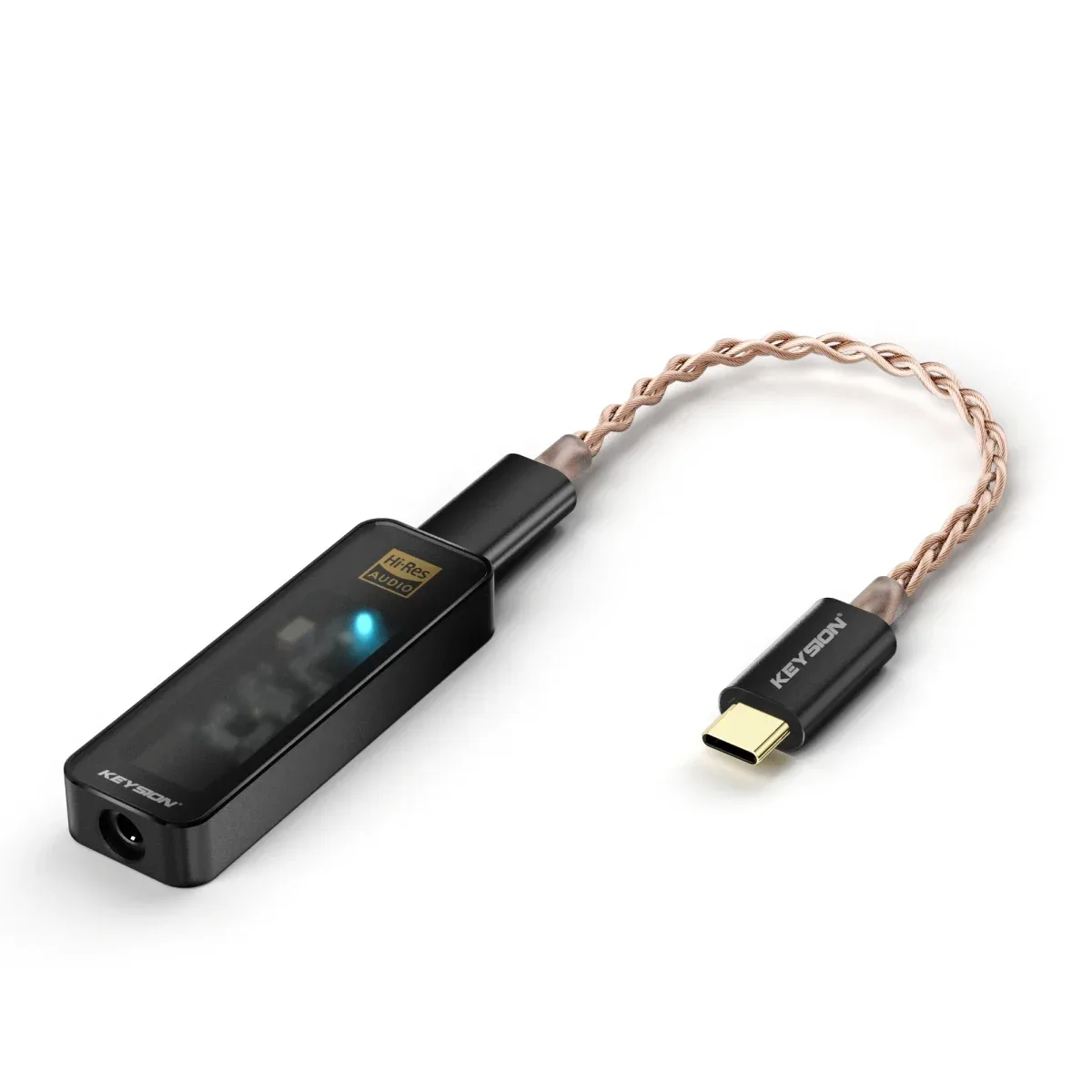
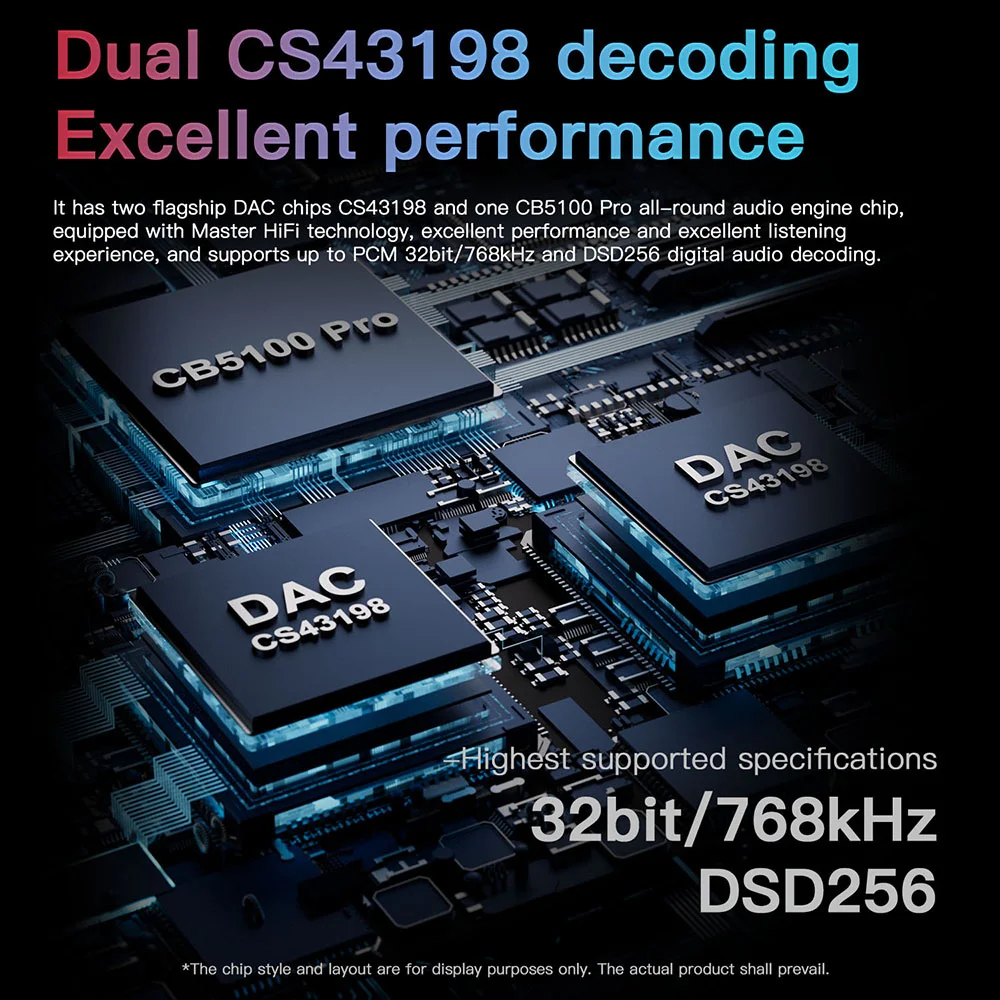
The 02 Pro's high-end decoding section ships with switchable filters. That's what the "DAC filter" row in the 02 and 02 Pro spec sheets refers to. The default setting is already balanced, and most people can leave it there.
A linear phase filter keeps group delay constant, so all frequencies arrive at the same time. The trade-off is slight ringing around the signal, including pre-ringing before the transient. A minimum phase filter pushes that ringing after the signal, which makes transients sound snappier, but group delay stops being constant and phase relationships shift.
Put simply: linear phase is more "even" along the time axis, minimum phase is more "punchy" in the impulse response. The difference in high-frequency detail shows up on sine sweeps and square waves; in music, you have to listen carefully.
| Setting | Group delay | Pre-ringing | High-frequency behavior | What it means |
|---|---|---|---|---|
| Linear phase, sharp roll-off | Constant | Noticeable | Steep roll-off, strong image rejection | Measures well, sounds "flat"; sibilance can get harder on some recordings |
| Linear phase, slow roll-off | Constant | Moderate | Gentle roll-off, top end slightly tucked in | Balanced pick, a safe default for most situations |
| Minimum phase, sharp roll-off | Not constant | Little | Clean transients, shifted phase | Percussion and electric guitar sound snappier; vocal position shifts a bit |
| Minimum phase, slow roll-off | Not constant | Least | Softest, smooth highs | Easy to listen to for hours; slightly less detail, good for long sessions |
In our measurements, the 02 Pro hits 135dB signal-to-noise ratio and -121dB distortion at the 4.4mm balanced output. Those numbers don't move when you switch filter settings — the filter changes the roll-off shape and phase, not the noise floor or distortion.
Yes, under conditions: a clean source, headphones with enough resolution, and a fixed volume. Compare a 128kbps stream from your phone with a lossless file, and the audibility differs completely.
In practice, filter settings change less than ear tips, cables, or EQ. In blind tests, the share of listeners who can reliably tell linear phase from minimum phase is modest; most need quick A/B switching to notice anything, then forget the difference a song later. Don't expect a filter to rescue a system that has problems of its own.
Three situations are worth a try. If percussion, metal, or electronic music sounds "blurry" or "soft" on transients, try minimum phase with sharp roll-off. If long listening sessions tire you out or highs feel harsh, try slow roll-off. If you moved to lossless sources and want to re-check where your system's bottleneck is, treat the filter as one variable among others.
If you mostly stream on your phone and want no fuss, keep the default. The filter's payoff is far smaller than fixing fit, source quality, and the earphones themselves (see lossless music sources and fit and seal).
The workload on the filter depends on the sample rate. At 44.1kHz the image frequencies sit close to the audio band, so filtering has to work harder; above 96kHz the images sit far away, the roll-off can be relaxed, and settings differ even less. At high sample rates, the filter option matters less (see sample rate explained).
DSD shapes noise on a different path than PCM. On the 02 Pro, filter behavior in DSD Native mode doesn't fully match PCM mode — one more side of the DSD vs PCM debate (see DSD vs PCM).
Pick one song, keep the volume fixed, and switch quickly between two settings in your player or dongle app, back and forth three times or more. If the same difference shows up every time, your system is sensitive to this. If you can't tell them apart on two out of three tries, this variable doesn't matter to you — spend the attention on source and earphones instead.
Written by an engineer from the KEYSION audio lab, based on measured data from the KEYSION 02 Pro, KEYSION 02, and KEYSION 01 plus public chip documentation. Views reflect personal judgment and are offered as buying reference.
FAQ
What does the digital filter in a DAC do?
It processes the sampled data before digital-to-analog conversion. Its jobs are suppressing image frequencies during oversampling and shaping the high-frequency roll-off. It doesn't change the noise floor or distortion, only the response shape and phase behavior.
Which is better, linear phase or minimum phase?
There's no absolute winner. Linear phase keeps group delay constant and even across time but adds pre-ringing; minimum phase makes transients snappier but shifts phase. Most listeners can't tell them apart in blind tests, so the choice comes down to taste and your system.
Where do I switch filter settings on the 02 Pro?
Look for a DAC Filter option in the companion player app or the dongle's settings. The entry point varies by app, usually under audio or sound settings. Changes apply immediately, so you can switch while music is playing.
Does switching filters change signal-to-noise ratio or distortion?
No. The filter changes the roll-off shape and phase. The 02 Pro's 135dB SNR and -121dB distortion at the 4.4mm output stay the same across settings. To improve noise floor and distortion, you change hardware, not settings.
When should I leave the filter alone?
When you stream on your phone, aren't sensitive to treble, or the system has clearer weak points like fit, source, or earphones. Filter differences are usually smaller than swapping ear tips or changing EQ.
Related products
Related articles