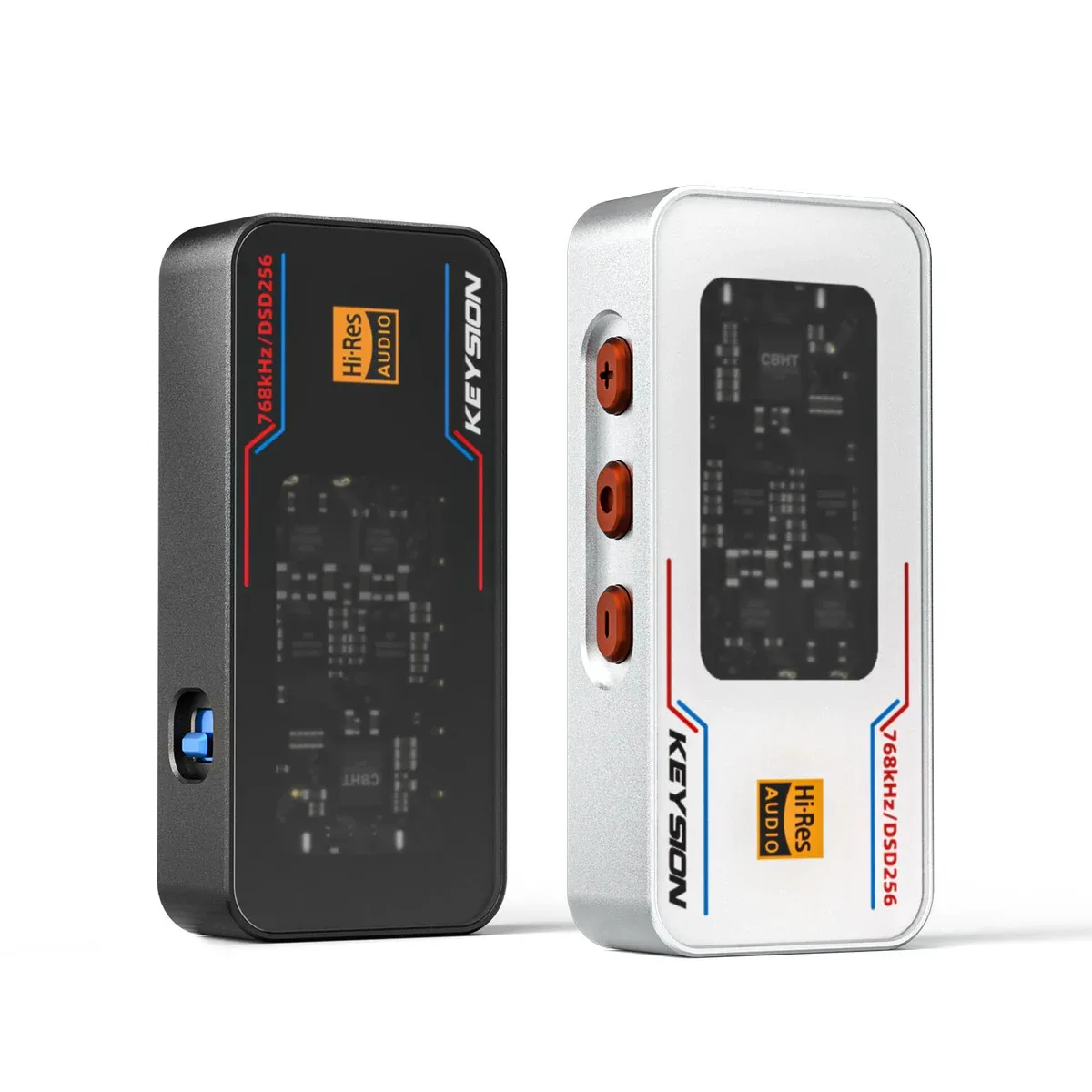
What’s the real difference between DSD and PCM? Is DSD256 worth changing your source for? The trade-offs we measured with KEYSION 02
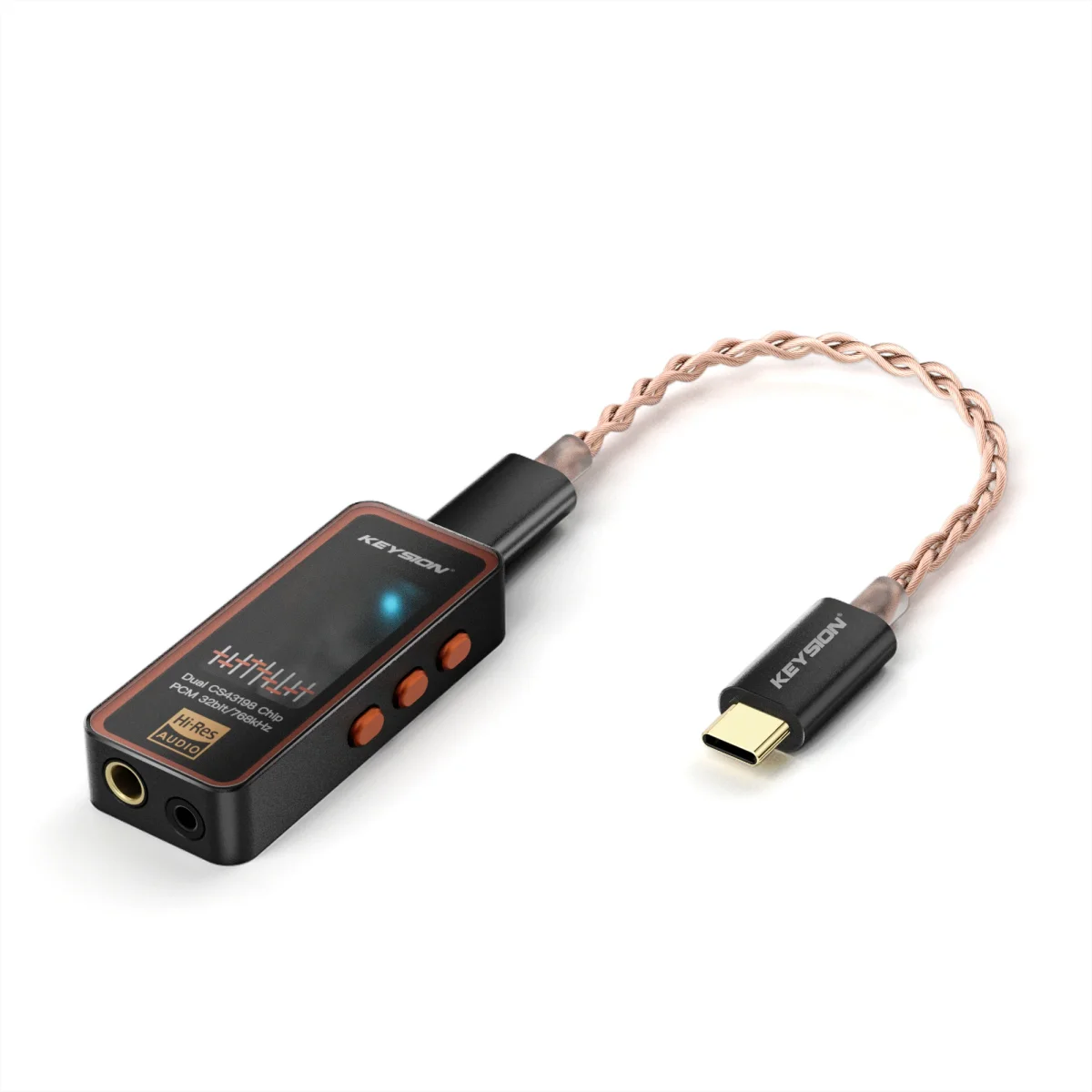
This is for dongle users who keep asking whether to move up to DSD. It answers two things: DSD and PCM are two different digital audio encodings, and whether DSD256 is really worth chasing a new source for. Take the conclusion first: the sound difference between DSD and PCM is something the vast majority of people can’t pick out on most gear, and quality DSD256 releases are thin on the ground. Unless you already own a stack of native 1bit recordings, there’s no reason to swap your device just for DSD256.
PCM records each sample’s amplitude point by point at a fixed sample rate and bit depth — say 24bit/96kHz, where every instant is quantized into 2^24 steps. DSD works the other way: at an extremely high sample rate it records only a 1bit “up/down” trend each time and leans on noise shaping to push the quantization noise up into frequencies you can’t hear.
In short, PCM is “how many steps describe the height of an instant”, while DSD is “how many up/down transitions in one second it takes to approximate the waveform”. Both end up reproducing music; they just sample and quantize on different ideas.
DSD’s advantage isn’t that it’s “closer to analog” — it’s noise shaping. It takes the huge noise created by 1bit quantization and concentrates it above 20kHz, leaving the audible band cleaner. Some high-resolution PCM DACs already do this very step internally.
So claims like “DSD is naturally smoother” are more marketing than measurement. On the bench, well-implemented DSD and PCM decoding both reach very low distortion, and the differences often sit outside what your ears can hear.
DSD releases fall into two groups: native 1bit recordings, and “fake DSD” that’s been converted from PCM. Truly native DSD256 recordings are far scarcer than CDs or 24bit lossless, mostly coming from a few classical labels and small jazz outfits. Much of the DSD you can download on streaming platforms is transcoded from masters, not actually captured in 1bit.
The bottom line is plain: whether DSD256 sounds good starts with whether you have DSD material worth listening to. Without a stack of native recordings, paying just because a unit supports DSD256 is poor value.
| Spec | 02 Pro (CNY 499, USD 74) | 02 (CNY 349, USD 52) | 01 (CNY 219, USD 33) | What it means |
|---|---|---|---|---|
| PCM decode | 32bit/768kHz | 32bit/768kHz | 32bit/384kHz | All handle high-res PCM |
| DSD (DoP) | 64/128/256 | 64/128/256 | 64/128 | Feeds all mainstream DSD |
| DSD (Native) | 64/128/256 | 64/128/256 | 64/128/256 | All three handle native DSD256 |
| Signal-to-noise ratio | 135dB@4.4mm / 130dB@3.5mm | 130dB@4.4mm / 125dB@3.5mm | 130dB@3.5mm | All in the zone ears can’t tell apart |
USD figures are converted at the system rate of 0.1488: 499→74, 349→52, 219→33.
Worth it: you already own native DSD recordings, listen to classical or jazz, and your gear can decode native DSD directly. In that case, a machine like the 02 Pro or 02 with native DSD256, paired with a decent source, is a legitimate purchase.
Not worth it: you mostly stream, listen to pop or podcasts, or you just want the spec sheet to “look high”. Plain lossless PCM is the more practical choice — supporting more formats doesn’t mean it’s more enjoyable to hear. If you actually want better sound, fix your headphone matching and volume levels first, not the format.
Supporting DSD doesn’t mean driving it well; power and headphone matching still matter.
To tell whether a unit truly decodes DSD, look at whether it says Native or DoP.
Source quality beats format: the same DSD256 file is still bad if the recording is bad.
To go deeper on sample rates, read what sample rate actually affects; if the format debate interests you, see R2R vs Delta-Sigma and whether the Hi-Res badge is worth it.
Supporting DSD doesn’t mean driving it well; power and headphone matching still matter.
To tell whether a unit truly decodes DSD, look at whether it says Native or DoP.
Source quality beats format: the same DSD256 file is still bad if the recording is bad.
To go deeper on sample rates, read what sample rate actually affects; if the format debate interests you, see R2R vs Delta-Sigma and whether the Hi-Res badge is worth it.
Author: KEYSION audio engineering team. The format comparison comes from our lab measurements and standard signals; listening impressions are testers’ subjective opinions and vary by person and gear, so these results don’t amount to a guarantee that DSD is always better than PCM.
FAQ
Which sounds better: DSD or PCM?
On measurements, both reach very low distortion with proper decoding, and most people can’t tell them apart by ear. DSD’s edge is noise shaping, PCM’s is deeper bit sampling; the style gap outweighs the format itself.
Do I need DSD256? Can the average person hear it?
First check whether you have native DSD256 sources. If not, supporting it won’t actually help your listening; if you do, it only matters alongside a device that decodes DSD directly.
What’s the difference between DSD Native and DoP?
Native sends the raw DSD data stream directly; DoP wraps DSD inside PCM frames. The decoding results are close, and the difference lies in how the device handles it. Many units support both.
Does converting 24bit lossless to DSD256 sound better?
Transcoding adds no information — it just reshapes PCM into DSD form, so the sound barely changes and may even pick up traces of extra processing in some cases. Don’t expect “converted to DSD means clean”.
Should I even care about DSD if I mostly stream?
Streaming is dominated by PCM, and the vast majority of content has nothing to do with DSD. Spending your budget on headphone matching and a source subscription beats fretting over DSD.
Related products
Related articles