High vs Low Gain on a Headphone Amp: When to Flip the Switch
This is for anyone who has stared at the "Low / High" switch on a headphone amp without being sure which way to push it. The short version: treat low gain as the default and only switch to high when a headphone stays weak and soft even with the volume nearly maxed. High gain is just a bigger amplification factor, not better sound, and it lifts the noise floor right along with the signal.
Gain is the factor by which a signal gets amplified. Low gain scales it up less, high gain scales it up more. An amp's job is to boost the input to a level loud enough to drive your headphones.
The common misunderstanding is assuming "high gain = more refined sound." It is not. High gain only raises the output level so that hard-to-drive headphones (high impedance, low sensitivity) can reach adequate volume. It adds nothing to sound quality, and it often makes things messier.
Look at two numbers first: impedance and sensitivity. At the same output voltage, high-impedance headphones demand more voltage, and low-sensitivity ones pull more current. If both look unfavorable, you are dealing with an inherently hard-to-drive headphone where high gain earns its keep.
A more practical check skips the math and watches behavior. Crank the volume to where it sounds comfortable; if the dial or keys are already close to their limit and there is almost no room left to raise it, the amp gain or power is genuinely short, and that is the moment to consider high gain or a stronger front-end.
The classic case: you are wearing high-impedance cans, the volume dial sits near its maximum, and the sound still feels weak and light on bass. Flip to high gain, the output level climbs, and dynamics and punch come back.
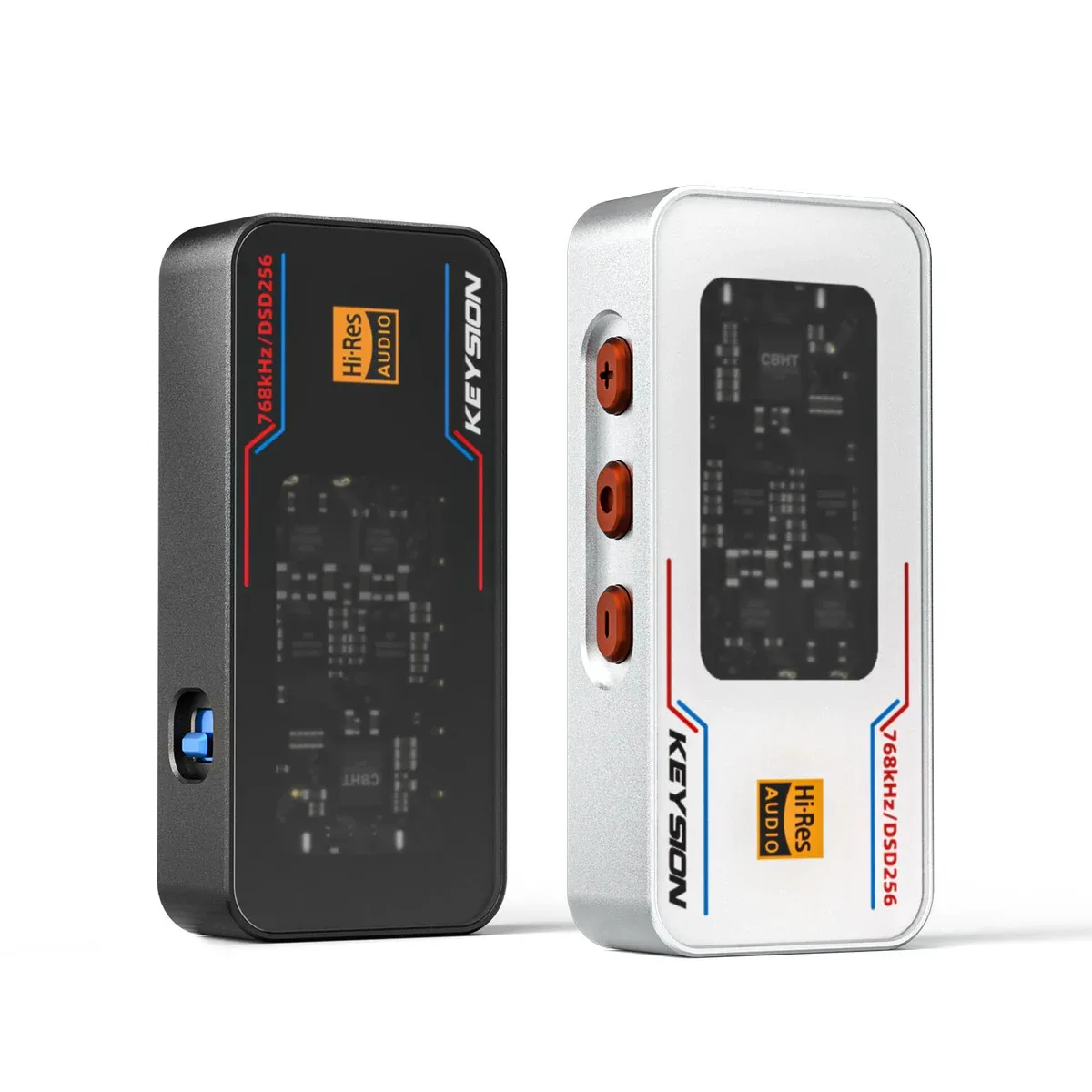
High-impedance, low-sensitivity, and planar headphones are the ones that suit high gain. They need enough voltage swing to open up, and the reasoning is covered in this headphone power guide. Something like the KEYSION 02 Pro, a portable DAC with a 4.4mm balanced output, already carries more driving power through balanced — in most cases low gain is enough.
High-sensitivity IEMs are where high gain is off-limits. They respond to faint noise easily, and high gain amplifies the amp's own noise floor, which becomes a clearly audible hiss or buzz — noisier, not better.
The check is direct: after switching to high gain, pause playback or wait for a gap between tracks and listen whether the background stays clean. If you hear noise, drop back to low gain. One thing is easy to overlook: with the same sensitive IEM, where you park the volume while on high gain matters too. A lot of people bump to high gain and then just walk the volume back down a click at a time to tame the harshness — the headphone never gets the drive it needs, and the noise shows up first. If you want a quiet front-end, drop back to low gain instead of lowering the volume.
| Use case | Gain to use | Why | What this means |
|---|---|---|---|
| Ordinary dynamic IEMs | Low | Sensitive enough; low gain already gives you volume | Clean background, noise floor rarely audible |
| High-sensitivity multi-BA IEMs | Low | They are noise-sensitive; high gain exposes the noise floor | Don't chase the extra volume; cleanliness matters more |
| High-impedance over-ears | High | They need more voltage swing | Volume climbs, and dynamics and punch come through |
| Low-sensitivity planars | High | They need more output power | Direct drive may fall short; pair them with enough drive |
Portable DACs with a 4.4mm balanced output have one extra advantage: balanced output usually delivers higher power and a larger voltage swing. So many over-ears behave well on balanced with low gain alone.
A practical routine is "balanced output + low gain first," then moving to high gain or a more powerful device only if that does not work — rather than jumping straight to high gain.
This article was written by the KEYSION audio review team, based on headphone amp gain design principles and several rounds of hands-on comparisons. Parameters and impressions here reflect individual experience only; your own gear and your listening preferences are what matter.
FAQ
What's the difference between high and low gain on a headphone amp?
It comes down to the amplification factor. High gain outputs more voltage, so hard-to-drive headphones get louder, but while amplifying the signal it also amplifies the noise floor. If your headphones reach a comfortable volume on low gain, use low gain.
When should I turn on high gain?
When low gain has the volume nearly maxed and the headphones still feel weak and soft in dynamics, switch to high gain — typically high-impedance, low-sensitivity over-ears or planars.
Does high gain make the sound better?
No, and it can make it worse. High gain scales the factor, not the quality, and it usually adds more noise and distortion. It is only worth it when you are short on volume.
Why do sensitive IEMs hiss with high gain?
Sensitive IEMs respond to faint noise, and high gain lifts the amp's own noise floor to an audible level. The fix is dropping back to low gain, or using a source with a lower noise floor.
How do I use the gain switch on a portable DAC?
Start on low gain and keep it if the volume is fine; switch to high only if the volume is maxed and still weak, or if you want more dynamics. Gear like the KEYSION 02 Pro with a 4.4mm balanced output already delivers more power through balanced, so low gain is often enough.