Dynamic, Balanced Armature, Planar, Electrostatic: Which Headphone Driver Is Right for You?
- Dynamic drivers: why most earphones look like this
- Balanced armature: more detail, not necessarily a better sound
- Planar drivers: textured bass, if you give them power
- Electrostatic drivers: a detail ceiling with a matching entry bar
- Which driver for you: one table settles it
- Pairing advice: rule out the dealbreakers first
- About the Author
This guide is for anyone torn between dynamic, balanced armature, planar, and electrostatic drivers. The takeaway first: no single driver is inherently better. What actually decides the sound is whether the driver matches your gear, especially how much power it gets. For commuting and phone-only listening, dynamic is the least hassle; if you chase detail, consider multi-BA; only once you move up to over-ears or a desktop rig do planar and electrostatic really belong in the picture.
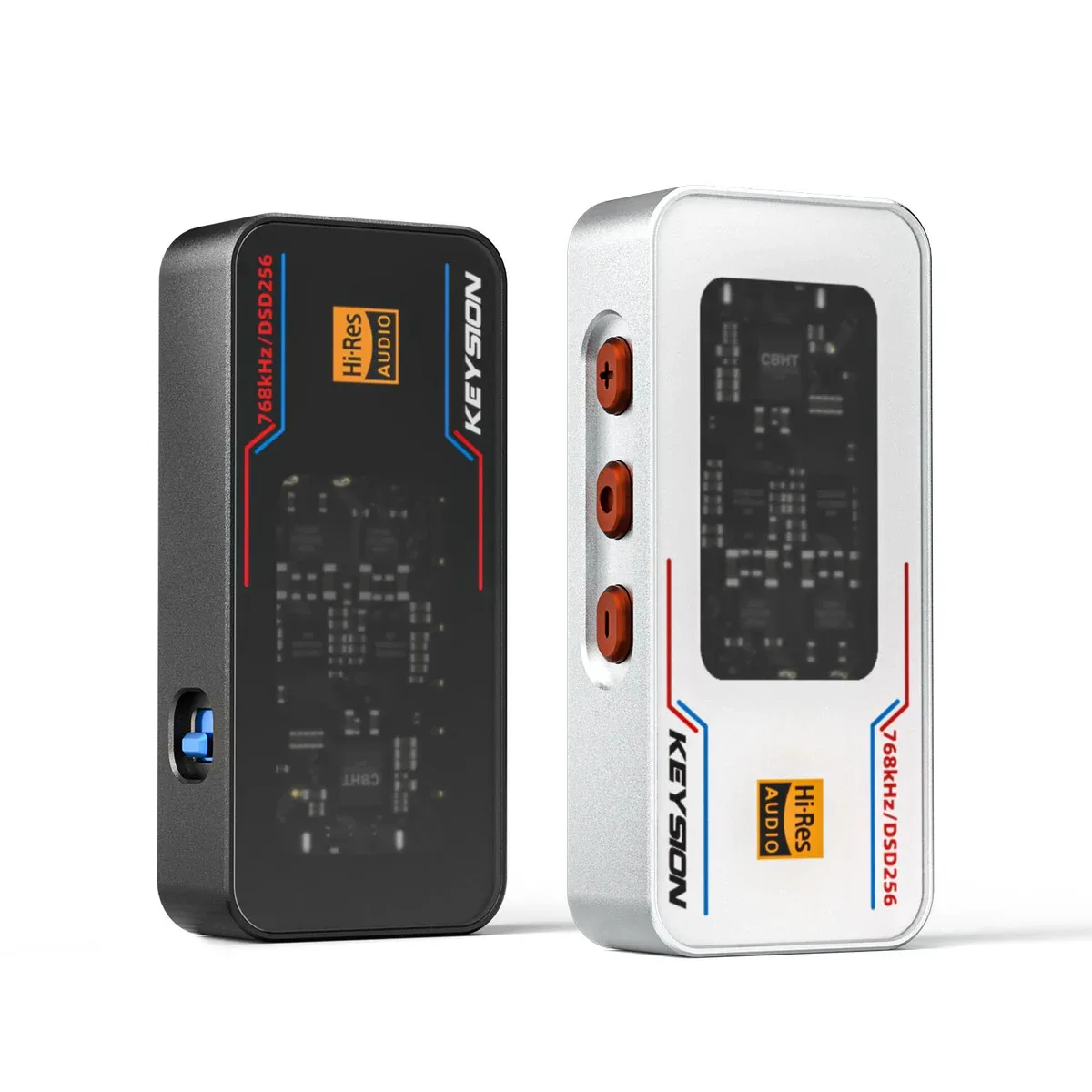
A dynamic driver pushes a diaphragm with a voice coil inside a magnetic field. The construction is simple and cost-effective, which is why most earphones and headphones use it. Frequency response tends to be fairly smooth, bass comes across naturally, and sensitivity is generally high, so even a phone can make it loud enough. A portable DAC like the KEYSION 02 easily drives most dynamic earphones.
Dynamic has its limits. Bigger diaphragms struggle to stay clean at high power and high resolution, and transient response trails higher-end BAs. Still, for nine out of ten listeners, that balance and easy-going nature reads as a plus rather than a drawback.
Balanced armature drivers were first used in hearing aids. A metal armature pivots within a magnetic gap to drive a tiny diaphragm. Sensitivity is high, often 110-120 dB/mW, and the small size lets several units fit inside one shell. Multi-BA earphones usually come out ahead on detail and separation.
The trade-offs are clear too. A single BA covers a narrow band on its own, so you need several units plus a crossover to span the full range. Get the crossover wrong and the sound turns thin, cool, and sometimes sibilant. So when you pick a multi-BA, think crossover and tuning first, not driver count.
A planar driver spreads the diaphragm into one large flat sheet held between magnets, so force is distributed evenly. Transient and distortion performance tend to be better, and the low end has a solid, textured feel.
The cost is lower sensitivity and a real need for power. Phone-only listening often leaves planar earphones sounding muffled with little dynamics. To get the most out of them, you want a desktop amp or a high-output portable DAC.
Electrostatics drive a thinner, lighter diaphragm with an electrostatic field. In pure information and micro-detail they sit at the top of the four, and the low distortion tends to flatter classical music.
But electrostatics require a dedicated electrostatic amp and a bias supply. The whole system is expensive and nearly impossible to carry around. It is an endgame choice, not a sensible first pair.
| Driver type | Sensitivity | Power needed | Sound character | Best for | What this means |
|---|---|---|---|---|---|
| Dynamic | High | Low | Balanced, natural bass, easy-going | Commuting, phone use, first pair | Works with nearly any source, hard to get wrong |
| Balanced armature | Very high | Low | Strong detail, can sound thin and dry | Detail and separation seekers | Mind the crossover and tuning, don't count drivers |
| Planar | On the lower side | High | Good texture, fast transients, low distortion | Desk users, over-ear listeners | Needs enough power or it sounds muffled |
| Electrostatic | Varies | Very high | Detail ceiling, good micro-dynamics | Classical fans, high-end listeners | Needs a dedicated electro amp; highest cost and barrier |
Start by ruling out drivers you cannot power properly. Planars and larger over-ears deserve plenty of power first; this look at headphone power, impedance and sensitivity walks through the numbers. Dynamic and BA earphones ask for little power, so the real concern is noise floor. A high-sensitivity earphone with a low-noise front end is what reveals a clean background.
On phone-only listening, dynamic's easy-going sound is the biggest asset. A small dongle like the KEYSION 01 or 02 Pro can improve drive quality noticeably, but the subjective part of the sound is still settled by your ears.
This article was written by the KEYSION audio review team, based on the engineering principles of each driver type and hands-on listening comparisons. Parameters and impressions only reflect personal experience; please check any pairing against your own gear and listening preferences.
FAQ
Which driver sounds best: dynamic, balanced armature, planar, or electrostatic?
There is no absolute best, only what suits you. Dynamic is balanced and smooth, good for commuting and direct phone driving; balanced armature pulls out more detail, though multi-driver models can sound thin and cold; planar offers textured lows and transparency but works best with a powerful source; electrostatic sits at the detail ceiling yet demands a dedicated amp. Budget and use case usually decide the real sound more than driver type.
Which driver fits an earphone plugged straight into a phone?
Dynamic. Dynamic drivers are generally more sensitive and friendlier to impedance, so a phone can produce decent volume and bass. For balanced armature, pick a low-impedance, high-sensitivity model; planar driven straight often sounds muffled, better to avoid.
Why do multi-BA earphones cost more?
Multi-BA stacks up crossovers and driver counts, so the cost is genuinely higher. But more drivers do not mean better sound. Several units create crossover challenges, and done poorly the sound turns thin and harsh. Focus on tuning and crossover, not driver count.
What is the difference between planar and electrostatic headphones?
In both, the load is spread evenly over the diaphragm. Planar is driven by magnetic force, has acceptable sensitivity, and ordinary amps can drive it with enough power; electrostatic is driven by an electrostatic field with a thinner diaphragm and needs a dedicated electro amp plus a bias supply, a much higher barrier.
First time using a portable DAC. How do I pair earphones with it?
Check impedance and sensitivity first, then match power. A basic dynamic earphone with a hundreds-of-milliwatt portable DAC (for instance, the KEYSION 02 at 361mW/32ohm) is enough; only over-ears or planars call for higher-power units. Any device that reaches a comfortable volume for your earphones is a reasonable match.