FLAC, DSD and Bluetooth Codecs: What Actually Changes What You Hear
- File formats and codecs are two different things
- The local lossless family: FLAC, ALAC, WAV, DSD — how to choose
- Bluetooth codec comparison: who does what, at what bitrate
- LDAC is high-quality lossy, not lossless
- When switching formats or codecs actually changes what you hear
- FAQ
- Is FLAC always better than MP3?
- Is LDAC lossless?
- Can iPhone only use AAC?
- Do I need DSD?
- Should I upgrade my source or my playback gear?
- About the author
File formats and Bluetooth codecs get lumped together all the time, but they're two separate links in the chain: FLAC/WAV/DSD decide how faithfully a local file is reproduced, while SBC/AAC/aptX/LDAC decide how much the wireless link compresses it. Let's get the conclusion out of the way: local lossless is worth keeping, but every Bluetooth link today is lossy — LDAC at 990kbps is high-quality lossy, not lossless. Most people can't tell 320kbps AAC from FLAC in a blind test, unless the rest of the chain (DAC, amp, headphones) is transparent enough.
This post separates the two kinds of "formats" and answers the question of whether you should upgrade your source.
When you play locally, the file goes straight from storage into the DAC for decoding, with no compression in between — FLAC decompresses to exactly what WAV would give you. With Bluetooth, the file is first compressed into a codec (SBC, AAC, aptX, or LDAC), then transmitted wirelessly and decoded at the earbuds. That step always loses information. So storing FLAC doesn't guarantee you're hearing lossless; the Bluetooth link already sets the ceiling.
| Format | Compression | Typical bit depth/sample rate | Compatibility | What it means |
|---|---|---|---|---|
| WAV | None | 16-24bit / 44.1-192kHz | Every platform | Bulky, no tags, not worth storing on purpose |
| FLAC | Lossless | 16-24bit / 44.1-384kHz | Nearly every player | The mainstream pick, about half the file size |
| ALAC | Lossless | 16-24bit / 44.1-192kHz | Apple ecosystem | Native support on Apple devices |
| DSD | 1bit pulse-density | DSD64-256 | Few devices support it | A different system; most people can't hear it beat 24bit/96kHz FLAC |
The audible ceiling sits a little above 16bit/44.1kHz (CD spec). 24bit/96kHz FLAC already covers the headroom most people need; beyond that, higher sample rates matter more at the recording and mastering stage than at playback. DSD is a different format built on 1bit pulse-density modulation — nice to collect, but its edge in blind tests isn't consistent.
| Codec | Peak bitrate | Max spec | Typical latency | Main platforms | What it means |
|---|---|---|---|---|---|
| SBC | 328 kbps | 16bit/48kHz | ~100ms | Fallback on every Bluetooth device | It plays; don't chase sound quality |
| AAC | 320 kbps | 16bit/44.1kHz | ~100ms | Default on iPhone | The daily ceiling for Apple users |
| aptX | 352 kbps | 16bit/48kHz | ~70ms | Qualcomm Android | A bit better than SBC |
| aptX HD | 576 kbps | 24bit/48kHz | ~150ms | Some Android phones | Looks good on paper, gains are modest |
| LDAC | 990 kbps | 24bit/96kHz | ~150-200ms | Android 8.0+ | Closest to wired over Bluetooth, but it steps down |
| LC3 (LE Audio) | 345 kbps | 16bit/48kHz | ~20-30ms | Bluetooth 5.2+ | Low latency and efficient, sound is average |
LDAC's 990kbps is a peak figure — in practice it steps down to 660 or 330kbps depending on signal quality, and dropping a tier in a noisy subway is normal. aptX HD's 576kbps looks better than aptX on paper, but the audible gain in blind tests is small, and it's since been replaced by aptX Adaptive. LC3 is the default codec for LE Audio; it's about low latency and low power draw, not better sound.
This is the most misunderstood point in Bluetooth sound-quality talk. LDAC supports 24bit/96kHz at 990kbps and gets close to entry-level wired HiFi in how it sounds, but its compression is still lossy — the wireless bandwidth is what it is. When manufacturers say "Hi-Res Wireless," they mean the spec ceiling, not lossless fidelity. Head-to-head with a wired connection on the same earphones, LDAC is closer than most people expect, but the gap is real — especially after it steps down in a difficult environment.
Three conditions have to line up: earphones transparent enough to resolve high-frequency detail, a clean playback chain (low noise floor, low distortion), and a decent recording (a bad recording stays bad on DSD). Only when all three hold can you actually hear 320kbps AAC versus FLAC; miss any one, and upgrading formats is money spent for nothing.
A more practical order of priorities: get the chain clean first — a DAC and amp that are transparent enough, and earphones matched to their sensitivity (see How Much Power Do Headphones Actually Need) — then worry about the source format. For most people, the bottleneck is the playback gear, not the file.
No. On ordinary gear, most people can't hear the difference between 320kbps MP3/AAC and FLAC; on a transparent chain, the air around the highs and the dynamic detail are audible. With a bad recording, both sound equally bad.
No. LDAC is a high-quality lossy codec — 990kbps peak, 24bit/96kHz support — but the compression drops information, and it steps down to 660/330kbps depending on signal quality. It's close to entry-level wired listening, but it's not lossless.
Bluetooth audio on iPhone tops out at AAC (320kbps). The AAC encoder is good and sounds fine on iPhones, but the bitrate ceiling blocks Hi-Res transmission. For LDAC you need an Android device.
For playback, 24bit/96kHz FLAC is already enough; DSD's value lives mainly in the recording and archiving world. In blind tests, DSD's edge over high-rate PCM is inconsistent, so ordinary listeners shouldn't reshuffle their gear for it.
Look at the chain first: are your earphones' sensitivity matched, and is the DAC/amp noise floor low? When the chain is dirty, upgrading the source buys you little; once it's transparent, the difference between 320kbps and FLAC is worth caring about.
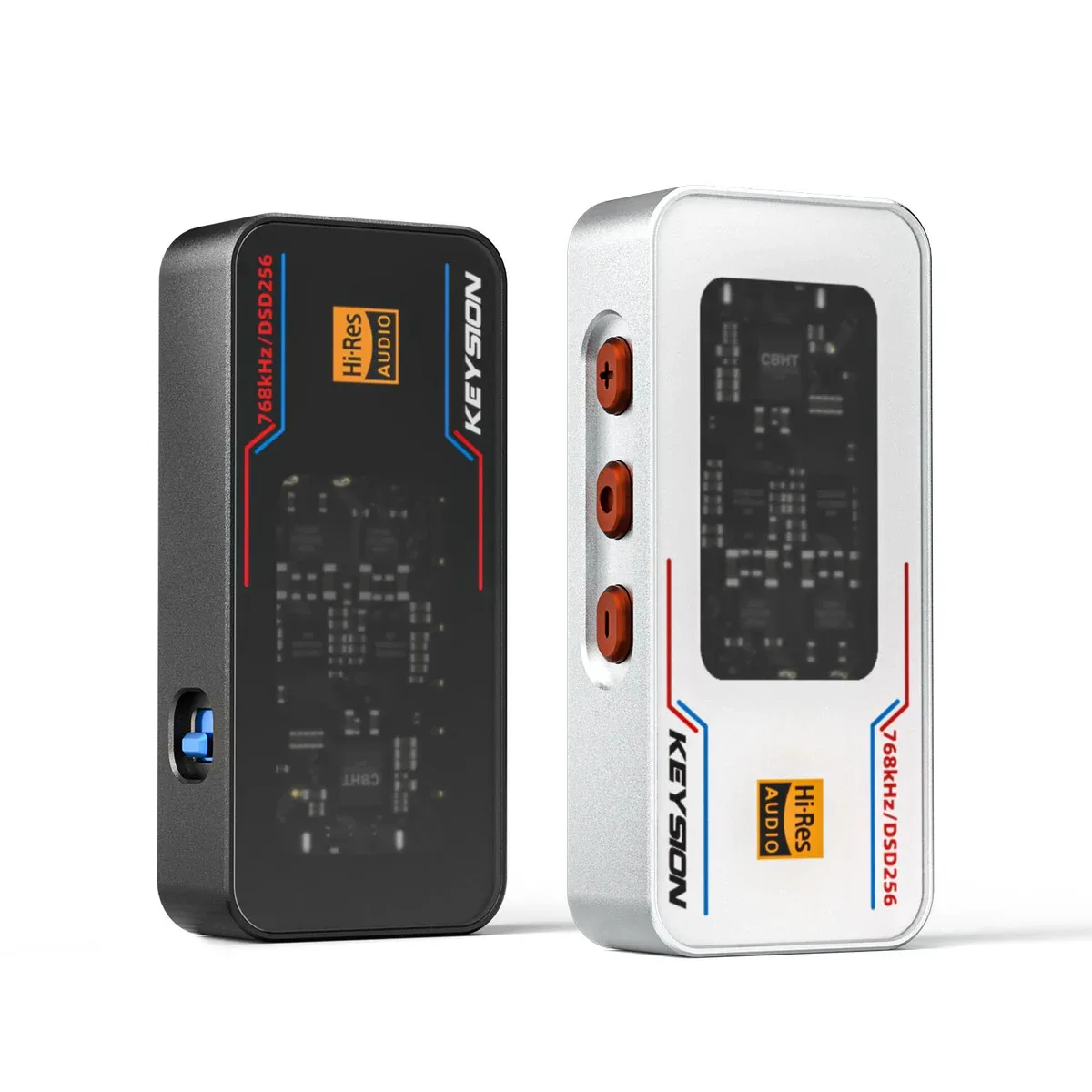
This article was put together by the KEYSION Audio Lab; codec specs reference public industry data. Tested on: KEYSION 02 Pro (32bit/384kHz PCM, DSD256 decoding). Related reading: What a DAC chip actually does, How to read headphone specs, 02 Pro hands-on.
FAQ
Is FLAC always better than MP3?
No. On ordinary gear, most people can't hear the difference between 320kbps MP3/AAC and FLAC; on a transparent chain, the air around the highs and the dynamic detail are audible. With a bad recording, both sound equally bad.
Is LDAC lossless?
No. LDAC is a high-quality lossy codec — 990kbps peak, 24bit/96kHz support — but the compression drops information, and it steps down to 660/330kbps depending on signal quality. It's close to entry-level wired listening, but it's not lossless.
Can iPhone only use AAC?
Bluetooth audio on iPhone tops out at AAC (320kbps). The AAC encoder is good and sounds fine on iPhones, but the bitrate ceiling blocks Hi-Res transmission. For LDAC you need an Android device.
Do I need DSD?
For playback, 24bit/96kHz FLAC is already enough; DSD's value lives mainly in the recording and archiving world. In blind tests, DSD's edge over high-rate PCM is inconsistent, so ordinary listeners shouldn't reshuffle their gear for it.
Should I upgrade my source or my playback gear?
Look at the chain first: are your earphones' sensitivity matched, and is the DAC/amp noise floor low? When the chain is dirty, upgrading the source buys you little; once it's transparent, the difference between 320kbps and FLAC is worth caring about.