Open-Back vs Closed-Back Headphones: Which Design Fits Your Listening Style
- Why Open-Back Headphones Sound More Natural
- Closed-Back Headphones Excel at Isolation and Bass
- Comparison Table: Open vs Closed Back
- Do Open-Back Headphones Really Sound "Better"?
- What to Know When Pairing with a DAC/Amp
- How to Decide Which Type to Buy
- Common Buying Mistakes
- Bottom Line: Tuning Matters More Than Design
Open-back and closed-back headphones aren't a matter of one being better than the other — it all depends on where you listen, what you listen to, and how much sound leakage you can live with. Picking the right design matters more than picking an expensive pair. Plenty of people drop a few thousand yuan on open-back headphones, only to realize everyone in the office can hear what they're playing, so the headphones end up gathering dust at home.
This article breaks down the real differences between the two designs and how they perform when paired with KEYSION DAC/amps. If you're buying your first pair of full-size headphones, you should have a pretty clear idea of which side you're on by the end.
Open-back headphones have openings or grilles on the outside of the ear cups, letting sound move freely in and out of the enclosure. The upside is a wide soundstage, natural midrange, and less fatigue during long sessions. The downside is just as straightforward — sound gets out, and ambient noise gets in.
When you listen to classical or jazz on open-back headphones in a quiet room, the imaging and sense of space are noticeably better than with closed-back models. This isn't some "tuning mysticism" — it's physics. Open-back designs avoid standing wave reflections inside a sealed chamber, which means lower distortion in the midrange.
But sound leakage is a real issue. At normal listening volumes (around 70-75dB), someone sitting a meter away can clearly hear what you're playing. Watch a show at night with open-back headphones, and your roommate will probably knock on the door. Open-back models basically only work when you're alone: your room, a study, late at night.
Closed-back headphones have fully sealed enclosures, so sound only comes out from the inner side. The most obvious benefit is isolation — outside noise stays out, and your music doesn't bother anyone else. On the subway, in cafes, or at the office, closed-back headphones are pretty much essential.
Because the enclosure is sealed, bass energy doesn't escape easily, so closed-back headphones usually have more bass quantity than open-back ones. For pop, electronic, and hip-hop — genres that rely on low-end impact — closed-back models often deliver a more immersive feel.
But sealed enclosures come with tradeoffs. Internal reflections can make the midrange sound slightly "muddy," and the soundstage tends to feel confined inside your head (often called "in-head localization"). Higher-end closed-back models use internal damping materials and chamber design to reduce this effect, but eliminating it entirely is nearly impossible.
| Category | Open-Back Headphones | Closed-Back Headphones | What This Means |
|---|---|---|---|
| Isolation | Almost none | 15-35dB (depends on fit) | For commuting and office use, go closed-back |
| Sound Leakage | Noticeable, audible within 1m | Minimal, barely escapes | Don't use open-back in shared spaces or offices |
| Soundstage Width | Wide, "out-of-head" feel | Narrower, mostly inside head | Classical and live recordings sound more natural on open-back |
| Bass Quantity | Less, tighter | More, fuller | Electronic and hip-hop hit harder on closed-back |
| Midrange Naturalness | High, fewer reflections | Moderate, affected by standing waves | Vocals and solo instruments sound more realistic on open-back |
| Long-Session Comfort | Good, ears don't get stuffy | Okay, can get sweaty in summer | Open-back is more comfortable for 3+ hour sessions |
| Power Requirement | Usually higher (sound escapes) | Usually lower | Dongles drive closed-back headphones more easily |
These numbers are just a reference. Real-world sound is heavily influenced by driver type, tuning direction, and ear pad material. Two closed-back pairs can sound completely different — one might lean neutral, the other bass-heavy. There's no one-size-fits-all.
You'll often see people online saying open-back headphones have higher sound quality. That's half true, half not.
The true part: at similar price points and tiers, open-back models usually have a more natural midrange and a wider soundstage. This is a structural advantage, not marketing hype. Many classic reference headphones (like the HD600 and K701) are open-back — that's not a coincidence.
The false part: sound quality is multi-dimensional. Closed-back headphones have their own strengths in bass extension, dynamic performance, and isolation. If you mostly listen to pop music or listen in noisy environments, closed-back models might actually sound better to you — because you can't hear ambient noise, the music's details come through more clearly.
A more accurate way to put it: open-back and closed-back are different tools for different scenarios and preferences. There's no such thing as "open-back is always better."
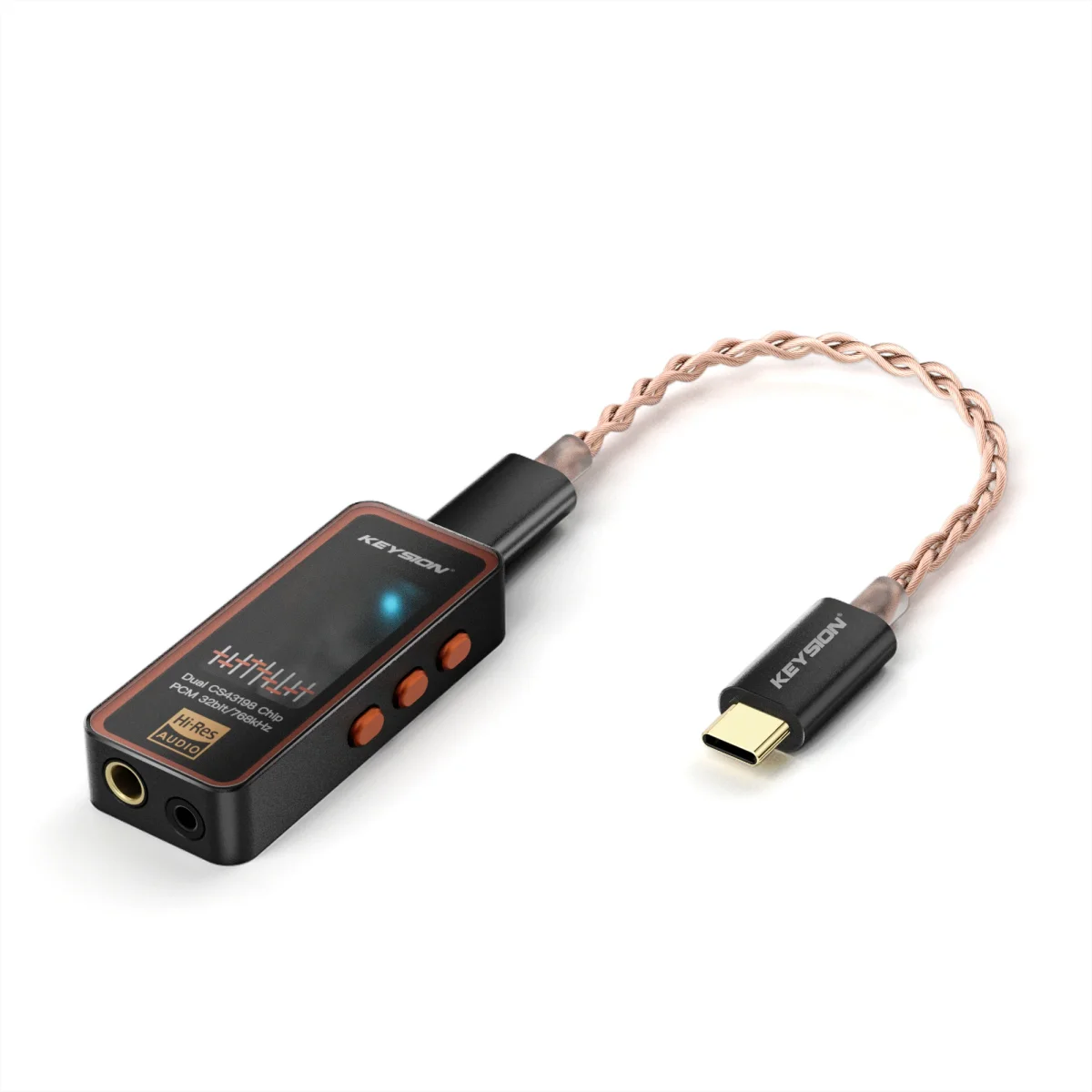
When you drive headphones with a dongle like the KEYSION 02 Pro, open-back and closed-back models respond differently.
Because sound escapes through the back of open-back headphones, they need more power at the same volume level. A 32Ω open-back pair, for example, might sound quieter than a 32Ω closed-back pair at the same setting. If your source has limited power, closed-back headphones will reach a satisfying volume more easily.
That said, the 02 Pro puts out 551mW@32Ω, which is enough for most portable over-ear models. Unless you're driving a particularly hard-to-drive high-impedance open-back headphone, the 02 Pro handles it fine. If you're using the 01 (130mW@32Ω), low-sensitivity open-back models might be a stretch — the high-gain setting can help compensate.
Background noise from a DAC/amp is also more noticeable on closed-back headphones. Because they isolate well and have a quiet background, even a small amount of hiss gets amplified. High-sensitivity, low-impedance closed-back pairs paired with low-SNR sources can produce audible hiss. The KEYSION 02 Pro has an SNR above 120dB, so this isn't much of an issue — but cheaper dongles from other brands can be problematic.
Ask yourself three questions:
1. Where do you mostly listen? If the answer is the office, subway, or library — go closed-back, no question. If it's your room or a study where you won't disturb anyone — open-back is worth considering.
2. What kind of music do you listen to? Classical, jazz, acoustic, solo vocals — open-back fits better. Pop, electronic, rock, hip-hop — closed-back bass and immersion work better. If you listen to everything, figure out which side you lean toward.
3. Can you live with sound leakage? This is the most practical question. A lot of people underestimate leakage before buying open-back headphones, only to find they can't even take video calls (the other person hears an echo). If you take calls or join online meetings often, closed-back is less hassle.
If you really can't decide, there's a middle ground: semi-open headphones. They have small openings on the ear cups, so the soundstage is a bit wider than closed-back, and leakage is less than open-back. But semi-open is a compromise — it doesn't excel at either. Soundstage isn't as good as fully open, isolation isn't as good as fully closed. It's for people who want a little bit of both.
A lot of people assume open-back means "high-end" and closed-back means "entry-level." That's wrong. Plenty of flagship headphones are closed-back and cost just as much as open-back ones. It's a design choice, not a tier indicator.
Others only look at specs and ignore tuning. Two headphones with the same impedance and sensitivity — one open, one closed — can sound wildly different. Specs tell you how easy a headphone is to drive, not how good it sounds. Try before you buy if you can.
Some people also overlook ear pads. The sound of closed-back headphones depends a lot on pad material — velour pads breathe better but reduce bass, while protein leather pads isolate well but can feel stuffy. Swapping pads can make a bigger difference than swapping your source. We covered how ear pad materials affect sound in a separate article.
The difference between open-back and closed-back headphones is real, but it's just one of many factors that affect how things sound. Driver type, tuning direction, source pairing, ear pad material — each one matters a lot.
Instead of obsessing over open vs closed, what you should really care about is finding a tuning style you like. Some people prefer warm, bass-heavy sound; others prefer a lean, neutral signature. These preferences don't necessarily line up with open vs closed.
If you can, the best approach is to listen for yourself. If you can't audition them, start from your use case — where you listen, what you listen to, and whether leakage is acceptable. Those three questions will get you most of the way to a decision.
For more HiFi basics, check out our articles on How to Read Frequency Response Curves and How to Match Amp Power to Headphones. If you're looking to upgrade your source, take a look at the KEYSION 02 Pro DAC/Amp.
About the author: KEYSION Audio Lab. We focus on HiFi fundamentals and real-world testing of portable audio gear. All opinions are based on measured data and actual listening — no sides taken, no technology glorified.
FAQ
Do open-back headphones sound better than closed-back ones?
Neither is inherently better — they're different design approaches. Open-back models have a more natural midrange and wider soundstage; closed-back ones isolate better and have more bass. Which sounds better depends on where you listen and what you prefer, not the design type.
How bad is the sound leakage on open-back headphones?
At normal listening volumes (around 70-75dB), someone sitting a meter away can clearly hear the music. Open-back models aren't recommended for shared living spaces, offices, or libraries.
What does 'in-head localization' mean with closed-back headphones?
It's when the sound feels like it's playing inside your head rather than out in the space around you. This is caused by internal reflections in the sealed chamber. Higher-end closed-back models reduce it with internal damping materials but can't eliminate it entirely.
Can a dongle amp drive open-back headphones properly?
Depends on the headphone's sensitivity and the source's power output. The KEYSION 02 Pro puts out 551mW@32Ω, which is enough for most portable open-back over-ear models. If it's a high-impedance, low-sensitivity full-size headphone, you might need a desktop amp.
Are semi-open headphones worth buying?
Semi-open is a middle ground — the soundstage is a bit wider than closed-back, and leakage is less than fully open, but it doesn't excel at either. It works for people who want some spatial sense but can't accept full sound leakage.
Related products
Related articles