CD, Vinyl or Streaming: Where Does the Same Song Differ? Noise, Dynamic Range and Master Versions
Where do CD, vinyl and streaming differ on the same song? The short answer: most of the difference comes from the master and its processing, not from analog sounding warmer than digital. In a quiet room you can hear vinyl surface noise and its dynamic ceiling; CD's 16-bit format has about 96 dB of theoretical dynamic range; streaming depends on which bitrate tier you selected.
Where does the difference start?
At the master. For one album, the vinyl cut may use a less compressed master while CD and streaming receive another version. Mixing, the mastering engineer and the release year all change the result.
The medium adds its own limits. Vinyl has surface noise, inner-groove distortion and wow; CD has a 16-bit quantization floor; streaming has codecs and loudness normalization.
Compare the same master and the three formats move much closer. This gets overlooked: changing the pressing often changes the sound more than changing gear.
Why does vinyl sound different?
The cut applies RIAA equalization, cutting lows and boosting highs, and playback reverses it. Cartridge, tonearm and phono stage loading and gain all shape the result.
Surface noise is a fixed cost. Even a clean record has audible noise in quiet passages, and measured dynamic range usually lands between 50 and 70 dB depending on the record and the system.
Vinyl also has inner-groove distortion and wow and flutter. Closer to the centre, linear speed drops and treble and transients suffer.
It has an advantage too: some vinyl masters are compressed less and sound more relaxed. That is a master difference, not a property of the medium.
How do the specs compare?
| Item | CD | Vinyl | Lossless streaming |
|---|---|---|---|
| Format | 16bit/44.1kHz PCM | Analog groove, RIAA EQ | FLAC/ALAC 16bit/44.1kHz and up |
| Theoretical dynamic range | About 96 dB | Usually 50-70 dB measured | Same as the file |
| Noise source | Quantization floor, master | Surface noise, phono stage, grounding | Codec, network buffering |
| High-frequency limit | About 22 kHz | Set by cartridge and inner grooves | Follows the file's sample rate |
| Convenience | Needs a player or ripping | Needs turntable, phono stage, cleaning | Phone only, works across devices |
| What it means | Stable, copyable, master sets the ceiling | Relaxed sound bought with noise and upkeep | Convenient, but check tier and version |
CD's 96 dB is theoretical; real recordings sit far below that. Vinyl's 50-70 dB is not a flaw, it is how the medium behaves.
Are CD and lossless streaming the same path?
Not quite. CD is fixed at 16bit/44.1kHz. Lossless streaming is usually FLAC 16bit/44.1kHz, sometimes 24bit/48kHz or higher Hi-Res.
For one album, a streaming service may hold a 24-bit master while the CD is a 16-bit reduction. Hearing no difference is normal; a different master is easier to notice.
Ripping has variables too. Drive read errors, verification software and tagging affect the file, but not the master.
How much do streaming tiers differ?
| Tier | Typical bitrate | What you hear | What it means |
|---|---|---|---|
| Standard lossy | 96-160kbps | Treble roughness, busy passages smear | Fine for commuting, exposed in a quiet room |
| High-bitrate lossy | 256-320kbps | Most listeners fail a blind test | The value zone for daily listening |
| Lossless | About 1411kbps | Matches the CD file | Needs stable network and data allowance |
| Hi-Res | 2304-4608kbps and up | Depends on the master, not guaranteed better | Check the version before the spec |
Services also normalize loudness, pulling albums toward a similar LUFS. On or off changes dynamics and level. See loudness normalization for the trade-offs.
What does each source cost you?
Vinyl costs maintenance: stylus, cleaning, storage, phono-stage matching. In return you get a ritual and part of the master difference.
CD costs physical space. Once ripped, it behaves like a local lossless file.
Streaming depends on network and licensing. Titles disappear, regions change, versions get replaced.
How far should the front end go?
Look at headphones and speakers first, then the source. Once the source is fixed, noise floor and output level matter more than the DAC chip's model number.
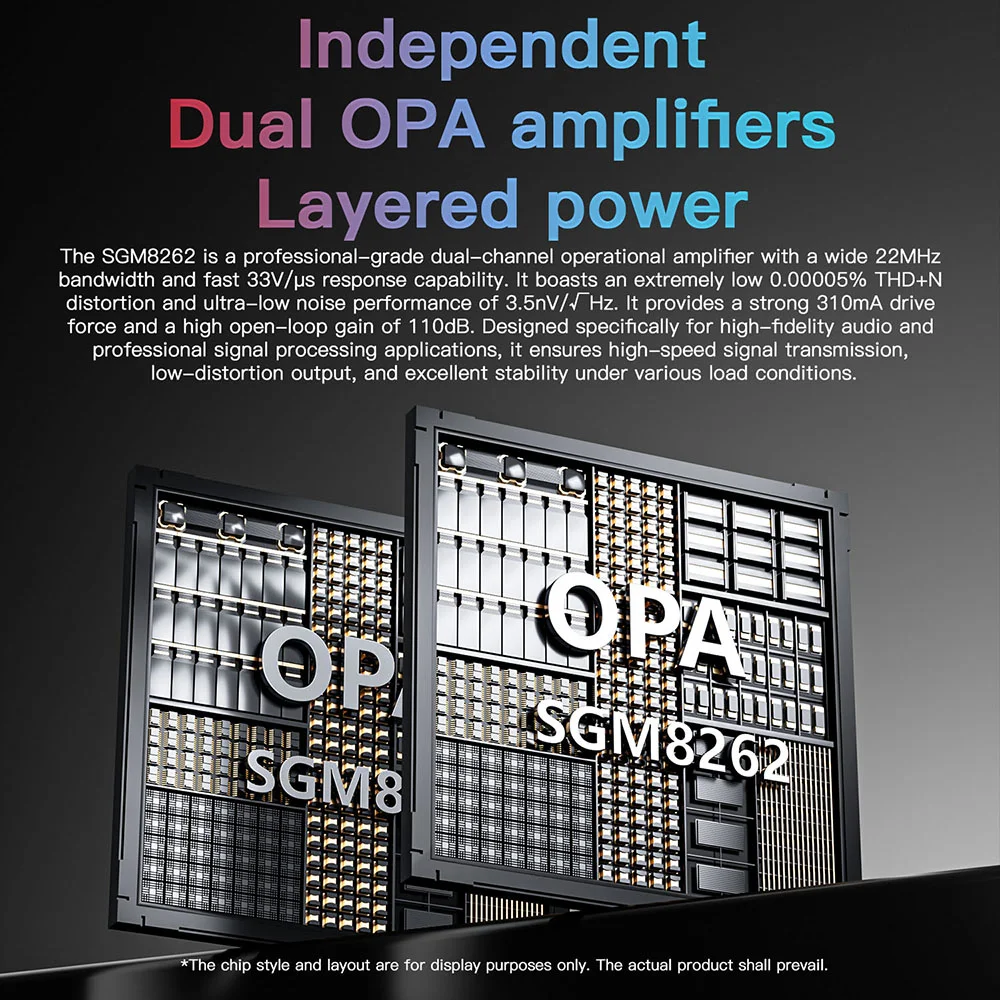
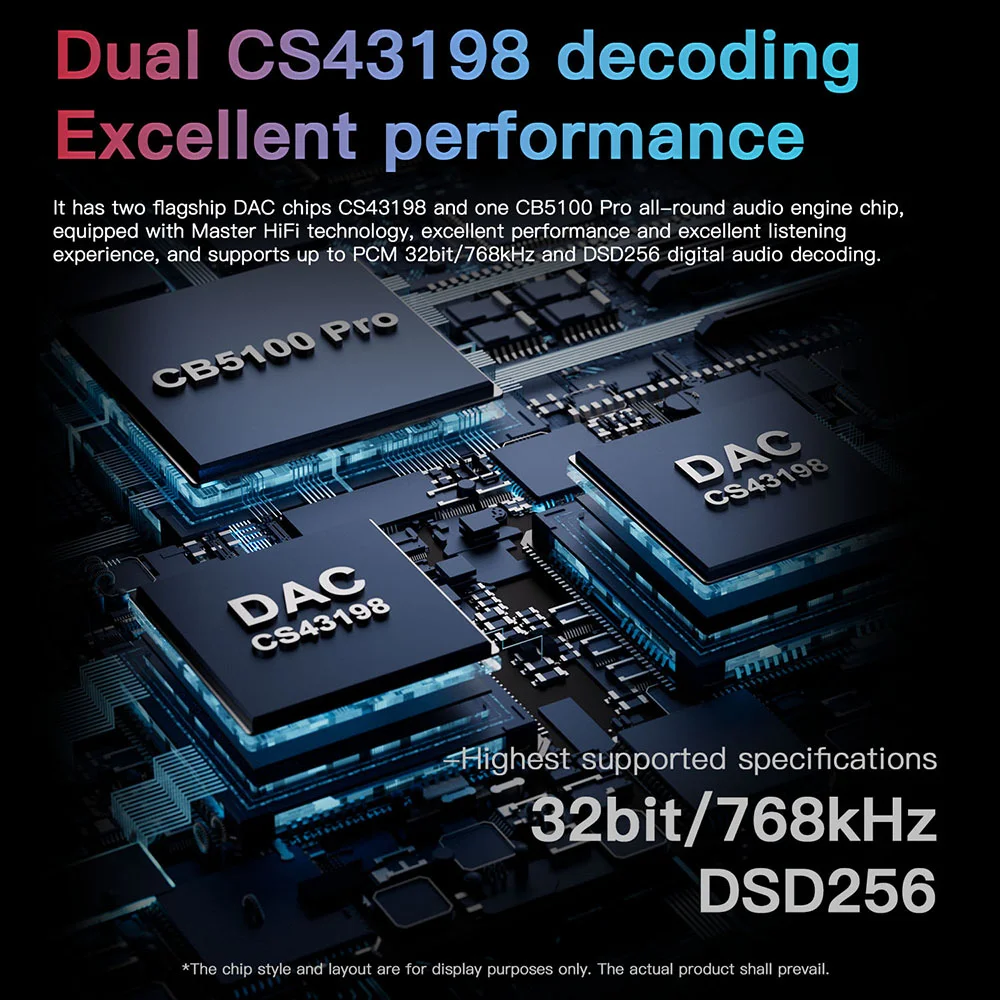
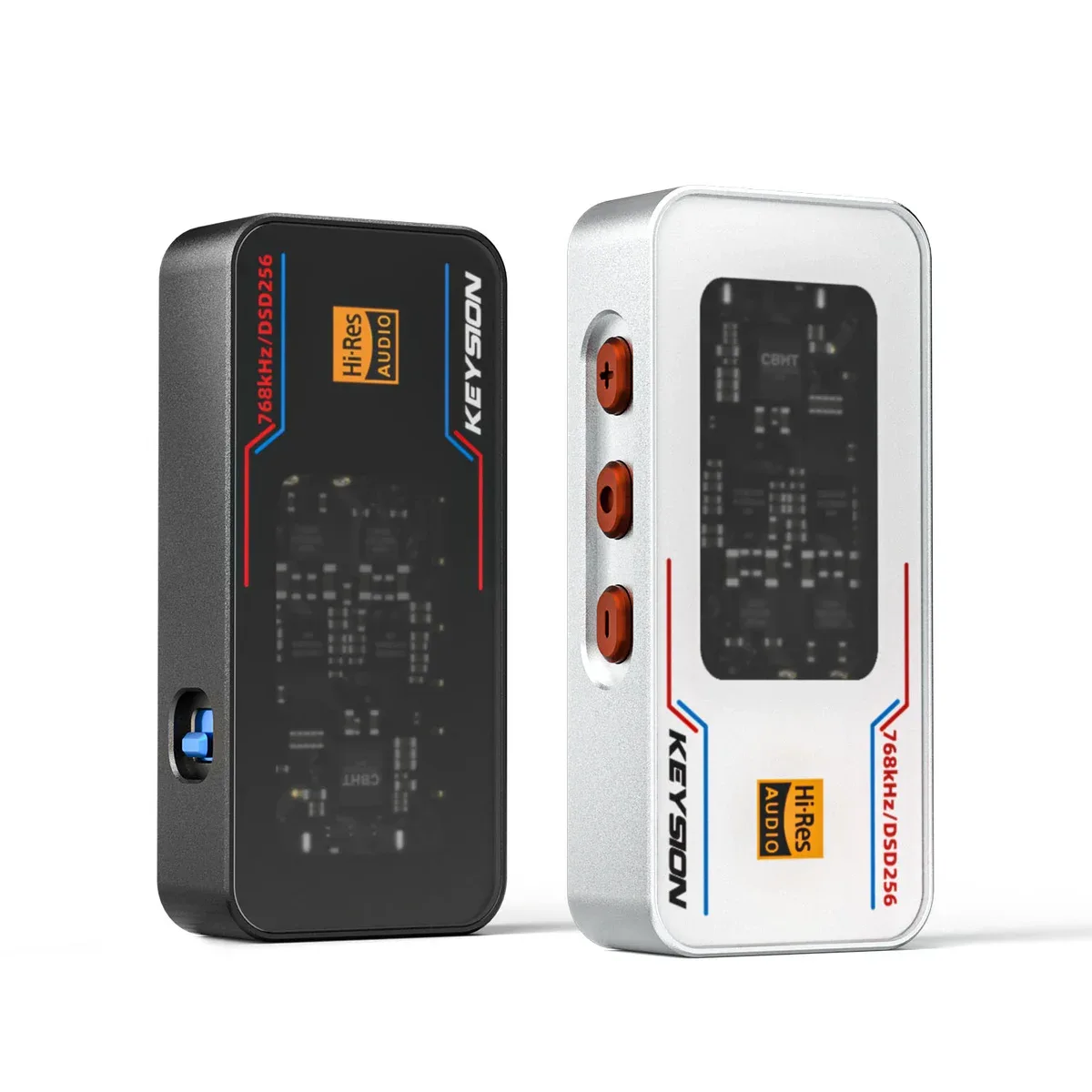
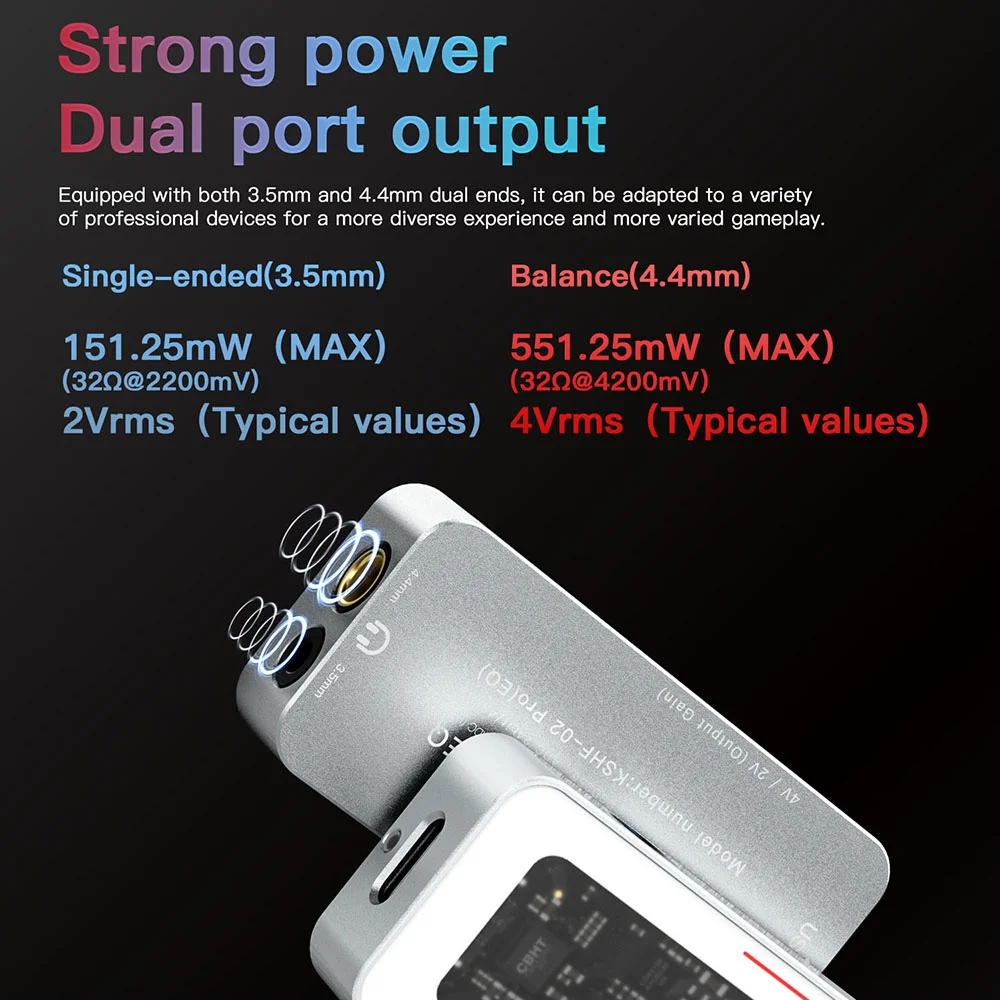
A dongle such as KSHF-02 Pro connects to a phone or computer with 3.5 mm and 4.4 mm outputs, PCM 32bit/768kHz, hardware DSD256 and a 16-600Ω range that covers most IEMs and headphones.
Its 135 dB SNR at 4.4 mm and 1.30 µV noise floor keep the gear's own hiss out of quiet vinyl transfers and CD rips.
On a budget, look at 02 and 01 with 361 mW and entry-level output; choose by how hard your headphones are to drive.
A vinyl chain needs a phono stage as well; see the phono preamp guide for wiring and grounding order.
Who this suits, and who it does not
Suits: listeners who already own several sources and want to know where the difference sits; anyone willing to spend time on vinyl upkeep for the ritual.
Does not suit: anyone hoping a source swap will fix every listening complaint. Headphones, placement and the recording version usually matter more.
How to start
Pick a familiar song and find three versions: a CD rip, vinyl and streaming. Match the level before listening. Start with quiet passages, then busy ones. Write the differences down instead of deciding from one impression.
Author: KEYSION audio content team. We test portable DACs, headphone amps and USB-C audio compatibility, and keep comparison notes from vinyl transfers and CD rips. Dynamic-range and bitrate figures are public specs and measured samples; listening conclusions come from small sample sessions and do not speak for everyone.
FAQ
Is vinyl always better sounding than digital?
No. Vinyl often gets a less compressed master, which can sound more relaxed, but the medium itself adds noise, inner-groove distortion and upkeep.
Do CD and lossless streaming sound the same?
With the same master and level, most listeners cannot tell. Differences usually come from the master version a service receives, not the format.
How different are 320kbps and lossless?
In a quiet room on a familiar track, treble and busy passages differ. While commuting at normal levels, most people fail a blind test.
Does vinyl need a separate phono stage?
Yes. Cartridge output is millivolts and needs RIAA correction; plugging it into powered speakers or a line input gives quiet, thin sound.
Will a new DAC make streaming sound better?
It can improve noise floor and output level, but not the master or bitrate. Match files and levels first, then consider the DAC.
Related products
Related articles