How Much Amp Power Do Speakers Need? Matching Sensitivity, Impedance and 4Ω/8Ω Loads
- Is the sensitivity rating based on 2.83V or 1W? The difference is a factor of two
- How to calculate power from your target SPL
- How much power for different sensitivities and impedances
- 4Ω vs 8Ω: voltage, current and amp ratings
- Desktop near-field: power, noise and placement trade-offs
- Common myths, one by one
- How to check the result once it is connected
- Who this suits, and who it does not
- What to do next
Amp power is not a case of more is better. Read the speaker's sensitivity and nominal impedance first, work backward from the loudness you want at your listening distance, then add 3-6dB of headroom. Most desktop near-field speakers run fine on 10-30W continuous. A bare 100W or 200W badge tells you very little when the test conditions are missing.
Is the sensitivity rating based on 2.83V or 1W? The difference is a factor of two
A speaker listed at 87dB is usually measured at 2.83V/1m. On an 8Ω load, 2.83V equals 1W, so the number is effectively dB/W. On 4Ω, 2.83V is already 2W. A 4Ω speaker rated 90dB at 2.83V works out to 87dB/W. Before comparing speakers of different impedance, convert both ratings to a 1W basis.
That also clears up a common confusion. A 4Ω speaker is not harder to drive because its power rating looks bigger. At the same voltage it draws twice the current. What it needs is current, not more voltage.
How to calculate power from your target SPL
The formula is simple: required power = 10^((target SPL - sensitivity)/10), with 1W as the reference. An 87dB speaker reaching a 96dB peak at 1m needs 10^(9/10) ≈ 8W.
Each doubling of distance costs about 6dB, so power has to quadruple. Desktop near-field listening is often 0.5-0.8m; a 2-3m living room needs 3-4 times more. Room gain adds a little low-frequency output, but do not treat it as free power.
Keep peaks and averages separate. Average levels of 85-90dB already sound loud. Drum hits and string transients in music run 10-15dB above that. Size the amp for peaks, set the volume by average loudness.
How much power for different sensitivities and impedances
| Speaker sensitivity (2.83V/1m) | Impedance | Continuous power for a 96dB peak at 1m | What this means |
|---|---|---|---|
| 90dB | 8Ω | about 4W | A small amp can handle near-field use; noise floor and distortion matter more |
| 87dB | 8Ω | about 8W | The common desktop case; 16-32W leaves comfortable headroom |
| 84dB | 8Ω | about 16W | 30W or more feels relaxed; watch amp heat |
| 90dB | 4Ω | about 8W | Same SPL but double the current; the amp must list 4Ω continuous power |
| 87dB | 4Ω | about 16W | More current-hungry at the same size; ignore the wattage label alone |
The figures assume 1m and no room gain. At a 2m listening distance, multiply by four. If the speaker sits close to a wall, the room lifts the bass, not the mids and highs.
4Ω vs 8Ω: voltage, current and amp ratings
An 8Ω speaker draws 1W at 2.83V; a 4Ω speaker draws 2W. The amp's voltage swing sets the SPL. Its current capability decides whether it distorts, protects or overheats into a 4Ω load.
When you read amp specs, look for 4Ω continuous RMS power and the THD condition. A peak rating of 200W with no impedance or distortion test stated is not very useful. Plenty of desktop amps list 50W into 8Ω but only 60-70W into 4Ω instead of doubling. That tells you current delivery is average, so be conservative with 4Ω speakers.
Damping factor = load impedance / amp output impedance. An 8Ω speaker with a 0.1Ω output impedance gives a damping factor of 80; the same amp into 4Ω gives 40. Both are in the useful range. Going from 10 to 100 rarely sounds as different as marketing suggests. Cable and connector contact resistance are more likely to spoil things.
Desktop near-field: power, noise and placement trade-offs
Short listening distances lower the power requirement, but make the noise floor more audible. If the amp reaches a sensible level at 30% volume, its noise floor is usually low too. If you have to turn it to 80% to get loud enough, power or sensitivity is mismatched.
Powered speakers put the amp inside the cabinet and remove the matching step, at the cost of heat and upgrade options. Passive speakers plus a separate amp give you more choices, but cables, grounding and placement all affect the result. For the wider comparison, see powered vs passive desktop speakers; for placement, see desktop speaker placement and room acoustics.
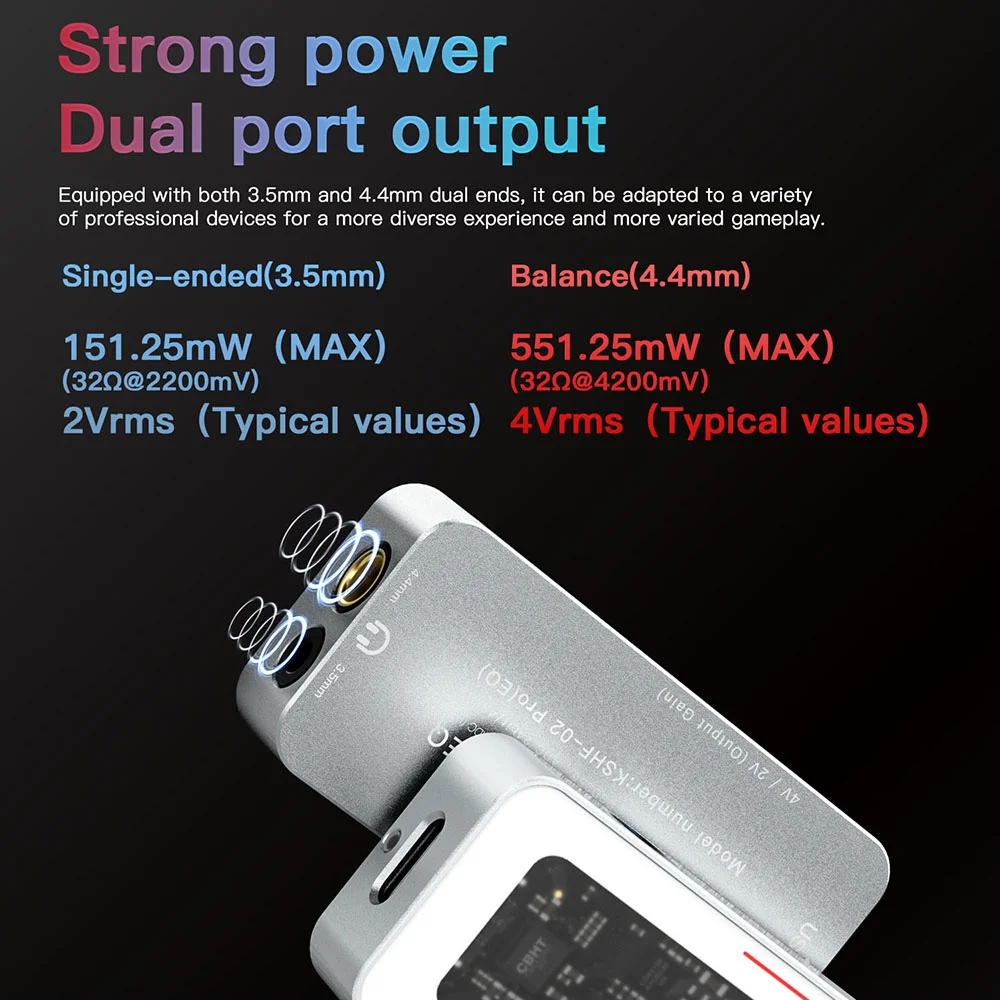
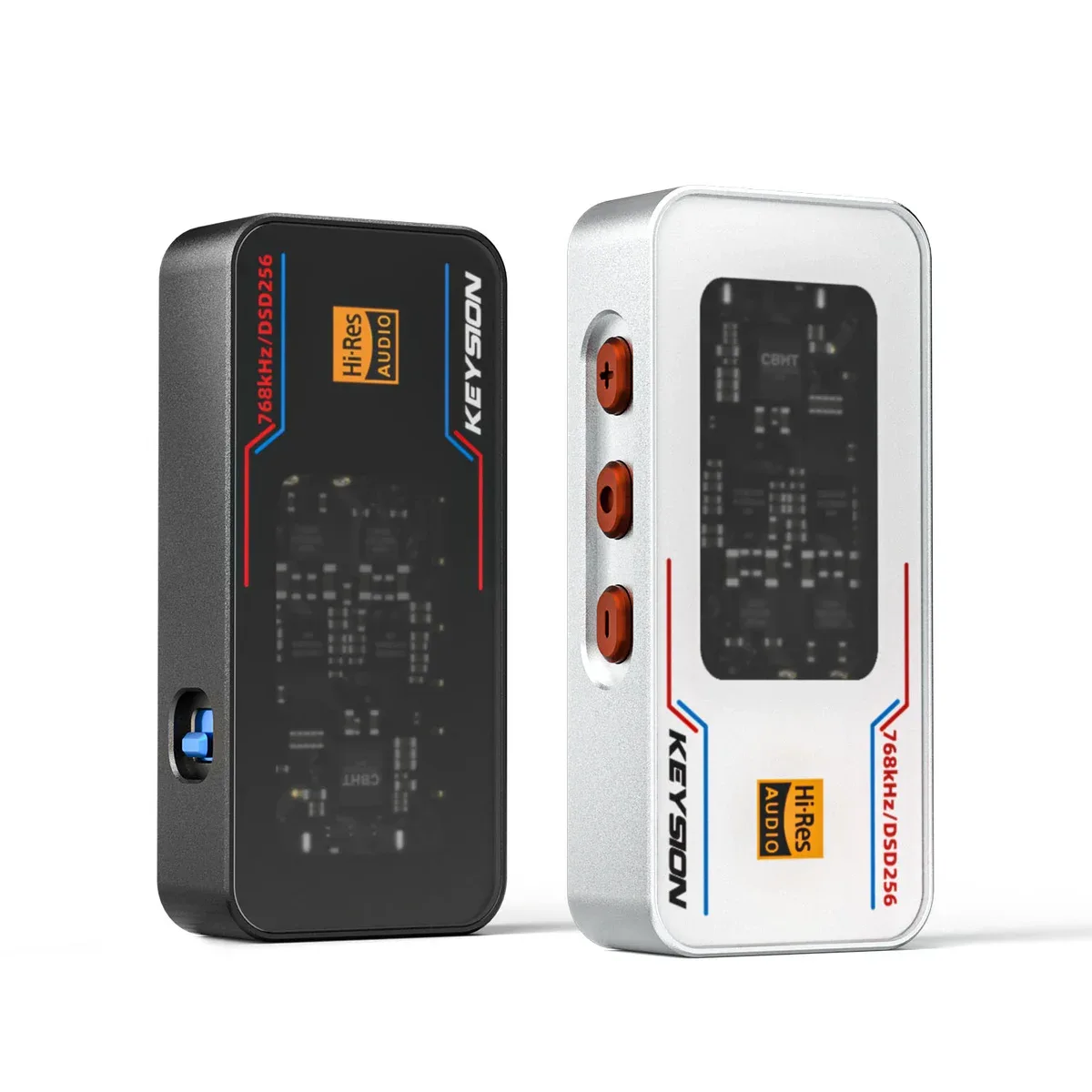
On the source side, KEYSION's 02 Pro delivers 551mW into headphones and is designed for 16-600Ω loads, not 8Ω speakers. Use it as a desktop DAC front end, but do not expect it to drive passive speakers. The S2 (h-turbo-s2) lists 105dB SNR and PCM 384kHz, enough for IEMs and a small desk setup; the 02 outputs 361mW, also into headphones. Speaker power belongs to the amp.
Common myths, one by one
"More power always sounds better": with matched sensitivity and the same volume, extra power only buys dynamic headroom and lower distortion at peaks. It does not thicken the midrange.
"4Ω is always harder than 8Ω": at the same SPL a 4Ω speaker needs more current, but the same voltage. If the amp can deliver current, a 4Ω load can hit the same SPL at lower voltage.
"An 87dB speaker needs a big amp": it depends on how loud and how far. A 20W amp is enough for an 87dB speaker at 1m.
"Amp power must equal the speaker's rated power": the speaker rating is a limit, not a requirement. A smaller amp with low distortion is usually safer than an inflated power figure.
How to check the result once it is connected
Play familiar pink noise or a dynamic track, put a phone sound level meter at ear height, and set average SPL to 85-90dB. Listen for ten minutes, then check the amp's case temperature and listen for clipping. A volume control sitting at 30-50% is comfortable; if it lives above 80%, consider a different amp or a more sensitive speaker.
Without a meter, use a rough reference: normal conversation is around 60dB, so music 25-30dB above conversation lands near 85-90dB. It is not precise, but more reliable than guessing by feel.
Who this suits, and who it does not
Suits: anyone buying a first desktop amp, holding speaker specs they cannot interpret, or hearing a system that sounds dull until the volume is cranked and then distorts.
Does not suit: anyone hoping a new amp will fix room modes and placement. Move the speaker and change placement first; power will not solve a boomy low end.
What to do next
Write down the speaker's sensitivity, impedance and rated power. Calculate once at 1m and once at your real distance, then check the amp's 4Ω/8Ω continuous power and THD conditions. The useful power range is narrower than you might expect. Put the rest of the budget into the speakers and placement.
About the author: the KEYSION audio content team. We test portable DACs, headphone amps and USB-C audio compatibility, and keep records of warranty returns. The power figures here are estimates on a 1W basis; sensitivity and impedance come from manufacturer ratings. Protection behavior and room gain will shift real results, so measurements in your own room beat a generic table.
FAQ
What happens if I connect an 8Ω speaker to an amp rated only for 4Ω?
An 8Ω load is easier on the amp and will usually play fine, with a little less output than the 4Ω rating suggests. The risky direction is the reverse: a 4Ω speaker on an amp rated only for 8Ω, where current demand doubles and protection or distortion becomes likely.
Is a 20W amp enough for an 87dB speaker?
At 1m, yes. The formula puts a 96dB peak at about 8W, so 20W leaves roughly 4dB of headroom. At 2m the same SPL needs about 32W, and 20W gets tight.
Will an amp with more power than the speaker rating damage the speaker?
Not at normal listening levels. Speakers are more often damaged by long-term clipping, overheating or a crossover fault. Judge the amp by continuous RMS power and its THD condition, not a peak number.
Is a 4Ω speaker always harder to drive than an 8Ω one?
At the same SPL, 4Ω needs twice the current but the same voltage. Many 4Ω speakers rate sensitivity at 2.83V, which flatters the number; converted to dB/W it drops by 3dB. Compare on the same basis.
How many watts does a desktop near-field setup really need?
For an 87dB/8Ω speaker, a 96dB peak at 1m takes about 8W; with 3-6dB headroom you land at 16-32W. Room gain and cabinet efficiency move the result, so treat the table as a starting point.
Related products
Related articles