MMCX, 0.78 2-pin or qdc: Which Detachable IEM Connector Should You Choose?
- How do MMCX, 0.78 2-pin and qdc differ mechanically?
- Can a qdc IEM use a standard 0.78 cable?
- Is a loose MMCX connector normal wear?
- Do 0.78 2-pin connectors have a polarity?
- Does an upgrade cable improve sound?
- When should you replace the cable, and when not?
- A four-step check before buying
- Who it suits, who should skip it
Start with the IEM, not the cable. Most detachable in-ears already lock you into a connector: 0.78 mm 2-pin is the most stable for daily use, MMCX rotates freely but wears at the centre pin, and qdc looks like a 2-pin while reversing the polarity. A well-made cable rarely changes sound in a level-matched blind test; contact quality, microphonics and fit are what you actually notice.
How do MMCX, 0.78 2-pin and qdc differ mechanically?
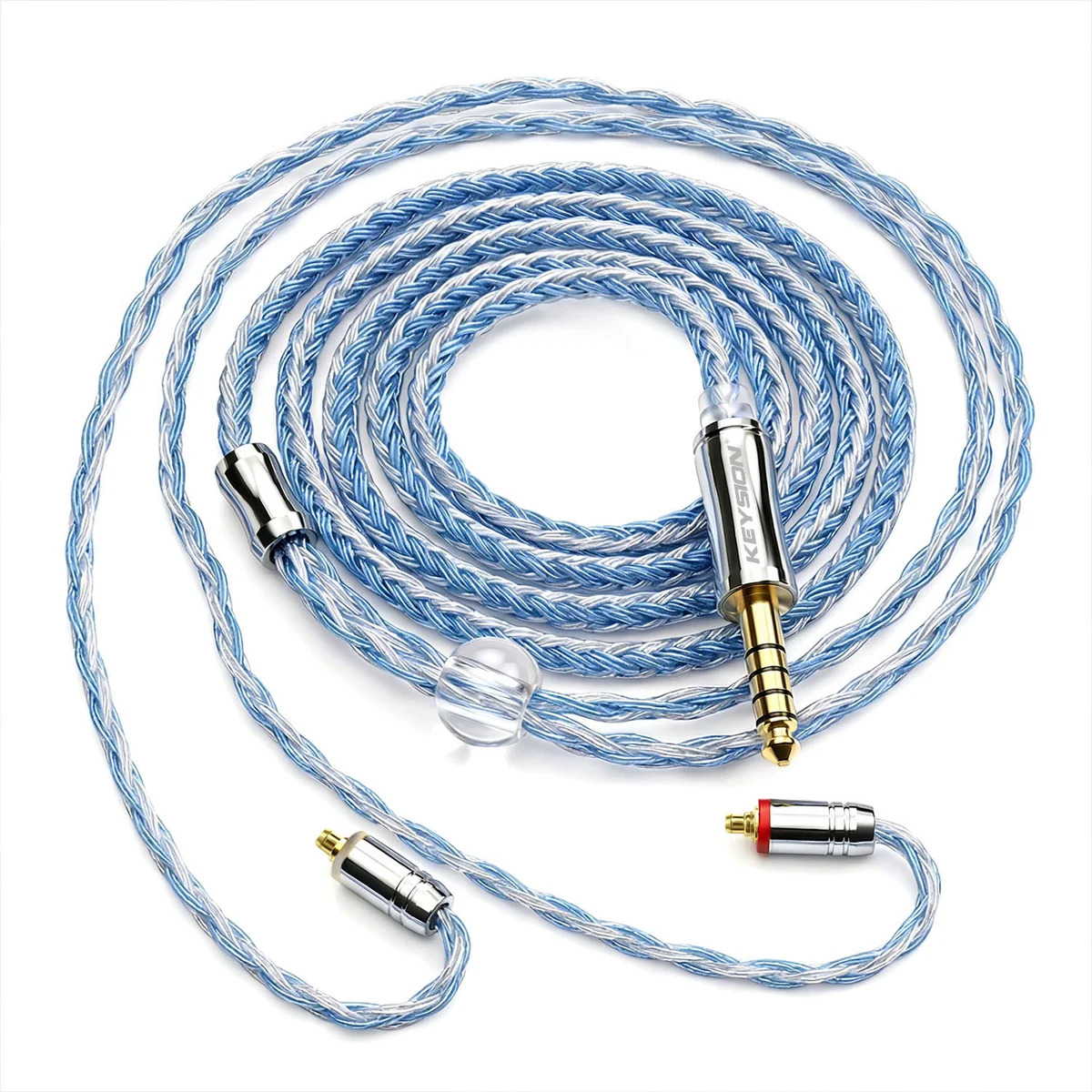
MMCX is a concentric design: a centre pin plus an outer ring, held by a spring latch. It rotates a full 360°, which keeps the cable angle comfortable behind the ear. The trade-off is a small contact area; repeated plugs, sweat and dust gradually reduce the latch tension.
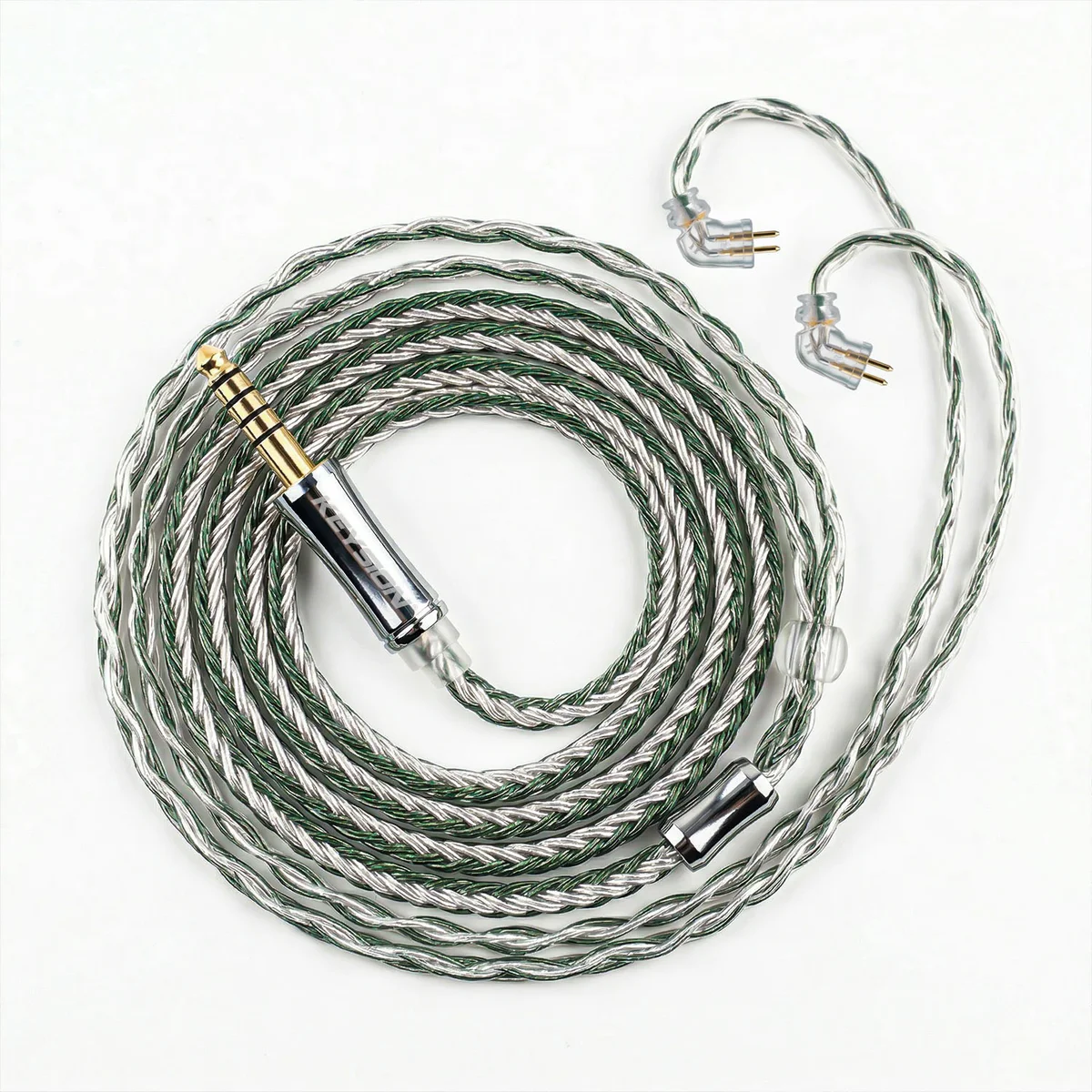
A 0.78 2-pin uses two parallel pins at 0.78 mm spacing, usually with a keyed slot or flat face on the socket. Insertion direction is fixed and the contact area is larger. The pins are thin, though. Angled insertion, force or a drop can bend one, and a pin snapped off inside the socket is difficult to remove.
qdc also uses two pins, commonly at 0.75-0.78 mm spacing, but the polarity order is reversed compared with a standard 0.78 2-pin. It may fit the physical holes of a standard socket; compatibility still depends on the maker's pinout. Do not stop at "it fits" — check the plus and minus marks.
| Connector | Structure | Rotation | Common failure | What it means |
|---|---|---|---|---|
| MMCX | Centre pin + outer ring latch | Yes, 360° | Oxidised pin, slack latch, intermittent audio | Flexible fit; clean often and stop using it once loose |
| 0.78 2-pin | Two 0.78 mm pins + key | No | Bent or broken pins, cracked socket | Mechanically more stable, but insert it straight |
| qdc 2-pin | Two pins, reversed polarity | No | Polarity mismatch with standard cables | Buy a cable explicitly marked qdc, not a standard 0.78 |
The spacing figures are common industry values. Brands may hold ±0.05 mm tolerance. That sounds tiny, yet on a thin pin it is enough to make insertion feel tight or loose.
Can a qdc IEM use a standard 0.78 cable?
Usually not directly. qdc reverses the positive and negative pins, so a standard cable may still produce sound but with absolute polarity inverted. With a single dynamic driver, few listeners notice. When you are tracing a channel swap, crossover phase or multi-driver hand-off, the inversion can send you down the wrong path. A worse problem is mechanical: pin diameter and socket tolerance may not match, and forcing it can damage the socket.
If you only have a standard 0.78 cable, check the pinout in the IEM manual first, or buy a clearly labelled qdc-to-0.78 adapter. Do not use "it makes sound" as the test. A poor contact often works at first and cuts out later.
Is a loose MMCX connector normal wear?
Yes, it is wear, but a little play does not mean the IEM is finished. The latch holds through elastic deformation, and after a few hundred plugs the tension drops. The useful test is not "can it rotate" but "does the sound cut out while it rotates".
Crackling, one channel dropping, or needing a specific angle before audio returns points to an unstable centre pin or outer ring. Clean it first with a lint-free swab and anhydrous isopropanol, let it dry completely, then reconnect. Avoid WD-40, oil or petroleum jelly; the residue collects dust and makes things worse.
If it still cuts out, try a known-good MMCX cable as a control. If the new cable also fails, the socket is the problem. If it works, the original cable is. That comparison is more useful than repeated plugging.
Do 0.78 2-pin connectors have a polarity?
Yes. Most sockets mark the positive side with a red dot, a plus sign or a notch, and the plug has a flat edge or key. Reversed insertion often still fits and may sound normal, but channel polarity is flipped. It is hard to hear on ordinary single-ended music; a left-right comparison or a measurement exposes it.
Hold the plug body when inserting, and move it straight in and out. Pulling at an angle bends the pins, especially with stiff cables and short plugs. Do not keep straightening a bent pin; metal fatigue makes a break more likely.
Does an upgrade cable improve sound?
Two cases. If the original cable has poor contact, is stiff, or rings badly when touched, a replacement can bring a real improvement: less noise, less cable noise while moving, and a plug that stays put. If the original cable is healthy and you only change the copper, silver plating or braid, the difference usually sits below the blind-test threshold.
A 1.2 m 24 AWG OFC cable typically adds 0.1-0.3 Ω of DC resistance. Into a 16 Ω IEM that is under 2% loss, roughly 0.1 dB of level change. Silver plating reduces skin effect at high frequencies, but in the audio band the skin depth is far thicker than the plating, so the benefit is small. Solder joints, plug plating and contact pressure are more likely to change what you hear.
In our repair samples, several "the new cable sounds better" cases turned out to be an oxidised plug or a cold solder joint on the old cable. The improvement came from restoring contact, not from the material story. For the measurement side, see cable length and gauge and plug plating and contact resistance.
When should you replace the cable, and when not?
Replace it when the plug is oxidised or loose, the cable has a break, microphonics make wearing them unpleasant, or the length and plug type do not suit your source. Cables such as KSHF 16G, 24G and 24G 5N mainly solve length, plug specification, braid feel and microphonics. They do not turn one IEM into another.
Do not replace it when the IEM itself is off-centre, the socket is already loose, the product is under warranty, or you expect a cable to fix dropouts. Work through the channel imbalance checklist first to see whether the driver or the cable is at fault. Forcing a new cable can void a warranty and wear the socket further.
A four-step check before buying
Look up the model in the manual or product page, or measure the old connector with callipers. Do not estimate 0.78 versus 0.75 mm by eye or by feel.
Check the red dot, plus sign, flat edge and notch. A qdc cable must say qdc; do not force a standard 0.78 plug into a qdc socket.
Turn the volume down before plugging in. Hold the plug body, insert straight, and stop when you feel the latch click.
Play a quiet track, brush the cable to hear microphonics, listen to each channel alone, and rotate an MMCX plug to check for dropouts. Clean before you replace.
Who it suits, who should skip it
It suits owners of a detachable IEM whose stock cable is too short, has the wrong plug, or rings badly during movement. KSHF 16G is the lighter build, 24G is thicker, and 24G 5N has a denser braid. Choose by plug type and length first, colour last.
Skip it if the IEM has a fixed cable, the socket already makes poor contact, or you want a cable to cure an imbalance or a dropout. A cable is a connection part, not a repair part.
Written by the KEYSION audio content team. We test portable DACs, cables and adapters and keep service records; contact-resistance figures come from bench measurements and repair samples, and listening conclusions are based on level-matched blind tests. Structural dimensions here are common industry values, so check the manual for your own IEM.
FAQ
Is MMCX or 0.78 2-pin more durable?
0.78 2-pin is mechanically more durable: larger contact area and a fixed direction. MMCX latches loosen with repeated plugging. Both can last years; insertion habits and cleaning matter more than the name.
Can I use a standard 0.78 cable on a qdc IEM?
It may fit physically, but the polarity order is reversed. Do not mix them directly; buy a qdc-specified cable or a qdc-to-0.78 adapter.
Does an upgrade cable really improve sound?
When the stock cable has poor contact, is stiff, or rings badly, the improvement is real. With a healthy stock cable and only a material change, the difference usually falls below the blind-test threshold.
What happens if I plug a 0.78 2-pin in backwards?
It often still fits and may sound normal, but channel polarity is inverted. Ordinary listening hides it; a channel comparison exposes it. Check the red dot or plus mark before inserting.
Can I repair a loose IEM socket at home?
Not advisable. The socket sits inside the shell, and opening it can damage the driver or water sealing. Clean the plug, test another cable, then contact service if the socket is confirmed.
Related products
Related articles