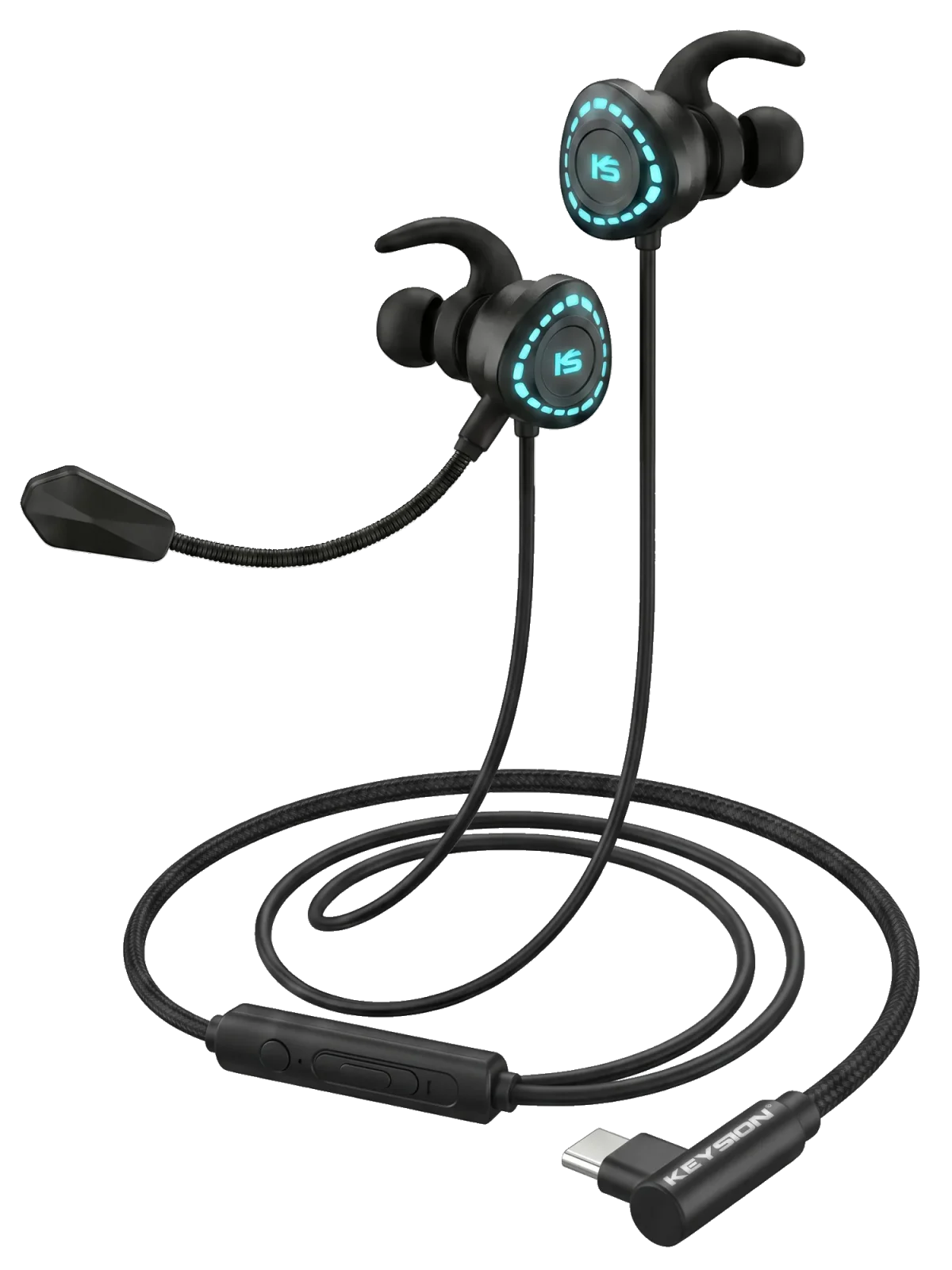
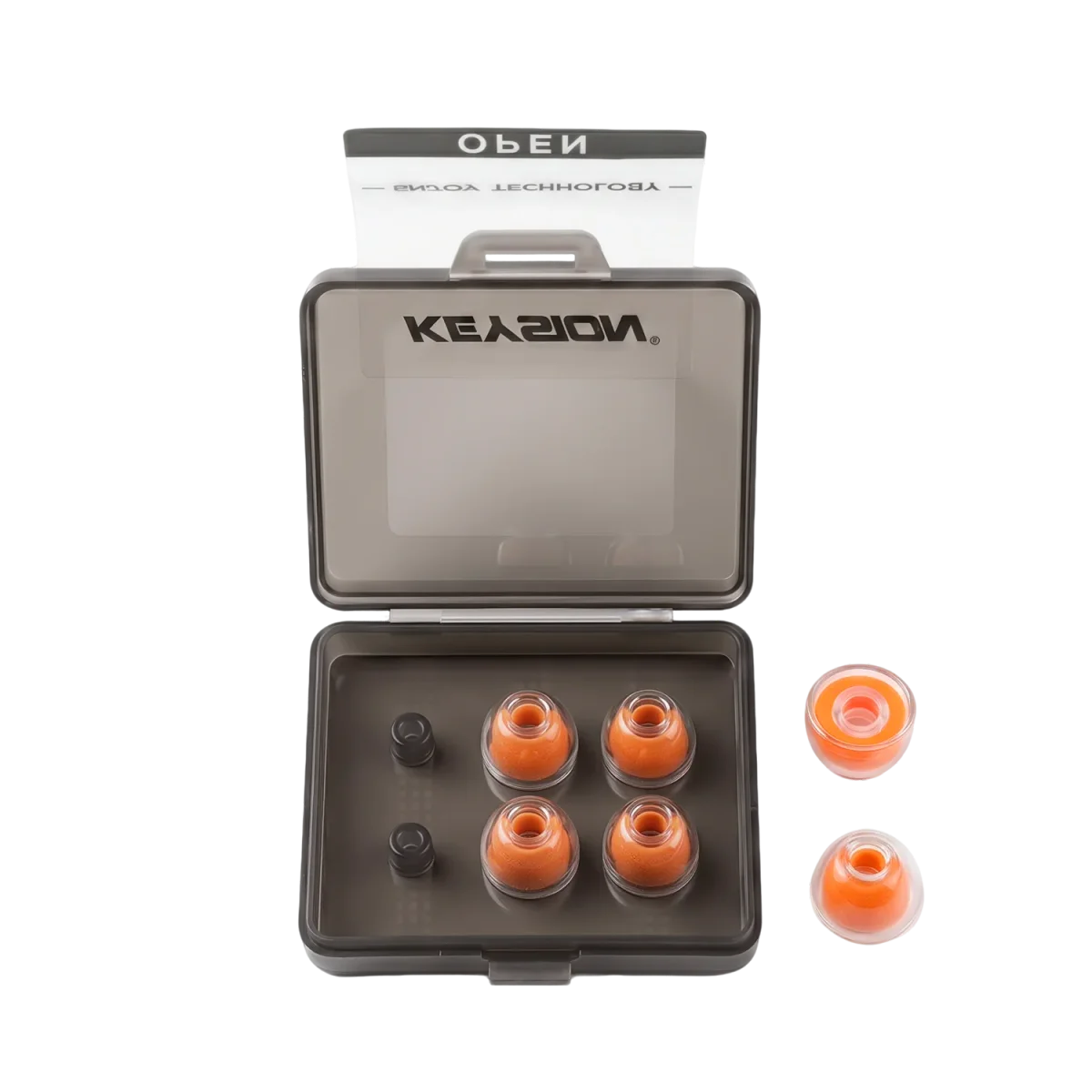
Does Buying an ANC Headset Actually Make the Office Quiet? Active Noise Cancelling vs Passive Isolation, Checked With KEYSION 30A Tips and X1
- The principle behind ANC: it's really only good at "humming"
- Why is passive isolation so often underestimated?
- Measured: how much do the 30A memory-foam tips block?
- How to judge which approach you need
- Step 1: Figure out the frequency of the noise you hate
- Step 2: Gauge whether charging will be a hassle
- Step 3: Check how good your tip seal actually is
- Noise reduction isn't "the pricier, the quieter" — it's "pick the right principle"
- FAQ
- About the author
Many people buy noise-cancelling headphones and only find out later that a colleague's voice and the keyboard clatter in the office still come through loud and clear. That's not because you got a fake ANC headset — it's because you're applying the wrong principle of noise reduction. Active noise cancelling (ANC) samples noise through microphones and cancels it with an inverse-phase wave. It's strongest against low-frequency and continuous noise, such as plane engines, subway rumble, or the hum of an air conditioner. Office voices and keyboard sounds, by contrast, are mid/high-frequency and irregular, and an inverse-phase wave simply can't keep up. In that scenario, passive isolation — a snug fit and well-sealed tips — is actually more reliable. Here we measure the KEYSION 30A memory-foam tips and the Type-C X1 to spell out the boundary of each approach.
ANC works by listening first, then cancelling. A microphone outside the earpiece captures the ambient sound, a chip analyzes it and generates a wave of equal amplitude but opposite phase to cancel it out. The catch is that processing takes time. For steady low-frequency noise, peaks and troughs are regular, so the chip can predict and cancel them with ease. But for high-frequency sounds that shift in an instant, like voices and keyboards, the sound reaches your ear before the wave is cancelled.
That's why ANC suppresses the 20-400Hz low range with striking effect, while high frequencies are largely a lost cause. It isn't a defect — it follows from the physics, and ANC was never built to cancel voices in the first place. We put together a comparison table:
| Scenario | Active noise cancelling (ANC) | Passive isolation (sealing) | What this means |
|---|---|---|---|
| Plane engine, subway rumble | Very strong (20-400Hz) | Weaker | Long commutes pick ANC precisely for this low-frequency |
| Voices in the office | Average | Very effective | If colleagues are too loud, check the tip seal first |
| Keyboard clatter, mechanical noise | Weaker | Good | Irregular highs; the inverse-phase wave can't react |
| Need to take on and off often | Average | Convenient | Passive isolation fits on/off freely, no delay |
| When the battery runs out | Fully fails | Unaffected | Always-on passive isolation is its biggest strength |
Passive isolation uses no electronics — it "blocks". An in-ear earpiece seals the ear canal tightly, so surrounding sound simply can't get in. It can't stop low frequencies, since their wavelengths are too long and vibration passes straight through, but for the mid/high frequencies humans perceive directly, the effect is immediate. And it uses no battery, has no latency, and is always on — it works even when there's no power.
The key is sealing. The larger and better-fitting the tips, the better the isolation. That's why memory-foam tips are usually a stronger barrier than silicone tips: the foam slowly expands and fills every gap in the ear canal. As a side note, ANC earpieces also depend on that seal — if the sealing is loose, the ANC effect drops noticeably, which is why it's worth fitting a good set of tips before anything else. In our tests, after pairing with the KEYSION 30A memory-foam tips, the perceived volume of office voices dropped clearly — effective without even switching the device on.
To put a number on it, we compared bare-wearing and memory-foam-wearing in the same environment using perceived isolation ratings (subjective listening grades combined with environmental SPL readings):
| Test item | Perceived isolation (approx.) | Note | What this means |
|---|---|---|---|
| No tips at all | 0 dB | Test baseline | Full exposure to office noise |
| Ordinary silicone tips | about 10-15 dB | Average seal | Some relief; voices still clear |
| Memory-foam tips (30A) | about 20-25 dB | Foam expands and fills the canal | Voices drop to "faint background", no need to power on |
| Memory foam + active noise cancelling | about 25-35 dB | Both stack | Covers lows and highs; best effect |
The conclusion is blunt: if what bothers you in the office is mainly colleagues talking and keyboards clacking, a well-sealed set of memory-foam tips is often less hassle than a several-thousand-yuan ANC over-ear. And if you're flying or taking a high-speed train and need to hold down the engine's low-frequency rumble, that's when ANC earns its place.
Don't rush to add to cart. Answer three questions first:
A continuous low-frequency "hum" (engine, air conditioner, plane) → go with ANC. For the pulsing mid/high-frequency voices, keyboards and mice → favor passive isolation: wear the tips properly and get the seal right.
ANC runs on battery — the stronger it is, the more it drains, and if you forget to charge it, it becomes an ordinary headset. If you wear it all day and often leave the charging case at home on commutes, a passive-isolation setup is simpler — it needs no power.
Whatever the approach, sealing is the foundation. If the tips are too loose, ANC is cut in half and passive isolation is pointless too. First make sure they stay snug and leak nothing, then talk about cancellation strength. A device like the X1, a Type-C digital-decoding earpiece, is inherently a passive-isolation-first setup, and it works even better paired with the 30A tips.
A common misconception is that a "noise-cancelling headset" equals automatic quiet. In fact, discussing cancellation in the abstract, apart from the type of noise, is meaningless. Once you read the table above, you'll see: ANC handles low frequencies, sealing handles high frequencies, and the two complement rather than replace each other. On a budget, rather than buying two headsets, spend a few dozen yuan first on sealing, then decide whether to step up to ANC. For commuters sensitive to steady noise, ANC is valuable; for office workers plagued by colleagues' voices, a good set of tips is usually the smarter, cheaper starting point.
Q: Why can I still hear my colleagues even with ANC on? Because ANC mostly cancels steady low-frequency noise; voices are mid/high-frequency and irregular, and the inverse-phase wave can't react in time. To block voices, the core is passive isolation — sorting out your tip seal helps more than raising the cancellation level.
Q: Can passive isolation and ANC be used together? Yes, and it's recommended. Memory-foam tips provide the passive seal, ANC handles the low frequencies, and the two combine for the largest total isolation, around 25-35dB — the best match for flying or taking a high-speed train.
Q: Are memory-foam tips always better at isolating than silicone? Usually yes. Foam slowly expands to fill the gaps in the canal for a more complete seal; silicone wins on durability and a cool touch. If your main complaint is voices, foam isolates more directly.
Q: Can an ANC headset still be used when it runs out of battery? Yes, but only at the level of passive isolation. So if you rely on it heavily and often forget to charge, a passive-isolation-first option is safer — for example, a tightly sealing in-ear with good tips.
Q: Is the KEYSION X1 an active noise-cancelling headset? No. The X1 is a Type-C digital-decoding gaming earpiece focused on passive isolation and low latency, with no built-in ANC. For daily office noise-reduction needs, its own sealing plus memory-foam tips is enough — no extra power required.
This article was put together by the KEYSION testing team. The conclusions come from hands-on wearing comparisons and SPL measurements, and the figures keep the individual variation between ear canals — the same tips worn by different people can differ by more than 5dB in isolation. When writing this kind of content, we only make "reliable per scenario" judgments: first look at the type of noise, then at sealing and how it's powered, and only last at cancellation strength. If you also want to fix the sealing link first, you can check how the 30A memory-foam tips and the X1 gaming earpiece are used.
FAQ
Why can I still hear my colleagues even with ANC on?
Because ANC mostly cancels steady low-frequency noise; voices are mid/high-frequency and irregular, and the inverse-phase wave can't react in time. To block voices, the core is passive isolation — sorting out your tip seal helps more than raising the cancellation level.
Can passive isolation and ANC be used together?
Yes, and it's recommended. Memory-foam tips provide the passive seal, ANC handles the low frequencies, and the two combine for the largest total isolation, around 25-35dB — the best match for flying or taking a high-speed train.
Are memory-foam tips always better at isolating than silicone?
Usually yes. Foam slowly expands to fill the gaps in the canal for a more complete seal; silicone wins on durability and a cool touch. If your main complaint is voices, foam isolates more directly.
Can an ANC headset still be used when it runs out of battery?
Yes, but only at the level of passive isolation. So if you rely on it heavily and often forget to charge, a passive-isolation-first option is safer — for example, a tightly sealing in-ear with good tips.
Is the KEYSION X1 an active noise-cancelling headset?
No. The X1 is a Type-C digital-decoding gaming earpiece focused on passive isolation and low latency, with no built-in ANC. For daily office noise-reduction needs, its own sealing plus memory-foam tips is enough.
Related products
Related articles