Is R2R actually more natural than Delta-Sigma? What the two DAC architectures really argue about
“R2R sounds more natural, Delta-Sigma sounds more digital” is one of the oldest claims in audio. But setting marketing aside, both architectures solve the same mathematical problem: how to reproduce a high-resolution digital signal with imperfect components. Conclusion first: the architecture does not determine sound quality by itself; what decides it is distortion, noise, and power-supply design. The claim that “R2R is more natural” has no reliable double-blind evidence behind it so far.
Delta-Sigma uses a 1-bit noise shaper with high-rate oversampling that pushes noise into the high frequencies, relying on a downstream analog low-pass filter to remove it. Its advantages are low cost, high integration, and respectable accuracy; more than 90% of mainstream DAC chips take this route.
R2R (resistor ladder) uses a set of precisely matched resistors to build a binary-weighted network and accumulates its voltage bit by bit. It avoids noise shaping, but resistor precision directly determines linearity. Early R2R designs often struggled at the least significant bit, producing audible noise and offset.
In short: Delta-Sigma trades time for precision, and R2R trades component precision for directness. That is also why R2R cannot be packed into a low-cost chip the way Delta-Sigma can.
Let us compare typical figures available on the market. We will not name specific models; these are common published reference values, so we avoid any single product's marketing claims:
| Metric | High-performance Delta-Sigma | Typical R2R | What this means |
|---|---|---|---|
| Signal-to-noise ratio | often 110–125 dB | usually 90–115 dB | DS generally wins on noise control, with a lower noise floor |
| THD+N | often below 0.001% | ranges 0.002–0.1% | DS distortion tends to be more stable and lower |
| LSB linearity | good | often off in earlier units | uncalibrated R2R loses low-volume detail |
| Integration/cost | high, cheap | low, expensive | DS is why most products became affordable |
Looking only at this table, Delta-Sigma does not typically fall behind on objective metrics. The “naturalness” R2R fans care about does not show up in these measurable figures.
Put “R2R is more natural” into a blind test and the conclusion becomes less certain. Once volume is carefully matched, most listeners cannot reliably tell the two apart, which is consistent with most double-blind listening experiments.
This may offend some enthusiasts, but one thing is clear: if R2R had a consistent audible advantage, it would have shown up in repeatable blind tests by now. What we mostly see are experiential accounts that measurements cannot explain, not reproducible differences.
What decides whether a DAC is worth the money is usually not the DAC architecture but signal-to-noise ratio, power isolation, PCB layout, and overall tuning. Using the same DS chip, different brands can sound quite different, and the gap largely comes down to these items.
For portable use, the weight on power and signal-to-noise ratio rises even further: keeping USB power ripple down in a small enclosure is far more practical than choosing one architecture over another. For more detail, see our article on portable DAC parameters: signal-to-noise ratio, distortion, and output power.
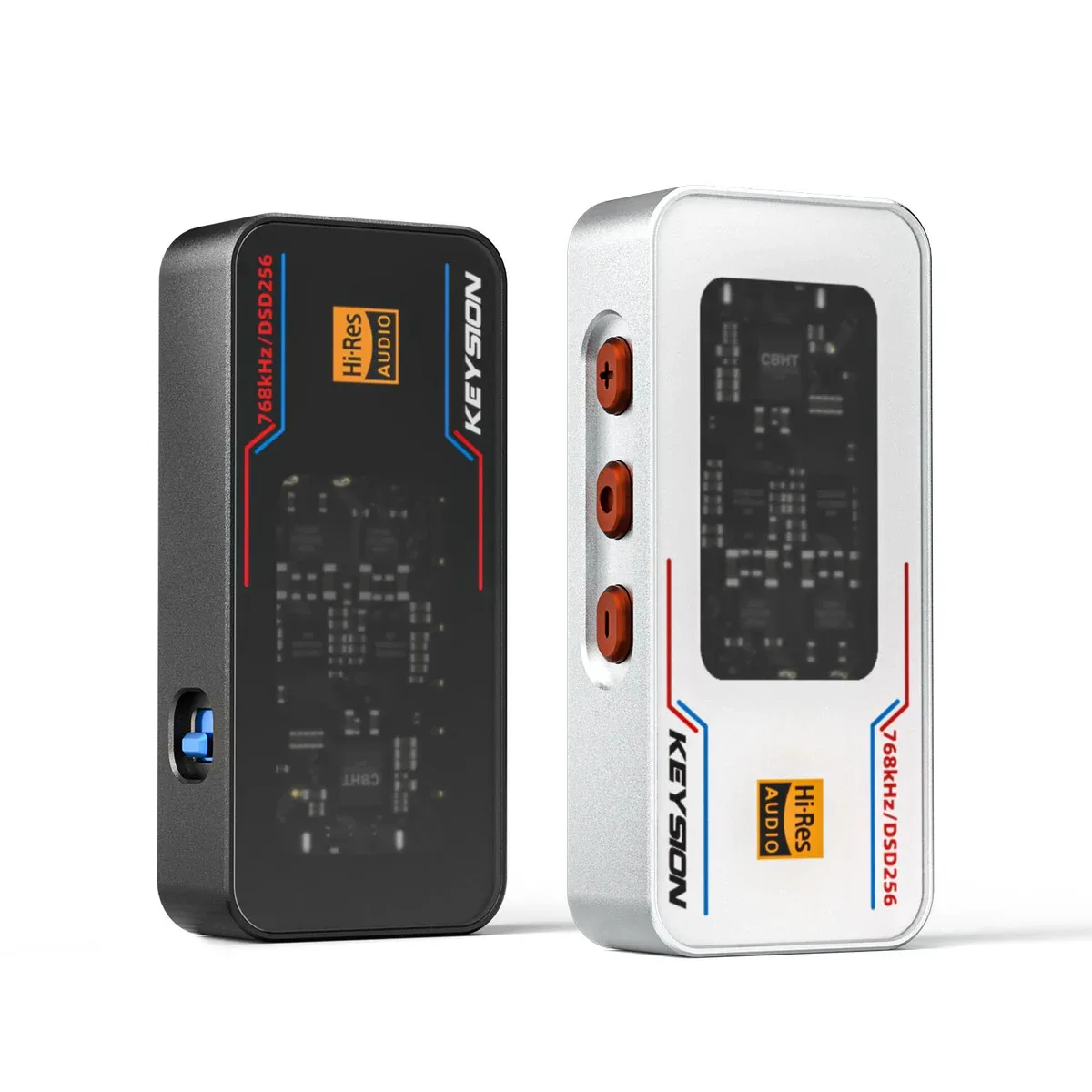
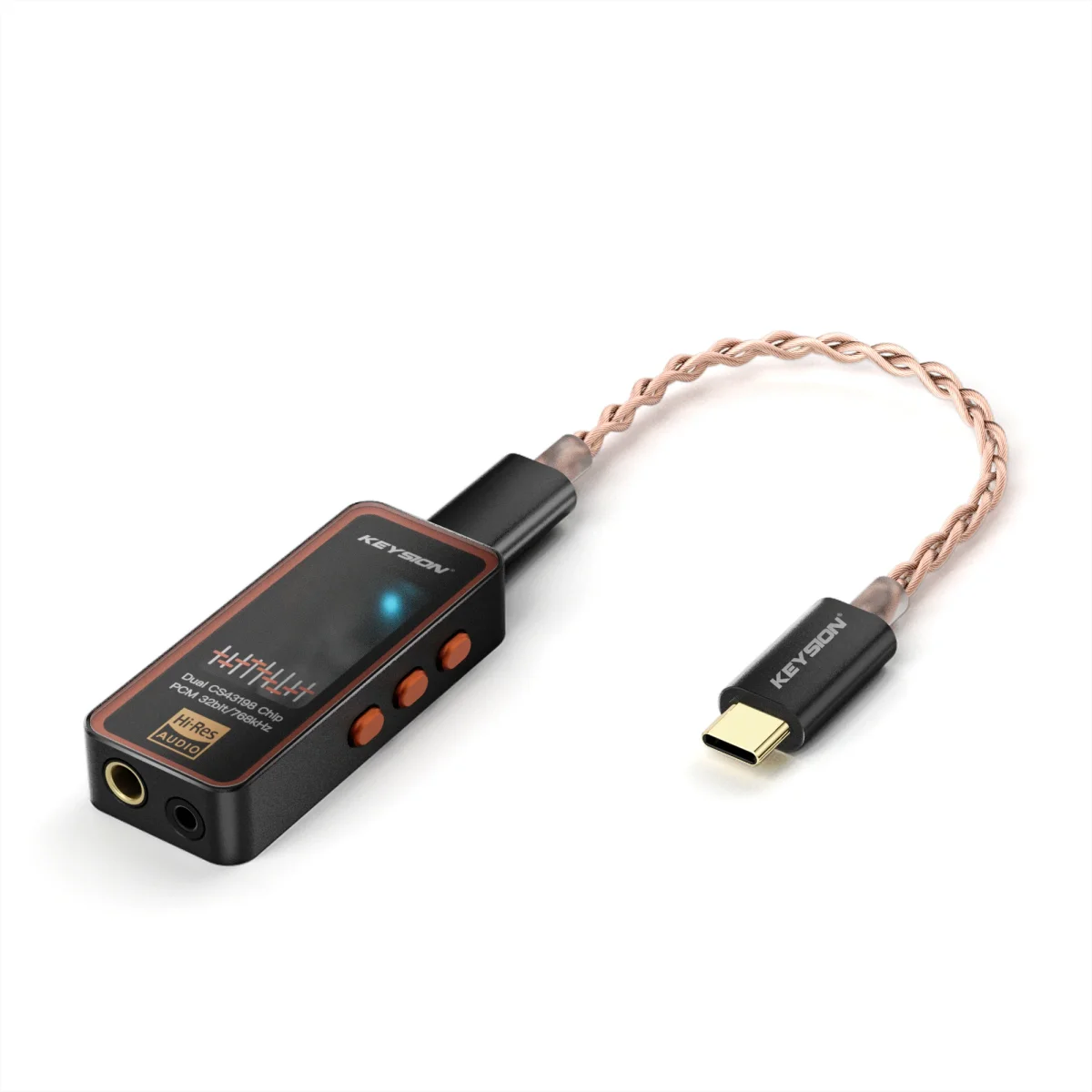
Portable dongles, constrained by size and power draw, almost all use Delta-Sigma. KEYSION 02, for example, is rated at 361 mW of output and decodes PCM 768 kHz, precisely because a high-performance DS chip keeps noise in check within a limited power budget.
This is not to say R2R is bad and DS is good. It means that under the three constraints of portability, USB power, and limited heat, the DS structure lets a low noise floor, high specs, and a reasonable price hold at the same time — something R2R finds hard to match on cost.
If your budget is limited, spend it on signal-to-noise ratio and power-supply design rather than paying several times more to chase R2R. Headphones often hit their limit before the source does, so secure your source and headphone quality first, then worry about architecture preference.
For high-end desktop R2R units, I will not deny that some people genuinely prefer their tone; personal taste should not be overruled by data. But such a preference is personal experience, and I would not recommend it to others as a general conclusion.
Both architectures can sound good; the “naturalness” in the debate lacks blind-test evidence. When choosing a DAC, prioritize signal-to-noise ratio and power supply, rather than fixating on R2R versus Delta-Sigma.
This article was written by the KEYSION Audio Lab, based on public measurements and blind-test literature, for objective reference only; how a component sounds varies from person to person.
FAQ
Which sounds better, R2R or Delta-Sigma?
Neither architecture is inherently better. Both can produce transparent sound; what determines sound quality is distortion, noise, and power-supply design, not the architecture itself. The claim that R2R is more natural lacks double-blind evidence.
Why are R2R DACs generally more expensive?
R2R depends on high-precision resistor arrays, which cost more, integrate poorly, and are hard to miniaturize. Delta-Sigma reaches a high SNR with a low-cost approach, which is why mainstream products almost all use DS.
Can a portable dongle be made with R2R?
It can, but it is rare. Portables are limited by USB power and heat; R2R loses on both power draw and cost, while the DS structure lets a low noise floor and high specs coexist, fitting the portable scenario better.
How do I judge whether a DAC is worth it?
First look at signal-to-noise ratio, THD+N, power isolation, and overall tuning, then at the headphones you actually feed. Around 100 dB SNR is usually enough; move up only if you want a quieter background.
Which DAC does the KEYSION 02 use?
A high-performance chip designed on the Delta-Sigma principle, rated at 361 mW and PCM 768 kHz. For most IEMs and headphones, its SNR and output are enough for daily use.
Related products
Related articles